Entrar
    Skoob logo

    Saiba mais

    Quem somosTermos de usoFale conoscoCentral de ajudaPrivacidade

    Fique por dentro

    Livros em destaque

    Explore

    LivrosAutoresEditorasLeitoresCortesias

    Siga nas redes sociais

    Baixe o app

    Google PlayApp Store

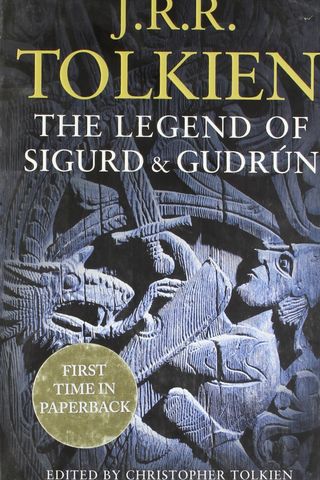
    Legend of Sigurd and Gudrun,The

    Autor desconhecido

    HarperCollins UK
    2016
    377 páginas
    12h 34m
    ISBN-13: 9780007317240
    4.5
    2 avaliações
    Leram1Lendo0Querem1Relendo0Abandonos0Resenhas1
    Favoritos0Desejados1Avaliaram2

    Many years ago, J.R.R. Tolkien composed his own version, now published for the first time, of the great legend of Northern antiquity, in two closely related poems to which he gave the titles The New Lay of the Völsungs and The New Lay of Gudrún.In the Lay of the Völsungs is told the ancestry of the great hero Sigurd, the slayer of Fáfnir most celebrated of dragons, whose treasure he took for his own; of his awakening of the Valkyrie Brynhild who slept surrounded by a wall of fire; and of his coming to the court of the great princes who were named the Niflungs (or Nibelungs), with whom he entered into blood-brotherhood. In that court there sprang great love but also great hate, brought about by the power of the enchantress, mother of the Niflungs, skilled in the arts of magic, of shape-changing and potions of forgetfulness.In scenes of dramatic intensity, of confusion of identity, thwarted passion, jealousy and bitter strife, the tragedy of Sigurd and Brynhild, and Gudrún his sister, mounts to its end in the murder of Sigurd at the hands of his blood-brothers, the suicide of Brynhild, and the despair of Gudrún. In the Lay of Gudrún her fate after the death of Sigurd is told, her marriage against her will to the mighty Atli, ruler of the Huns (the Attila of history), his murder of her brothers, and her hideous revenge.Deriving his version primarily from his close study of the ancient poetry of Norway and Iceland known as the Poetic Edda (and from the later prose work the Völsunga Saga), Tolkien employed a verse-form whose lines embody in English the exacting alliterative rhythms and the concentrated energy of the poems of the Edda.This ancient poetry remained a deep force in Tolkien's life's work. Here, at last, is presented the source of the wellspring that would lead to The Hobbit and The Children of Húrin. It is the first full flourishing of a rich narrative style and powerful, dramatic storytelling that was destined to become famous throughout the world.

    Resenhas (1)Ver mais
    João Paulo Hoppe picture
    João Paulo Hoppe14/09/2019Resenhou um livro
    5 (Perfeito)

    Antes de ser o criador de Arda e da Terra-média, Tolkien foi um filólogo, alguém que estuda linguagens. Seus interesses estavam nas línguas do norte, principalmente, especialmente nórdico antigo e inglês antigo. Sua primeira publicação foi a respeito de Beowulf, uma das histórias mais importantes no inglês antigo. Segundo Christopher Tolkien, seu filho, Tolkien deve ter escrito os poemas que compõem "The Legend of Sigurd and Gudrún" nos anos 1930. Pouco falou sobre eles durante sua vida, como consta das memórias de Christopher e do registro epistolar de Tolkien. No entanto, os textos foram encontrados e publicados, recentemente, com muitas notas e comentários por seu filho, também um filólogo de formação. O livro contém dois poemas, escritos em versos aliterativos à maneira nórdica, inspirado pela lenda de Sigurd e a queda dos Nibelungos, como presente nas Eddas. Sigurd, também conhecido como Sigfried nas versões germânicas, é uma das lendas mais conhecidas da mitologia nórdica, o herói dos Völsungs, portando a espada Gram, matador do dragão Fáfnir e prometido à valquíria Brynhildr. Sigurd eventualmente é morto, e posteriormente vemos os eventos da queda dos Nibelungos pela ação de Átila, o Huno. É um livro bem diferente dos demais de Tolkien. Apesar de vermos muito de sua criatividade e conhecimento das línguas e lendas, pouco vemos da sua voz ao longo do livro, apenas aparecendo nas notas. Também não há conexões com a Terra-média, exceto nos esparsos comentários etimológicos, que incluem "warg" e a raiz de "Gandalf". Nem por isso deixa de ser um livro interessante. Pra qualquer um que se interesse por essas histórias, e não são poucas as versões e adaptações que inspiraram muito da cultura popular, vale muito a pena a leitura.

    curtir

    Estatísticas

    Avaliações

    4.5 / 2
    • 5 estrelas50%
    • 4 estrelas50%
    • 3 estrelas0%
    • 2 estrelas0%
    • 1 estrelas0%
    Book cover
    Compartilhar
    Editar
    • Sinopse
    • Edições0
    • Vídeos0
    • Grupos0
    • Resenhas1
    • Leitores2
    • Similares0