In the 1850s, while studying the foreign policies of European states and endeavouring to disclose the inner springs of these policies, Marx often turned to the history of diplomacy. Working at the British Museum, he discovered, in the collection of an English historian and writer, William Coxe, a mass of eighteenth-century documents, including letters from English ambassadors in St. Petersburg. This find served as an immediate stimulus for writing the Revelations of the Diplomatic History of the 18th Century which he conceived at the beginning of 1856, when the Crimean war was still in progress. Marx wrote later: “While looking through the diplomatic manuscripts in the possession of the British Museum I came across a series of English document’s, going back from the end of the eighteenth century to the time of Peter the Great, which reveal the continuous secret collaboration between the Cabinets of London and St. Petersburg, and seem to indicate that this relationship arose at the time of Peter the Great” . Initially Marx intended to publish some of these documents, with his own comments, in the American Putnam’s Monthly Magazine, but he then decided to develop the theme and write an extensive (about 20 printed sheets) work on the history of Anglo-Russian relations in the 18th century. However, his negotiations with the German publisher in London Nikolaus Trübner in March — May 1856 on the publication of the work were fruitless. Marx failed to find another publisher and thought of printing it in one of the newspapers published by the followers of the English conservative journalist, David Urquhart, who was in opposition to the British Government and vigorously criticised its foreign policy. Marx had occasionally contributed to these papers, though he always dissociated himself from Urquhart’s anti-democratic stance. It was because of Urquhart’s political approach that Marx hesitated for some time before entrusting him with his work for publication. Marx wrote to Engels on August 1, 1856: “...Should Urquhart come out with his counter-revolutionary nonsense in such a way that collaboration with him would discredit me in the eyes of the revolutionaries here, I would be obliged ... to decide against it”. The Revelations of the Diplomatic History of the 18th Century, which Marx wrote from June 1856 to March 1857, began to appear in instalments in The Sheffield Free Press, an Urquhartist newspaper, in late June 1856. But since the editors interfered with the text by arbitrarily making cuts without Marx’s consent, he stopped publication and handed over the work to another Urquhartist periodical — the London weekly Free Press. The work was published from the very beginning without any abridgements, as the text was sent in by Marx, from August 16, 1856 to April 1, 1857. The published text was, in Marx’s own words, only an introduction to a projected work that was never written. It is divided into five chapters. More than half consists of documents (reports, letters and pamphlets) concerning the history of diplomatic relations between England and Russia in the 18th century. Chapter I consists of documents and Marx’s numerous comments. In Chapters II and III the proportion of Marx’s text proper is insignificant. The whole of Chapter IV was written by Marx; in Chapter V, where he profusely cites the pamphlet Truth Is But Truth... Marx gives a description of Peter I’s foreign policy.
Secret Diplomatic History of the Eighteenth Century -
Karl Marx
CreateSpace Independent Publishing Platform; Lrg edition
2016
94 páginas
3h 8m
ISBN-13: 9781530408955
Edições (1)
Ver mais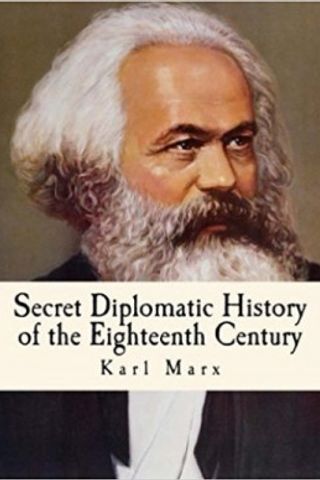
Estatísticas
Avaliações
0 / 0- 5 estrelas0%
- 4 estrelas0%
- 3 estrelas0%
- 2 estrelas0%
- 1 estrelas0%
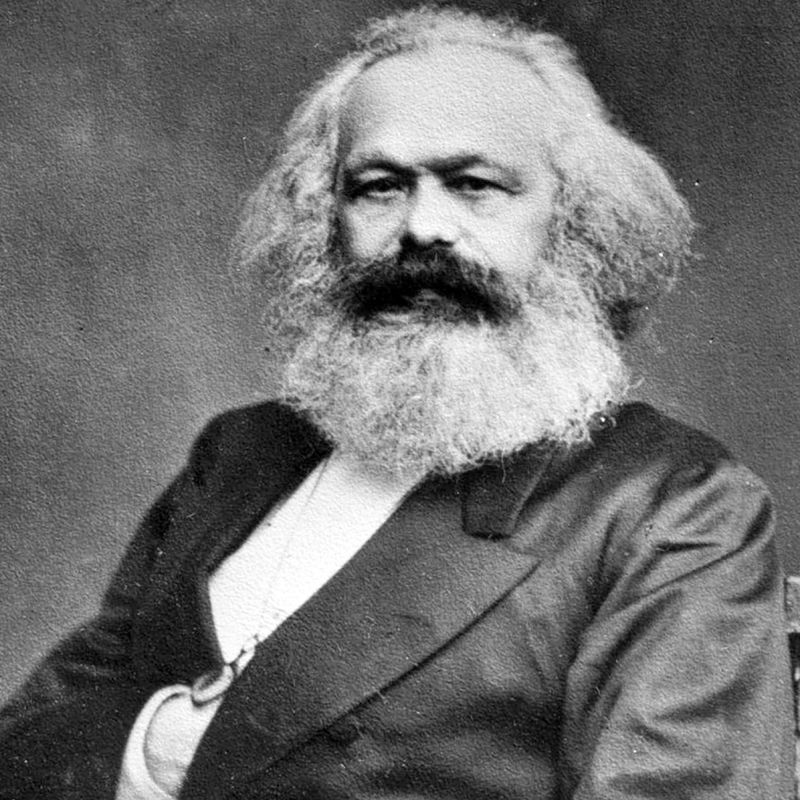
Karl Heinrich Marx
Intelectual e revolucionário alemão, um dos principais interpretes do sistema capitalista, influente comunista e notória influência nas mais diversas ciências, como Filosofia, História, Sociologia, Direito, Antropologia, Psicologia, Economia, Geografia, entre outras.
142 Livros
720 Seguidores
Renânia-Palatinado, Alemanha