Reconstructing phylogenetic trees from DNA sequences has become a popular exercise in many branches of biology, and here the award-winning geneticist, John Avise, explains why. Molecular phylogenies provide a genealogical backdrop for interpreting the evolutionary histories of many other types of biological traits (anatomical, behavioral, ecological, physiological, biochemical, and even biogeographical). Guiding readers on a natural history tour along dozens of evolutionary pathways, the author describes how creatures ranging from microbes to elephants came to possess their current phenotypes. If you want to know how the toucan got its bill and the kangaroo its hop, this is the book for you. This book also provides a definitive answer to the proverbial question: "which came first, the chicken or the egg?" This scientifically educational yet entertaining treatment of ecology, genetics, and evolution is intended for college students, professional biologists, and anyone interested in natural history and biodiversity.
Evolutionary Pathways in Nature - A Phylogenetic Approach
John C. Avise
Cambridge University Press
2006
286 páginas
9h 32m
ISBN-10: 0521674174
Edições (1)
Ver mais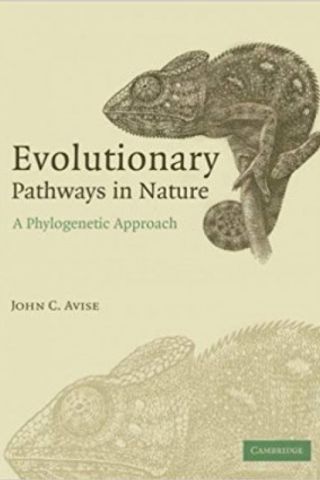
Resenhas (1)Ver mais
João Paulo Hoppe21/12/2018Resenhou um livro
2 curtidas
Estatísticas
Avaliações
5 / 1- 5 estrelas100%
- 4 estrelas0%
- 3 estrelas0%
- 2 estrelas0%
- 1 estrelas0%