The story of the rise and fall of those comic books has never been fully told -- until The Ten-Cent Plague. David Hajdu's remarkable new book vividly opens up the lost world of comic books, its creativity, irreverence, and suspicion of authority. In the years between World War II and the emergence of television as a mass medium, American popular culture as we know it was first created—in the pulpy, boldly illustrated pages of comic books. No sooner had this new culture emerged than it was beaten down by church groups, community bluestockings, and a McCarthyish Congress—only to resurface with a crooked smile on its face in Mad magazine. When we picture the 1950s, we hear the sound of early rock and roll. The Ten-Cent Plague shows how -- years before music -- comics brought on a clash between children and their parents, between prewar and postwar standards. Created by outsiders from the tenements, garish, shameless, and often shocking, comics spoke to young people and provided the guardians of mainstream culture with a big target. Parents, teachers, and complicit kids burned comics in public bonfires. Cities passed laws to outlaw comics. Congress took action with televised hearings that nearly destroyed the careers of hundreds of artists and writers. The Ten-Cent Plague radically revises common notions of popular culture, the generation gap, and the divide between "high" and "low" art. As he did with the lives of Billy Strayhorn and Duke Ellington (in Lush Life) and Bob Dylan and his circle (in Positively 4th Street), Hajdu brings a place, a time, and a milieu unforgettably back to life.
The Ten-Cent Plague - The Great Comic-Book Scare and How It Changed America
David Hajdu
Farrar, Straus and Giroux
1999
468 páginas
15h 36m
ISBN-10: B00139XT6Y
Edições (1)
Ver mais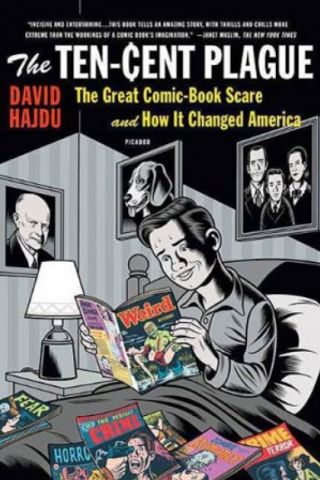
Estatísticas
Avaliações
0 / 0- 5 estrelas0%
- 4 estrelas0%
- 3 estrelas0%
- 2 estrelas0%
- 1 estrelas0%