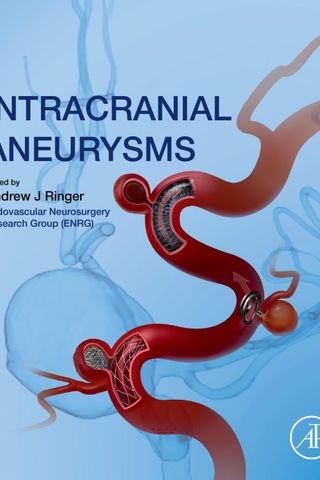
Intracranial aneurysm result from complex interactions between cerebrovascular anatomy, vascular injury, and adaptive remodeling of the arterial wall and represent a cerebrovascular disorder with the potential for substantial morbidity and mortality. Most intracranial aneurysms occur in the larger arteries near the skull base, in or around the circle of Willis, but variants may appear virtually anywhere in the cerebral vasculature. The aneurysm can leak or rupture, causing life-threatening bleeding, and is the most common cause of spontaneous subarachnoid hemorrhage, the third most common form of stroke. Intracranial aneurysms affect about 1 in 10,000 people per year in the United States (approximately 27,000). Intracranial Aneurysms will address the natural history, biology, and basic management principles and treatment of aneurysms. The chapters also explore the unique features of each type or location of aneurysm while considering the medical, surgical, and endovascular options. Contributions are by members of the Endovascular Neurosurgery Research Group, a group of recognized expert neurosurgeons who specialize in cerebrovascular and endovascular management of aneurysms. Comprehensively covers the basic mechanisms, history, management and treatment of intracranial aneurysms Written for researchers, residents and clinical practitioners in clinical neuroscience, neurology and neurosurgery Contains contributions by expert neurosurgeons of the Endovascular Neurosurgery Research Group
Intracranial Aneurysms
Andrew J. Ringer
Academic Press
2018
736 páginas
1d 0h 32m
ISBN-13: 9780128118832
Estatísticas
Avaliações
0 / 0- 5 estrelas0%
- 4 estrelas0%
- 3 estrelas0%
- 2 estrelas0%
- 1 estrelas0%