An imaginary historical portrait in which Marius is offered as a kind of self-portrait of Pater transferred to the Rome of Marcus Aurelius. Marius speculates on various views of art and life. The love of art for art's sake is advocated, as is the moral obligation to lead a good and ordered life.
Estatísticas
Avaliações
0 / 0- 5 estrelas0%
- 4 estrelas0%
- 3 estrelas0%
- 2 estrelas0%
- 1 estrelas0%
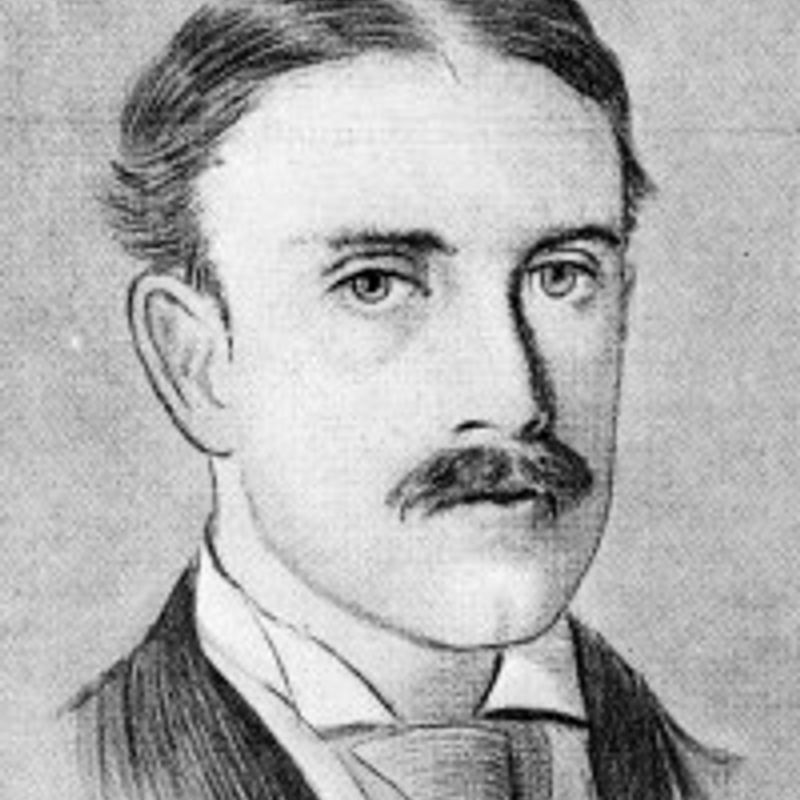
Walter Horatio Pater
English critic, essayist, and humanist whose advocacy of “art for art’s sake” Walter Pater became a cardinal doctrine of the movement known as Aestheticism. Pater was educated at King’s School, Canterbury, and at Queen’s College, Oxford, where he studied Greek philosophy under Benjamin Jowett. He then settled in Oxford and read with private pupils. In 1864 he was elected to a fellowship at Brasenose College. Pater’s early intention to enter the church gave way at this time to a consuming interest in classical studies. Pater then began to write for the reviews, and his essays on Leonardo da Vinci, Sandro Botticelli, Pico della Mirandola, Michelangelo, and others were collected in 1873 as Studies in the History of the Renaissance (later called simply The Renaissance). His delicate, fastidious style and sensitive appreciation of Renaissance art in these essays made his reputation as a scholar and an aesthete, and he became the centre of a small group of admirers in Oxford. In the concluding essay in The Renaissance, Pater asserted that art exists for the sake of its beauty alone, and that it acknowledges neither moral standards nor utilitarian functions in its reason for being. These views brought Pater into an association with Swinburne and with the Pre-Raphaelites. Marius the Epicurean (1885) is his most substantial work. It is a philosophical romance in which Pater’s ideal of an aesthetic and religious life is scrupulously and elaborately set forth. The setting is Rome in the time of Marcus Aurelius; but this is a thin disguise for the characteristically late-19th-century spiritual development of its main character. Imaginary Portraits (1887) are shorter pieces of philosophical fiction in the same mode. Appreciations (1889) is a return to the critical essay, this time largely on English subjects. In 1893 came Plato and Platonism, giving an extremely literary view of Plato and neglecting the logical and dialectical side of his philosophy. Pater’s Greek Studies (1895), Miscellaneous Studies (1895), and Essays from The Guardian (privately printed, 1896; 1901) were published posthumously; also published posthumously was his unfinished romance, Gaston de Latour (1896). The primary influence on Pater’s mind was his classical studies, coloured by a highly individual view of Christian devotion and pursued largely as a source of extremely refined artistic sensations. In his later critical writings Pater continued to focus on the innate qualities of works of art, in contrast to the prevailing tendency to evaluate them on the basis of their moral and educational value. Pater’s early influence was confined to a small circle in Oxford, but he came to have a widespread effect on the next literary generation. Oscar Wilde, George Moore, and the aesthetes of the 1890s were among his followers and show obvious and continual traces both of his style and of his ideas.
3 Livros
3 Seguidores