"Major Operation", 1971. A Grande Operação, de James White, poderosa obra polémica dos domínios da mais excelente ficção-científica, revaloriza a posição já insofismavelmente prestigiosa de James White, autor dos mais acarinhados pelo público de dois continentes, e revela-nos um mundo simultâneamente de pesadelo e de extraordinário poder encantatório. Se muitas das suas qualidades provêm directamente do caprichismo de uma imaginação alucinante e prodigiosa, uma quota parte do seu valor deriva do conhecimento e prática científica de James White. Assim, A Grande Operação não é um texto descabelado e recheado de aventuras inconcebíveis, mesmo para quem vê no presente muitos indícios do que será a crónica de um futuro a que, em parte, já pertencemos. Pelo contrário, ao lermos estas páginas admiráveis e graves, penetramos no mundo do "possível", que tem traços de verosimilhança audaz e que nos fará meditar sobre o percurso de uma ciência que tende a desumanizar-se e a perder a razão de ser histórica e moral que sempre a justificou, incentivando-a. A Grande Operação recomenda-se, portanto, como uma das obras mais interessantes das escritas e publicadas por James White, autor que a Colecção Argonauta se orgulha de incluir entre os seus colaboradores de renome universal. Introdução: A Grande Operação (Major Operation), é o último volume da trilogia de James White, formada também por Hospital no Espaço e Médico Espacial, publicados na Colecção Argonauta, com os números 214 e 220. Mais uma vez, o cenário é o Hospital Geral do Sector Doze da Galáxia, uma enorme estrutura, com centenas de pisos, contruída no espaço, na periferia galáctica, e onde são reproduzidos os ambientes das centenas de mundos da Federação, habitados por seres inteligentes. É uma novela do futuro - de um futuro distante. Mas é também um prodígio de engenho e lógica, em que o Médico-Chefe Conway e o Major O'Mara, mais uma vez, são dos símbolos da inventiva de um autor ímpar, quer na sua originalidade, quer num impecável manejo da ciência e da técnica. Esclareça-se que James White é, ele próprio, um médico, e compreender-se-á muito do que se lê nas suas novelas.
A Grande Operação (Argonauta #223) -
James White
Livros do Brasil
1975
207 páginas
6h 54m
ISBN-1: 0
Português
Edições (1)
Ver mais
Estatísticas
Avaliações
0 / 0- 5 estrelas0%
- 4 estrelas0%
- 3 estrelas0%
- 2 estrelas0%
- 1 estrelas0%
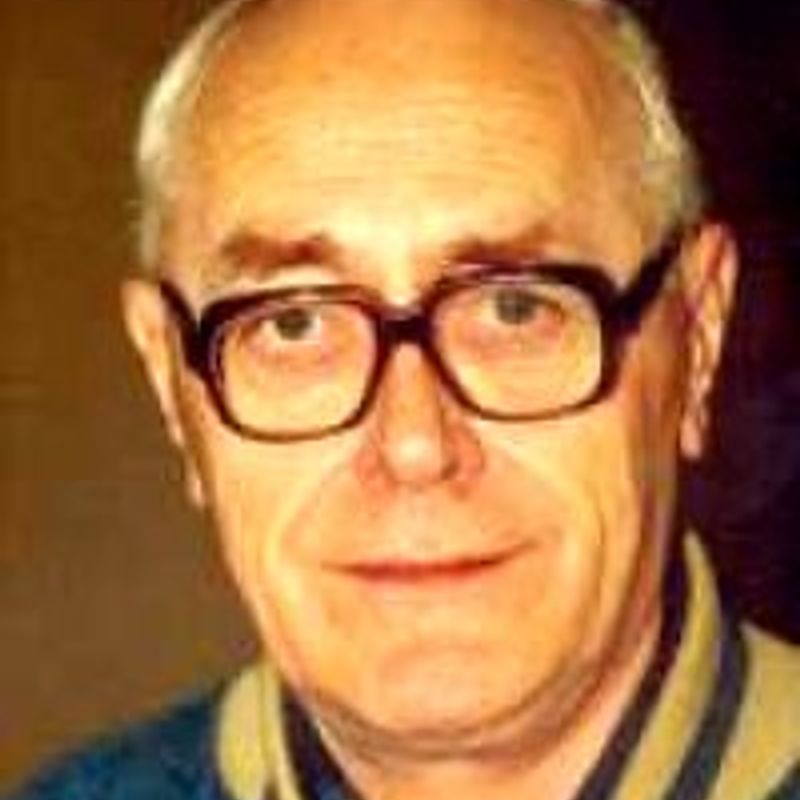
James White
James White was born in Belfast, Northern Ireland, on 7 April 1928, and spent part of his early life in Canada.[1] He was educated in Belfast at St. John's Primary School (1935–1941) and St. Joseph's Technical Secondary School (1942–1943).[2] As a teenager he lived with foster parents.[3] He wanted to study medicine but financial circumstances prevented this. Between 1943 and 1965 he worked for several Belfast tailoring companies and then as assistant manager of a Co-op department store. He married Margaret ("Peggy") Sarah Martin, another science fiction fan,[4] during 1955 and the couple had three children: daughter Patricia, and sons Martin and Peter. White later worked for the aeroplane builders Short Brothers Ltd. as a technical clerk (1965–1966), publicity assistant (1966–1968), and publicity officer (1968–1984).[2][5] He became a science fiction fan during 1941, attracted particularly by the works of E. E. "Doc" Smith, which featured good aliens as well as evil ones, and of Robert A. Heinlein, many of whose stories concern ordinary people. During 1947 he met another Irish fan, Walter A. ("Walt") Willis (1919–1999), and the two helped to produce the fan magazines Slant (1948–1953) and Hyphen (1952–1965),[2][6][7] which featured stories and articles by noted authors including John Brunner, A. Bertram Chandler, and Bob Shaw. During 2004 both White and Willis were nominated for the retrospective Hugo Award for Best Fan Writer of 1953, although neither won.[8] White said that he started writing stories because the Slant team felt that Astounding Science Fiction was too dominated by prophesies of nuclear doom, and his friends dared him to write the kind of story that they all liked to read.[3] He said that getting published was fairly easy during the 1950s, as the World War II restrictions on paper were ended, and there were at least 12 science magazines in Britain and about 40 in the United States.[4] His first published short story, Assisted Passage, a parody of 1950s Anglo-Australian emigration policies, appeared in the January 1953 edition of the magazine New Worlds.[1][9] Further stories appeared in New Worlds during the next few years, but White's attempt to access the more lucrative American market by submitting stories to Astounding Science Fiction stalled after the publication of The Scavengers.[4][10] White later said that his optimism about inter-species relations was unpalatable to Astounding's xenophobic editor, John W. Campbell.[2][5] As a result White's work was little-known outside the UK until the 1960s.[11] During 1957, Ace Books published White's first novel, The Secret Visitors, which included locations in Northern Ireland.[1] The book had previously been serialised in New Worlds with the title Tourist Planet. Ace Books' science fiction editor, Donald A. Wollheim, thought the original ending was too tame and suggested that White should insert an all-out space battle just after the climactic courtroom scene.[2] During November the same year New Worlds published White's novelette Sector General, and editor John ("Ted") Carnell requested more stories set in the same universe, founding the series for which White is known best.[2] White gained "a steady following" for his "scientifically accurate" stories, which were notable examples of hard science fiction in New Worlds, despite the magazine's promotion of literary "New Wave" science fiction during the 1960s.[11] White kept his job with Short Brothers and wrote during evenings, as his stories did not make enough money for him to become a full-time author.[5] During 1980 he taught a literature course at a Belfast branch of the Workers Educational Association. When diabetes had severely impaired his eyesight, he took early retirement during 1984 and relocated to the north Antrim resort town of Portstewart, where he continued to write.[2][4] For many years he was a Council Member of the British Science Fiction Association and, with Harry Harrison and Anne McCaffrey, a Patron of the Irish Science Fiction Association.[2] White was also a strong pacifist.[12] He died of a stroke on 23 August 1999,[1][13] while his novels Double Contact and The First Protector were being prepared for publication.[2][7][14] His wife Peggy, son Martin, and daughter Patricia survived him.[1]
9 Livros
1 Seguidor
Northern Ireland, United Kingdom