Eric “Moby” Calhoune’s best friend Sarah Byrnes is catatonic, sitting in the mental ward of Sacred Heart Hospital. The staff there suggests that he recall some moments that may jog her memory and bring her out of her catatonic state and back to reality. Eric and Sarah Byrnes (who insists on being called Sarah Byrnes, rather than just Sarah) have been friends for a long time, originally because he was extremely overweight and she was severely burned as a child leaving her with scars on her hands and face. They were picked on regularly and began to write an underground newspaper called Crispy Pork Rinds, focusing an article on the bully Dale Thornton. After the ensuing events, they recruited Dale as “protection”, and their lives became a bit easier. Eric is recruited to the swim team, and as he improves in skill his weight decreases. Out of fear of losing his friend Sarah Byrnes, he continues to eat, even more excessively, so he can “stay fat for Sarah Byrnes”. Eric’s search for a “cure” to Sarah Byrnes’s catatonia, leads him to seek out Dale Thornton, and Eric learns that she had an abusive father and that the facial scarring was no accident. Shortly after being confronted with this information, Sarah Byrnes begins speaking to Eric, and he discovers that her catatonia has been a ruse, and that she is terrified that her father, who has been declining into further mental illness, is going to kill her. She has been hiding out in the hospital because it is the only place she feels safe from him. But Virgil Byrnes appears to be on to Sarah, and time is running out. Confused as to what to do, Eric reveals all to his teacher and swim coach, Ms. Lemry. She hatches a plan to hide Sarah Byrnes in the apartment above her garage. Ms. Lemry teaches the Contemporary American Thought (CAT) class which includes discussions on abortion, suicide, religion, body image, social justice, and many other topics. Through these moments, Eric, Steve Ellerby, Jody Mueller, and Mark Brittain (fellow classmates with conflicting views), develop and explore their personal views on these issues. During the course of this class, Mark is confronted with the truth of his actions—that he encouraged Jody to have an abortion—and he has difficulty reconciling his actions with his beliefs and later attempts suicide. Ms. Lemry agrees to take Sarah Byrnes to Reno to look for her mother, who is the only witness to the abuse Sarah has suffered at the hands of her father. While they are gone, Virgil Byrnes hunts down Eric after school and threatens to kill him, and eventually stabs him in the back. Eric makes his way to Dale Thornton’s house where he passes out, and Dale and his father rescue him and take him to the hospital. Sarah attempts to run away because she doesn’t want any more of her friends to get hurt, but Eric and Ms. Lemry stop her. Eric’s mother’s boyfriend Carver Middleton (former Vietnam Special Forces soldier) figures out that Virgil Byrnes must be hiding out in his house and lays a trap for him, capturing him after a brief struggle.
staying fat for sarah byrnes -
Chris Crutcher
Greenwillow Books
1993
304 páginas
10h 8m
ISBN-10: 0060094893
Estatísticas
Avaliações
4 / 1- 5 estrelas0%
- 4 estrelas100%
- 3 estrelas0%
- 2 estrelas0%
- 1 estrelas0%
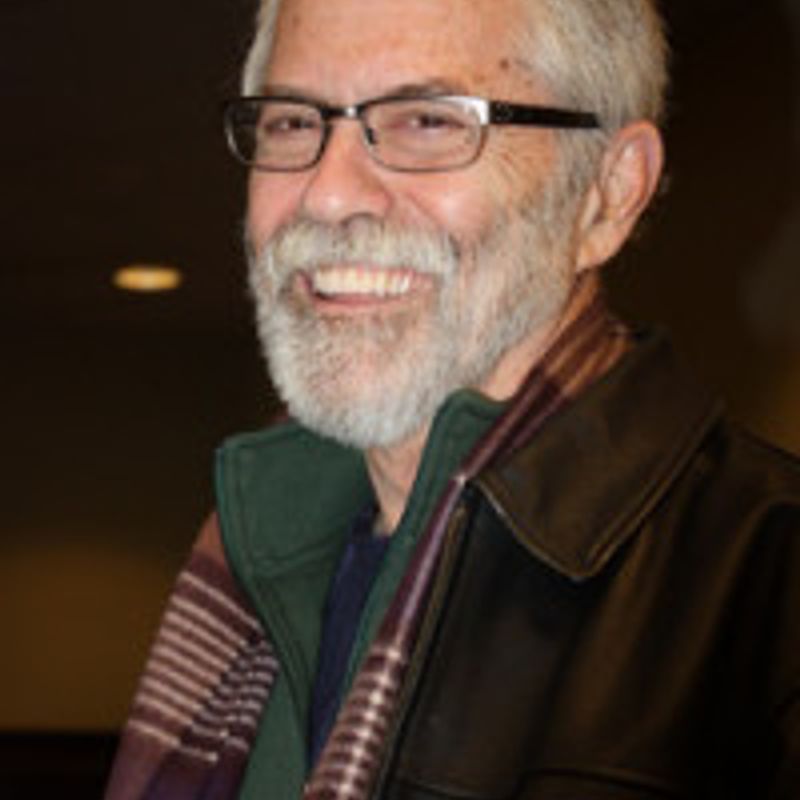
Chris Crutcher
Chris Crutcher was raised in Cascade, Idaho, a lumber and cattle ranch town located in the central Idaho Rockies, a two hour drive over treacherous two-lane from the nearest movie theater and a good forty minutes from the nearest bowling alley. In high school he played football, basketball and ran track, not because he was a stellar athlete, but because in a place so isolated, every able bodied male was heavily recruited. “If you didn’t show up on the first day of football practice your freshman year,” he says, “they just came to your house and got you. And your parents let them in.” His early interest in stories came principally from reading Jean Shepherd and other fine authors in the Playboy Magazine delivered monthly to his house because, as he overheard his father saying to his mother, “Some of the very finest contemporary American literature graces the pages of that magazine.” Full disclosure, there is justified suspicion that he may have perused some of the photography before settling down to serious reading. Crutcher’s years as teacher, then director, of a K-12 alternative school in Oakland, California through the nineteen-seventies, and his subsequent twenty-odd years as a therapist specializing in child abuse and neglect, inform his thirteen novels and two collections of short stories. “I have forever been intrigued by the extremes of the human condition,” he says, “the remarkable juxtaposition of the ghastly and the glorious. As Eric ‘Moby’ Calhoun tells us at the conclusion of Staying Fat for Sarah Byrnes, ‘Ain’t it a trip where heroes come from’.” He has also written what he calls an ill-advised autobiography titled King of the Mild Frontier, which was designated by “Publisher’s Weekly” as “the YA book most adults would have read if they knew it existed.” Chris has received a number of coveted awards, from his high school designation as “Most Likely to Plagiarize” to the American Library Association’s Margaret A. Edwards Lifetime Achievement Award. His favorites are his two Intellectual Freedom awards, one from the National Council for Teachers of English and the other from the National Coalition Against Censorship. Five of Crutcher’s books appeared on an American Library Association list of the 100 Best Books for Teens of the Twentieth Century (1999 to 2000). A recent NPR list of the Best 100 YA and Children’s books included none of those titles. Time flies. Crutcher no longer listens to, nor contributes to, NPR. Extended Biography By the time Chris Crutcher was born in Dayton, Ohio on July 17, 1946, his father John (also known as “Crutch”) had decided to leave his career in the United States Air Force behind. After piloting more than 30 successful B-17 bombing missions in World War II, Crutch was ready to settle down with his family in his wife Jewel’s hometown of Cascade, Idaho. So the pilot and the housewife bundled up six-week-old baby Chris and his 2 ½-year-old brother John (sister Candy came four years later) and headed for the rural Pacific Northwest to run a service station and wholesale oil business with Jewel’s father. It was a setting that helped define Crutcher’s human perspective and his critically acclaimed body of work. Like the town of Trout, Idaho described in Crutcher’s first book Running Loose, Cascade was a sparsely populated mountain logging town – a village that patiently endured the quick temper and voracious curiosity apparent during most of Crutcher’s childhood. It was also a small town that celebrated extracurricular sports. “If you could breathe,” Crutcher says, “you could play.” In fact, the recruitment of nearly every male adolescent in Cascade was necessary to populate a viable team. His brother John was an authentic jock and a stellar academic. But even without athletic prowess, Crutcher participated in football, basketball and track. When he wasn’t at school or practice, Crutcher often manned the pumps at the family service station, where he learned the value of hard work, the ecstasy of junk food, and the true reach of his father’s powerful intellect. “I saw him as a God,” Crutcher explains, “but he was 6’5” so I also saw him as BIG.” With logic and common sense as his guideposts, Crutch tutored his youngest son on everything from religion to the physics of relativity to political ideals. Crutcher still remembers the day they added “under God” to the Pledge of Allegiance and his Republican father’s objection to blurring the crucial line between church and state. Crutcher’s mother Jewel softened his father’s pragmatic influence with her sense of humor, her love of music and her more traditional take on Christian faith. But as a functional alcoholic, she also introduced her son to the disabling impact of addiction and unspoken pain. A loving relationship with both parents helped Crutcher refine his ability to think and feel, but not his ability to excel in school. Stealing brother John’s secret stash of straight A book reports, humor and boyish charm got Crutcher through high school and into Eastern Washington State College with a solid C average and just one classic novel under his reader’s belt – To Kill a Mockingbird by Harper Lee. Four years later, Crutcher emerged with a BA in sociology and psych, but no salable skills. So he went back to get his teaching credential and, soon after, taught in Washington State and in Northern California, where The Crazy Horse Electric Game was eventually set. In the early 1970’s, as the director of Oakland, California’s Lakeside School (a racially diverse, k-12 alternative program), Crutcher came face to face with his professional destiny and the vibrant, often courageous community that would provide years of inspiration for his fictional work. When Crutcher left Lakeside in 1981 and settled in Spokane, Running Loose was already written, but he still needed a job. So he applied for a position with the Spokane Community Health Center and Child Protection team, where he saw his therapeutic abilities take flight. Crutcher still works as a therapist and child protection advocate. His life experiences in rural Idaho, in urban Oakland, in education and in mental health keep his fiction rooted in real life. “Crutcher writes with heart-wrenching realism,” according to People Magazine with “superb plotting, extraordinary characters and crackling narrative,” Publisher’s Weekly said. In his personal life, Crutcher enjoys running, swimming, music and basketball. He lectures 30 to 40 times a year at schools, universities and conferences across the country and around the world. He has contributed articles to Voices from the Middle, Family Energy Magazine, The Signal Journal and Spokane Magazine. He has had short stories published in seven anthologies including On the Fringe edited by Donald R. Gallo and Dirty Laundry edited by Lisa Rowe Fraustino. He has also written an adult suspense novel, The Deep End, which is currently being adapted as a major motion picture, as are his novels Staying Fat for Sarah Byrnes, Whale Talk and The Crazy Horse Electric Game. The American Library Association has named eight of his young adult books, to date, “Best Books for Young Adults,” and four of his books appeared on Booklist’s Best 100 Books of the 20th Century, compiled in 2000 – more than any other single author on the list. Crutcher received the ALAN Award in 1993, the NCTE SLATE Intellectual Freedom Award in 1998, the Margaret A. Edwards Lifetime Achievement Award in 2000 and Writer Magazine’s Writers Who Make a Difference Award in 2004. Selected Works by Chris Crutcher Running Loose, 1983; Stotan!, 1986; The Crazy Horse Electric Game, 1987; Chinese Handcuffs, 1989; Athletic Shorts: Six Short Stories, 1991; The Deep End, 1991; Staying Fat for Sarah Byrnes, 1993; Ironman, 1995; Whale Talk, 2001; King of the Mild Frontier, 2003; The Sledding Hill, 2005, Deadline, 2007, Angry Management, 2011, Period 8, 2014.
9 Livros
1 Seguidor
Ohio, Estados Unidos