Roderick é o primeiro robô com aspecto humano inteiramente concebido e programado para pensar e aprender. Os leitores desta Coleção já o conhecem: o seu nome deu o título ao volume nr 386. Agora imagina-se que, de um momento para o outro, Roderick se vê à solta, sem qualquer e apoio e ferozmente perseguido, num mundo de shows de jogos malucos, seitas maníacas, companhias multinacionais tentaculares, governos assassinos, consumismo desenfreado e gente papa-pílulas e papa-pós (qualquer semelhança com aquele que vivemos é capaz de não ser pura coincidência...). E imagina-se também tudo isto descrito com um humor sem igual por John Sladek, o célebre autor de "Muller-Fokker-Effect" e de "Bugs", volume nr 411 desta Coleção, para se concluir facilmente que Roderick à Solta, versão portuguesa de Roderick at Random é uma obra única, por certo divertida, mas dando, ao mesmo tempo, muito que pensar.
Roderick à Solta - Coleção Argonauta nr 451 e 452
John Sladek
Livros do Brasil
1994
212 páginas
7h 4m
ISBN-1: 0
Português
Estatísticas
Avaliações
0 / 0- 5 estrelas0%
- 4 estrelas0%
- 3 estrelas0%
- 2 estrelas0%
- 1 estrelas0%
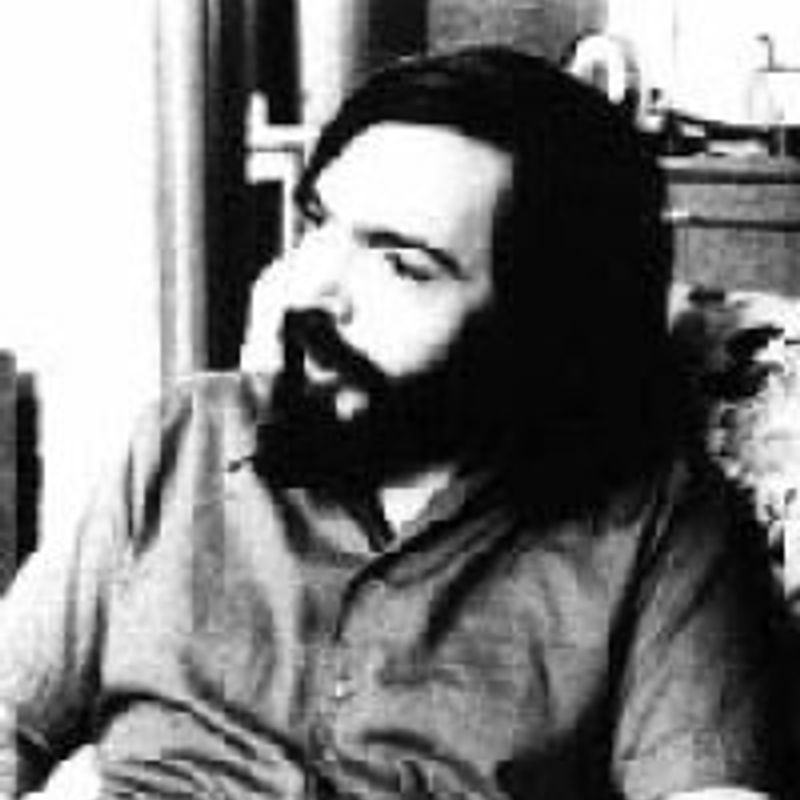
John Thomas Sladek
Born in Waverly, Iowa in 1937, Sladek was in England in the 1960s for the New Wave movement and published his first story in New Worlds. His first science fiction novel, published in London by Gollancz as The Reproductive System and in the United States as Mechasm, dealt with a project to build machines that build copies of themselves, a process that gets out of hand and threatens to destroy humanity. In The Müller-Fokker Effect, an attempt to preserve human personality on tape likewise goes awry, giving the author a chance to satirize big business, big religion, superpatriotism, and men's magazines, among other things. Roderick and Roderick at Random offer the traditional satirical approach of looking at the world through the eyes of an innocent, in this case a robot. Sladek revisited robots from a darker point of view in the BSFA Award winning novel Tik-Tok, featuring a sociopathic robot who lacks any moral "asimov circuits", and Bugs, a wide-ranging satire in which a hapless technical writer (a job Sladek held for many years) helps to create a robot who quickly goes insane. Sladek was also known for his parodies of other science fiction writers, such as Isaac Asimov, Arthur C. Clarke, and Cordwainer Smith. These were collected in The Steam-Driven Boy and other Strangers (1973). A strict materialist, Sladek subjected dubious science and the occult to merciless scrutiny in The New Apocrypha. Under the pseudonym of "James Vogh", Sladek wrote Arachne Rising, which purports to be a nonfiction account of a thirteenth sign of the zodiac suppressed by the scientific establishment, in an attempt to demonstrate that people will believe anything. In the 1960s he also co-wrote two pseudonymous novels with his friend Thomas M. Disch, the Gothic The House that Fear Built (1966; as "Cassandra Knye") and the satirical thriller Black Alice (1968; as "Thom Demijohn"). Another of Sladek's notable parodies is of the anti-Stratfordian citation of the hapax legomenon in Love's Labour's Lost "honorificabilitudinitatibus" as an anagram of hi ludi, F. Baconis nati, tuiti orbi, Latin for "these plays, F. Bacon's offspring, are preserved for the world, "proving" that Francis Bacon wrote the play. Sladek noted that "honorificabilitudinitatibus" was also an anagram for I, B. Ionsonii, uurit [writ] a lift'd batch, thus "proving" that Shakespeare's works were written by Ben Jonson. Sladek returned from England to Minneapolis, Minnesota[1] in 1986, where he lived until his death in 2000 from pulmonary fibrosis.
5 Livros
1 Seguidor
Iowa, Estados Unidos