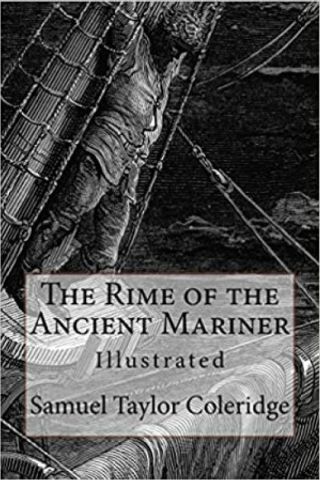
Coleridge's poem The Rime of the Ancient Mariner is wrote in a way that the reader is expected to temporarily allow him or herself to believe it to be able to understand it. The poem itself is about a Mariner who is telling his tale of sin and forgiveness by God to a man referred to as the "Wedding Guest." The Mariner is supposedly responsible for the death of all of the crew on his ship because of his killing of a creature which was to bring them the wind that they needed to put power into the sails of the ship. The whole point of the poem is to encourage or convince the reader to believe the tale that Coleridge tells. Coleridge wrote the poem as a means to induce the reader with what he calls a "willing suspension of disbelief." The poem is written in such a way that the reader is expected to willingly decide to temporarily believe the almost unbelievable story. The reason a person is to make sure that he or she believes it temporarily to be true is because the Mariner in the story is trying to get the point of forgiveness from God across to the reader and if the reader chooses not to believe the story behind the poem then they will not understand the effect of the point of the tale. Coleridge's main point in writing the story was to get people to understand forgiveness by understanding the poem. The Mariner in the poem is telling his tale to a "Wedding Guest" who has no choice but to listen and to believe. The "Wedding Guest" in the poem represents "everyman" in the sense that "everyone" is to be at the marriage of the Mariner to life. That is, the reader is to follow, live, and participate with the idea of the poem.
The Rime of The Ancient Mariner - And Other Poems
Coleridge
Dover Publications
2006
76 páginas
2h 32m
ISBN-10: 0486272664
Edições (4)
Ver mais


Resenhas (7)Ver mais
@psi.adriana.scarpin18/11/2024Resenhou um livro
40 curtidas
Estatísticas
Avaliações
4.3 / 70- 5 estrelas47%
- 4 estrelas29%
- 3 estrelas21%
- 2 estrelas1%
- 1 estrelas1%

Samuel Taylor Coleridge
Coleridge nasceu em Ottery St Mary, no condado inglês de Devonshire. Ele era o filho mais novo do segundo casamento do pastor protestante John Coleridge. Seu pai morreu em 1771 então Coleridge foi, contra sua vontade, estudar em colégios religiosos em Londres. Ele se destacava dentre os outros alunos pois era muito inteligente. Contudo, se sentia muito solitário e não tinha muito contato com a sua família. Desse modo, escreveu posteriormente o poema “Frost at Midnight”; este poema fala de sua situação nesse período. Em 1790 seu irmão Luke morre e um ano depois sua irmã Ann. Esses fatos fazem com que ele escreva “Monody” e é durante esse período também que ele começa a ter problemas com álcool e mulheres. Posteriormente, começa a fazer uso de ópio; droga que usava para aliviar as dores dos problemas de saúde. No ano de 1791 entra para Universidade de Cambridge e em 1792 ganhou um prêmio por uma ode que falava sobre o tráfico de escravos. Em 1793 ele se alista no exército usando um nome falso mas, devido a sua inaptidão com os deveres do exército, não foi enviado para lutar na França. Depois de quatro meses um de seus irmãos conseguiu que ele saísse do exército alegando insanidade. Enquanto estava na universidade, a qual nunca concluiu, Coleridge passou a defender ideais revolucionários com seu amigo o poeta Robert Southey. Eles escreveram “A queda de Robespierre”. Em 1795 Coleridge se casa com Sara Fricker, que era cunhada de Southey e com ela teve quatro filhos. Porém, eles acabam se divorciando. Também neste ano, Coleridge é apresentado a William Wordsworth e sua irmã Dorothy. Coleridge e Wordswoth escreveriam, posteriormente, muitos trabalhos juntos e seriam grandes amigos mesmo depois de uma briga que os afastou durante muito tempo. Em abril de 1796 Coleridge publica sua primeira coletânea, "Poemas sobre vários assuntos". E no final desse mesmo ano escreve e publica "Ode ao ano que se vai". Em 1797 começa a escrever "O velho marinheiro" e "Kubla Khan, uma visão". Recebeu do governo uma ajuda que o permitiu escrever mais outros poemas: "Geada à meia-noite", "Christabel", "Temores na solidão" e "O rouxinol”. Em 1798 foi publicado "Baladas líricas", que continha "O velho marinheiro" e outras três poesias de Coleridge e vinte de Wordsworth. No mesmo ano Coleridge faz uma viagem para Alemanha para se dedicar a estudos sobre metafísica voltando para Inglaterra no ano seguinte. Coleridge morreu aos 61 anos e foi enterrado no jardim da casa do farmacêutico dr. Gillman, em Highgate, no subúrbio de Londres, onde estava morando pois não conseguiu se livrar de seu vício no ópio. Lá ele terminou seu livro de prosa “Biographia Literaria (1817)”, além de outros escritos como “Sibylinne Leaves” (1817), “Aids to Reflection” (1825) e “Church and State” (1830).
10 Livros
19 Seguidores
Ottery St Mary, Inglaterra