A humanidade corre perigo. O meio natural é devastado sem piedade, o armamento nuclear continua, apesar de todos os protestos. A população aumenta desenfreadamente. E o desenvolvimento industrial, que parecia um bem, começa a sugar todas as forças da natureza. As tradições são abandonadas, a degradação genética provoca problemas de comportamento. E cada vez mais os homens se submetem a toda espécie de doutrinação, e perdem cada vez mais sua capacidade de sentir e amar. Esses são castigos pelos pecados da civilização, castigos que ameaçam o Homem e a Vida de extinção prematura. Todos somos vítimas e responsáveis. Quanto mais tarde a humanidade perceber esses perigos, menos tempo haverá para salvação. E como a humanidade, em princípio, é cada um de nós, ler este livro é uma obrigação.
Civilização e Pecado - Os oito erros capitais do homem moderno
Konrad Lorenz
Arte Nova
1974
140 páginas
4h 40m
ISBN-10: 3854474814
Português Brasileiro
Edições (1)
Ver mais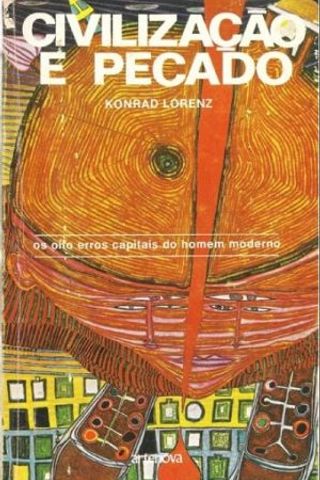
Estatísticas
Avaliações
3.8 / 12- 5 estrelas33%
- 4 estrelas42%
- 3 estrelas17%
- 2 estrelas0%
- 1 estrelas8%

Konrad Zacharias Lorenz
Konrad Zacharias Lorenz (German pronunciation: [ˈkɔnʁaːt ˈloːʁɛnts]; 7 November 1903 – 27 February 1989) was an Austrian zoologist, ethologist, and ornithologist. He shared the 1973 Nobel Prize in Physiology or Medicine with Nikolaas Tinbergen and Karl von Frisch. He is often regarded as one of the founders of modern ethology, developing an approach that began with an earlier generation, including his teacher Oskar Heinroth. Lorenz studied instinctive behavior in animals, especially in greylag geese and jackdaws. Working with geese, he investigated the principle of imprinting, the process by which some nidifugous birds (i.e. birds that leave their nest early) bond instinctively with the first moving object that they see within the first hours of hatching. Although Lorenz did not discover the topic, he became widely known for his descriptions of imprinting as an instinctive bond. In 1936 he met Dutch biologist Nikolaas Tinbergen, and the two collaborated in developing ethology as a separate sub-discipline of biology. A Review of General Psychology survey, published in 2002, ranked Lorenz as the 65th most cited scholar of the 20th century in the technical psychology journals, introductory psychology textbooks, and survey responses. Lorenz's work was interrupted by the onset of World War II and in 1941 he was recruited into the German army as a medic. In 1944 he was sent to the Eastern Front where he was captured and spent four years as a Soviet prisoner of war. After the war he regretted his membership in the Nazi party. Lorenz wrote numerous books, some of which, such as King Solomon's Ring, On Aggression, and Man Meets Dog, became popular reading. His last work "Here I Am - Where Are You?" is a summary of his life's work and focuses on his famous studies of greylag geese.
15 Livros
2 Seguidores
Vienna, Áustria-Hungria