Eclipse is a new open-source, Java-based, extensible development platform designed for nothing in particular but everything in general. Because of its roots, it is currently most popular as a Java integrated development environment (IDE). Eclipse ships with plugins for writing and debugging Java code. Additional plugins for more advanced Java development, such as JSP/servlets, are available from third parties. This book provides a thorough guide to using Eclipse features and plugins effectively in the context of real-world Java development. Realistic examples demonstrate how to use Eclipse effectively to build, test and debug applications using the tools provided by Eclipse and other third-party open source plugins. The reader will learn how to use plugin tools for using Eclipse in a team environment, including using Ant for more sophisticated build processes and CVS for source control. Plugin-ins for building web applications, using J2EE technologies, such as JSP/Servlets and EJB, are also discussed. Complementing this coverage of Eclipse in the context of development is a reference providing a comprehensive guide to Eclipse. Because Eclipse and its plugins provide a remarkable array of features, it is often hard to learn what features are available and how they can be invoked. This reference lays things out clearly: feature-by-feature, menu-by-menu. What's inside: Getting started with the Eclipse Workbench: Perspectives, views and editors Working effectively with the Eclipse JDT Adding unit tests with JUnit, logging with log4j Team development with Ant and CVS Plugins for J2EE including the Sysdeo Tomcat plugin Developing Eclipse plugins Comprehensive Eclipse reference About the technology Eclipse is a new open-source, Java-based, extensible development platform designed for nothing in particular but everything in general. Because of its roots, it is currently most popular as a Java integrated development environment (IDE). Eclipse ships with plugins for writing and debugging Java code. Additional plugins for more advanced Java development, such as JSP/servlets, are available from third parties. About the book This book provides a thorough guide to using Eclipse features and plugins effectively in the context of real-world Java development. Realistic examples demonstrate how to use Eclipse effectively to build, test and debug applications using the tools provided by Eclipse and other third-party open source plugins. The reader will learn how to use plugin tools for using Eclipse in a team environment, including using Ant for more sophisticated build processes and CVS for source control. Plugin-ins for building web applications, using J2EE technologies, such as JSP/Servlets and EJB, are also discussed. Complementing this coverage of Eclipse in the context of development is a reference providing a comprehensive guide to Eclipse. Because Eclipse and its plugins provide a remarkable array of features, it is often hard to learn what features are available and how they can be invoked. This reference lays things out clearly: feature-by-feature, menu-by-menu.
Eclipse in Action - A Guide for Java Developers
David Gallardo, Ed Burnette, Robert McGovern
Manning
2003
416 páginas
13h 52m
ISBN-13: 9781930110960
Edições (1)
Ver mais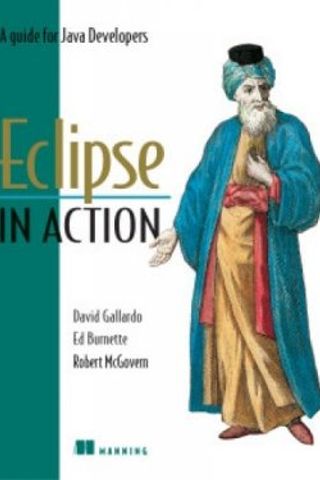
Estatísticas
Avaliações
5 / 1- 5 estrelas100%
- 4 estrelas0%
- 3 estrelas0%
- 2 estrelas0%
- 1 estrelas0%