Few things promise us greater happiness than our relationships – yet few things more reliably deliver misery and frustration. Our error is to suppose that we are born knowing how to love and that managing a relationship might, therefore be intuitive and easy. This book starts from a different premise: that love is a skill to be learnt, rather than just an emotion to be felt. It calmly and charmingly takes us around the key issues of relationships, from arguments to sex, forgiveness to communication, making sure that success in love need never again be just a matter of luck.
Relationships -
The School of Life
The School of Life
2016
93 páginas
3h 6m
ISBN-10: B01N5B2JUJ
Edições (1)
Ver mais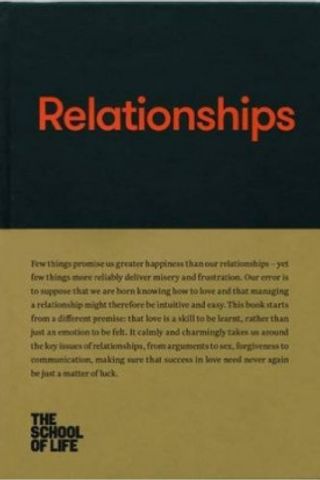
Resenhas (1)Ver mais

Felipe Moitta08/02/2017Resenhou um livro
Relationships
1. Post-Romanticism Our loves unfold against a cultural backdrop that creates a powerful sense of what is ‘normal’ in love; it subtly directs us as to where we should place our emotional emphases, it teaches us what to value, how to approach conflicts, what to get excited about, when to tolerate and what we can be legitimately incensed by. Love has a history and we ride – sometimes rather helplessly – on its currents. We need to replace the Romantic template with a psychologically mature vision of love we might call Classical, which encourages in us a range of unfamiliar but hopefully effective attitudes: – It is normal that love and sex may not always belong together. – Discussing money early on, upfront, in a serious way, is not a betrayal of love. – Realising that we are rather flawed, and our partner is too, is of huge benefit to a couple in increasing the amount of tolerance and generosity in circulation. – We will never find everything in another person, nor they in us, not because of some unique flaw, but because of the way human nature works. – We need to make immense and often rather artificial-sounding efforts to understand one another; that intuition can’t get us to where we need to go. – Spending two hours discussing whether bathroom towels should be hung up or can be left on the floor is neither trivial nor unserious, and there is a special dignity around laundry and time-keeping. 2. Object Choice But there’s another school of thought, this one influenced by psychoanalysis, which challenges the notion that instinct invariably draws us to those who will make us happy. The theory insists that we don’t fall in love first and foremost with those who care for us in ideal ways, we fall in love with those who care for us in familiar ways. Adult love emerges from a template of how we should be loved that was created in childhood and is likely to be entwined with a range of problematic compulsions that militate in key ways against our chances of growth. We may believe we are seeking happiness in love, but what we are really after is familiarity. We are looking to recreate, within our adult relationships, the very feelings we knew so well in childhood – and which were rarely limited to just tenderness and care. The love most of us will have tasted early on was confused with other, more destructive dynamics: feelings of wanting to help an adult who was out of control, of being deprived of a parent’s warmth or scared of his or her anger, or of not feeling secure enough to communicate our trickier wishes. How logical, then, that we should as adults find ourselves rejecting certain candidates not because they are wrong but because they are a little too right – in the sense of seeming somehow excessively balanced, mature, understanding and reliable – given that, in our hearts, such rightness feels foreign and unearned. We chase after more exciting others, not in the belief that life with them will be more harmonious, but out of an unconscious sense that it will be reassuringly familiar in its patterns of frustration. Psychoanalysis doesn’t wish to suggest that everything about our attractions will be deformed. We may have quite legitimate aspirations to positive qualities: intelligence, charm, generosity … But we are also liable to be fatefully drawn towards trickier tendencies: someone who is often absent, or treats us with a little disdain, or needs to be surrounded all the time by friends, or cannot master their finances. However paradoxical it can sound, without these tricky behaviours we may simply not be able to feel passionate or tender with someone. Alternatively, we may have been so traumatised by a parental figure that we cannot approach any partner who shares qualities with them of any kind, even ones disconnected from their negative sides. We might, in love, be rigidly intolerant of anyone who is intelligent, or punctual or interested in science, simply because these were the traits of someone who caused us a great deal of difficulty early on. To choose our partners wisely, we need to tease out how our compulsions to suffering or our rigid flights from trauma may be playing themselves out in our feelings of attraction. A useful starting place is to ask ourselves (perhaps in the company of a large sheet of paper, a pen and a free afternoon) what sort of people really put us off. Revulsion and disgust are useful first guides because we are likely to recognise that some of the traits that make us shiver are not objectively negative and yet feel to us distinctly off-putting. We might, for example, sense that someone who asks us too much about ourselves, or is very tender or dependable, will seem eerie and boring. And we might equally well, along the way, recognise that a degree of cruelty or distance belong to an odd list of the things we appear genuinely to need in order to love. It can be tricky to avoid self-censorship here, but the point isn’t to represent ourselves as reassuring, predictable people, but to get to know the quirks of our own psyches. We’ll tend to find that some ostensibly pretty nice things are getting caught in our love filters: people who are eloquent, clever, reliable and sunny can set off loud alarms. We should pause and try to fathom where the aversions come from, what aspects of our past have made it so hard for us to accept certain sorts of emotional nourishment. Getting to know the past, we come to recognise our earlier associations for what they are: generalisations we formed – entirely understandably – on the basis of just one or two, hugely impressive, examples. We’ve unknowingly turned some local associations into strict rules for relationships. Even if we can’t radically shift the pattern, it’s useful to know that we are carrying a ball and chain. It can make us more careful of ourselves when we feel overwhelmed by a certainty that we’ve met the one after a few minutes chatting at the bar. Ultimately, we stand to be liberated to love different people to our initial ‘types’, because we find that the qualities we like, and the ones we very much fear, are found in different constellations from those we encountered in the people who first taught us about affection, long ago in a childhood we are starting at last to understand and free ourselves from. 3. Transference Relationships are filled with curious moments where one or the other partner appears to ‘overreact’ to a situation. These moments may quickly descend into bitter arguments, where the overreaction by one lover sets off a stern and heated response in the other. There may be very little search for understanding – and even less expenditure of generosity and sympathy. That’s because we seldom recognise these overreactions for what they really are: garbled manifestations of a partner’s tricky past that has not been fully understood or mutually discussed. It turns out that one of the keys to living successfully with another person can be to grasp just how much of a role the ‘transference’ of past fears and anxieties plays in all of our behaviours. For all of us, there are situations and behaviours which can be counted upon to elicit swift and powerful responses which don’t seem in any way in line with what is happening right now. Our behaviour seems not to fit what is unfolding in front of us. These sorts of behaviours don’t make any sense if we try to justify them simply according to the facts in the here and now (as we and their perpetrators are inclined to do). The clue to them lies in something known as transference – a psychological phenomenon whereby a situation in the present elicits from us a response – generally extreme, intense or rigid in nature – that we cobbled together in childhood to meet a threat that we were at that time too vulnerable, immature and inexperienced to cope with properly. We are drawing upon an old defence mechanism to respond to what feels like a very familiar threat. In most of our pasts, when our powers of comprehension and control were not yet properly developed, we faced difficulties so great that our capacities for poise, calm and trust suffered grievous damage. In relation to certain issues, we were warped. We grew up preternaturally nervous, suspicious, hostile, sad, closed, furious or touchy – and are at risk of becoming so once again whenever life puts us in a situation that is even distantly evocative of our earlier troubles. Perhaps a parent we loved left us for long periods to work abroad. They didn’t mean to but the pain was so intense at that time that we reacted by shutting down our capacities for affection. Our way of coping was not to feel, to grow numb – a response that we keep producing even now, thirty years later, whenever someone we love has to go away for a time. Or perhaps we had chaotic, unreliable parents, whom we dealt with by rigidly organising our room, arranging books by size, and reacting with alarm at the slightest bit of dust – and even now, outer disorder can usher in a panicky feeling within that everything is out of control once again. Or we had a sister who was always late to events that mattered to us, or a mother who was both humiliating and obsessed by fashion. The unconscious mind is slow to realise that things have changed in the outer world but sadly quick to mistake one person for another, seeming to judge only by crude correspondences; ‘someone we love’ or ‘a person coming to our party’ appears to be enough to confuse us. Because transference happens without us knowing it, we generally can’t explain why we are behaving as we are. The concept of transference provides a vantage point on some of the most frustrating behaviours that we ever have to meet with in relationships – and it allows us to feel sympathy and understanding where we might have only felt irritation. If we cannot always be entirely sane in our relationships, the kindest thing we can do for those who care about us is to hand over some maps that try to chart and guide others through the more disturbed regions of our internal world. A third transference exercise asks us to say the first thing that comes to mind when we try to finish particular sentences. For example: Men in authority are generally … Young women are almost always … When I am promoted, what’s bound to happen is … When someone is late, it must be because … When I hear someone described as ‘very intellectual’, I imagine them being Transference is not – as yet – an idea we normally employ as we try to make sense of some of the more difficult aspects of life around another person. That’s because, unfortunately, transference doesn’t announce itself to us as it should. The task of growing up is to realise with due humility the exaggerated dynamics we may be bringing to situations and to monitor ourselves more accurately and more critically so as to improve our capacity to judge and act on situations with greater fairness and neutrality. 4. The Problems of Closeness In order to survive in the world, we have little option but to spend our lives being rather ‘defended’, that is, at one remove from our more vulnerable sides, closed off from certain emotions, focused – in many cases – on not feeling. And yet in relationships, quite the opposite is required. To be good at love means to have a capacity to reveal one’s hurt, desire and tenderness; to know how to be dependent and ready to surrender one’s autonomy to another. It’s quite a balancing act: great strength for most hours of the day, well-handled tenderness for the few that remain. It should be no wonder if the journey from independence to vulnerability can get rather fraught – and if the desire for closeness can be accompanied by terror and what looks like (but isn’t really) nastiness. the need for, yet fear of, rejection never ends. It continues, even in quite sane people, on a daily basis, with frequently difficult consequences – chiefly because we refuse to pay it sufficient attention and aren’t trained to spot its counter-intuitive symptoms in others. We haven’t found a stigma-free, winning way to keep admitting just how much reassurance we need. The trigger to insecurity can be apparently minuscule. Perhaps the other has been away at work for unusual amounts of time; or they were pretty animated talking to a stranger at a party; or it’s been a while since sex took place. Perhaps they weren’t very warm to us when we walked into the kitchen. Or they’ve been rather silent for the last half an hour. Even after years with someone, there can be a hurdle of fear about asking for proof that we are wanted. But with a horrible, added complication: we now assume that any such anxiety couldn’t possibly exist. This makes it very difficult to recognise our feelings, let alone communicate them to others in ways that would stand a chance of securing us the understanding and sympathy we crave. Rather than requesting reassurance endearingly and laying out our longing with charm, we might instead mask our needs beneath some brusque and hurtful behaviours guaranteed to frustrate our aims. Within established relationships, when the fear of rejection is denied, two major symptoms tend to show up. Firstly, we may get distant – or what psychotherapists call ‘avoidant’. Or else we get controlling (what therapists call ‘anxious’). We feel our partners are escaping us emotionally, and respond by trying to pin them down administratively. We get unduly cross that they are a bit late, we chastise them heavily for not having done certain chores, we ask them constantly if they’ve completed a task they had agreed to undertake. All this, rather than admit: ‘I’m worried I don’t matter to you …’ We should have sympathy for ourselves. Relationships require us to put ourselves in a very weak position vis-à-vis our partners, which can make us fumble for a show of strength and invulnerability. On the surface, both the anxious and avoidant patterns of behaviour are horrible. In such states the person seems to be saying: ‘I don’t care about you’ or ‘I’m a controlling monster’. But the controlling or distant person is trying, via their actions, to say something quite different. The deep message is: ‘I’m terrified you don’t care about me’; ‘I’m worried you don’t love me enough to go easy on my sore spots, so I’m putting on some armour or making a pre-emptive strike’. If we’re going to deal a bit better with the very common (and difficult) responses to intimacy, we have to start by looking with calm honesty at ourselves. A good question to ask is: What do we characteristically do when we need someone but aren’t able to reach them? Do we withdraw, attack or – this is so rare – explain our requirements in an un-frightened way? The hopeful move is that we can learn to recognise our own and our partner’s typical defensive manoeuvres in our calmer moods. The central solution to all this trouble is to normalise a new and more accurate picture of emotional functioning: to make it clear just how healthy and mature it is to be fragile and in repeated need of reassurance – and at the same time, how difficult it is to reveal one’s vulnerable dependence. We suffer because adult life posits too robust a picture of how we operate. It tries to teach us to be implausibly invulnerable. It suggests it might not be right to want a partner to show us they still really like us after they have been away for only a few hours. Or to want them to reassure us that they haven’t gone off us – just on the basis that they haven’t paid us much attention at a party and didn’t want to leave when we did. But it is precisely this sort of reassurance that we often stand in need of. We can never be through with the requirement for acceptance. This isn’t a curse limited to the weak and the inadequate. Insecurity is, in this area, a sign of well-being. It means we haven’t allowed ourselves to take other people for granted. It means we remain realistic enough to see that things could genuinely turn out badly – and are invested enough to care. We should create room for regular moments, perhaps as often as every few hours, when we can feel unembarrassed and legitimate about asking for confirmation. ‘I really need you; do you still want me?’ should be the most normal of enquiries. We should uncouple the admission of need from any associations with the unfortunate and punitively macho term ‘neediness’. We must get better at seeing the love and longing that lurk behind some of our and our partner’s most frosty, managerial and brutish moments. 5. The Weakness of Strength The failings of our lovers can be deeply galling. We got close to them because of their skills and merits – but after a while it can be the disappointing sides of their personalities that dominate our view of them. We look upon their faults and wonder again and again why they are the way they are. Why so slow? Why so unreliable? How can they be so bad at explaining things or telling an anecdote? Why can’t they face bad news straight on? Even worse, we feel they could change – if only they really wanted to, if only they weren’t so mean … It’s at moments of particular agitation that we need to remember The Weakness of Strength theory. This dictates that we should always strive to see people’s weaknesses as the inevitable downside of certain merits that drew us to them, and from which we will benefit at other points (even if none of these benefits are apparent right now). What we’re seeing are not their faults, pure and simple, but rather the shadow side of things that are genuinely good about them. The theory goes like this: every strength that an individual has necessarily brings with it a weakness of which it is an inherent part. It is impossible to have strengths without weaknesses. Every virtue has an associated weakness. Not all the virtues can belong together in a single person. We may well find people with different strengths, but they will also have a new litany of weaknesses. It’s always calming to take a moment to remind ourselves that perfect people simply don’t exist. 6. Partner-As-Child Small children sometimes behave in stunningly unfair and shocking ways: they scream at the person who is looking after them, angrily push away a bowl of animal pasta, throw away something you have just fetched for them. But we rarely feel personally agitated or wounded by their behaviour. And the reason is that we don’t assign a negative motive or mean intention to a small person. We reach around for the most benevolent interpretations. We don’t think they are doing it in order to upset us. We probably think that they are getting a bit tired, or their gums are sore or they are upset by the arrival of a younger sibling. We’ve got a large repertoire of alternative explanations ready in our heads – and none of these lead us to panic or get terribly agitated. This is the reverse of what tends to happen around adults in general, and our lovers in particular. But if we employed the infant model of interpretation, our first assumption would be quite different: maybe they didn’t sleep well last night and are too exhausted to think straight; maybe they’ve got a sore knee; maybe they are doing the equivalent of testing the boundaries of parental tolerance. Seen from such a point of view, the lover’s adult behaviour doesn’t magically become nice or acceptable. But the level of agitation is kept safely low. It’s very touching that we live in a world where we have learned to be so kind to children: it would be even nicer if we learned to be a little more generous towards the childlike parts of one another. A central premise of the Partner-As-Child theory is that it is not an aberration or unique failing of one’s partner that they retain a childish dimension. It’s a normal, inevitable, feature of all adult existence. You are not desperately unlucky to have hitched yourself to someone who is still infantile in many ways. Adulthood simply isn’t a complete state; what we call childhood lasts (in a submerged but significant way) all our lives. We need to imagine the turmoil, disappointment, worry and sheer confusion in people who may outwardly appear merely aggressive. 7. Loving and Being Loved We speak of ‘love’ as if it were a single, undifferentiated thing, but in truth it comprises two very different modes: being loved and loving. Part of getting better at relationships means growing a little readier to do the latter and a little more aware of our unnatural and dangerous fixation on the former. 8. The Dignity of Ironing All the great Romantic writers were – in their different ways – deeply interested in what might make it hard for a relationship to go well. Yet there has always been something major missing from their list. There has never been much interest in any of the challenges that fall within the realm of what we can call the ‘domestic’, a term that captures all the practicalities of living together and extends across a range of small but crucial issues, including who one should visit at the weekend, what time to go to bed, how often one should have friends over for dinner and who should buy detergent. When a problem has high prestige, we are ready to expend energy and time trying to resolve it. This respect leads to an unexpected but crucial consequence. We don’t panic around the challenges because we understand the difficulty of what we are attempting to do. We are a lot calmer around prestigious problems. It’s problems that feel trivial or silly but nevertheless take up sections of our lives that drive us to heightened states of agitation. Such agitation is precisely what the Romantic neglect of domestic life has unwittingly encouraged: its legacy is overhasty conversations about the temperature of the bedroom and curt remarks about the right channel to watch, matters which can – over years – spell an end to love. In the arts, we acknowledge that small things – details – are densely packed with significance. Domestic details, too, look small but carry big important ideas. It might sound very odd at first to make the comparison, but the objects of domestic agitation are very like works of art: they condense complex meaning into tightly packed symbolic details. We might typically associate panic with the presence of a difficult task or an urgent demand. But that’s not quite right. What actually causes panic is a difficulty that hasn’t been budgeted for or a demand that one has not been trained or prepared to meet. The road to calmer relationships therefore isn’t necessarily about removing points of contention. It’s rather about assuming that they are going to happen and that they will inevitably require quite a lot of time and thought to address. If we admit that sharing a space and a life is very difficult – and yet very important and worthwhile – we come to conflicts with a very different attitude. 9. Teaching and Learning The Greeks took the view that love is not an obscure emotion. Loving someone is not an odd chemical phenomenon indescribable in words. It just means being awed by another person for all the sort of things about them that truly are right and accomplished. Do we not ourselves aspire to change and improvement? Then why blame them for wanting from us what we at heart want from ourselves? At this point, the Greek idea of love turns to a notion to which we desperately need to rehabilitate ourselves: education. For the Greeks, given that we are all very imperfect, part of what it means to deepen love is to want to teach – and to be taught. Two people should see a relationship as a constant opportunity to improve and be improved. When lovers teach each other uncomfortable truths, they are not giving up on love. They are trying to do something very true to love: which is to make their partners more loveable. We should stop feeling guilty for simply wanting to change our partners, and we should never resent our partners for simply wanting to change us. Both these projects are, in theory, highly legitimate, even necessary. The desire to put one’s lover right is, in fact, utterly loyal to the essential task of love – to help another person to become the best version of themselves. Unfortunately, under the sway of Romantic ideology, most of us end up being terrible teachers and equally terrible students. That’s because we don’t accept that it’s honest (let alone noble) to have things we might want to teach and areas where we might need to be taught. We should never feel ashamed of instructing or of needing instruction. The only fault is to reject the opportunity for education if it is offered – however clumsily. Love should be a nurturing attempt by two people to reach their full potential – never just a crucible in which to look for endorsement for all one’s present failings. 10. Pessimism Our lives are powerfully affected by a special quirk of the human mind to which we rarely pay much attention. We are creatures deeply marked by our expectations. We go around with mental pictures, lodged in our brains, of how things are supposed to go. We may hardly even notice we’ve got such phantasms. But expectations have an enormous impact on how we respond to what happens to us. They are always framing the way we interpret the events in our lives. It’s according to the tenor of our expectations that we will deem moments in our lives to be either enchanting or (more likely) profoundly mediocre and unfair. What drives us to fury are affronts to our expectations. There are plenty of things that don’t turn out as we’d like but don’t make us livid either. When a problem has been factored into our expectations, calm is never endangered. We may be sad, but we aren’t screaming. Unfortunately, our expectations are never higher, and therefore more troubling, than they are in love. It’s always very tempting to console ourselves with an apparently very reasonable thought: the reason it didn’t work out this time was not that the expectations were too high, but that we directed them onto the wrong person. No one can disappoint and upset us as much as the person we’re in a relationship with – for of no one do we have higher hopes. It’s because we are so dangerously optimistic that we call them a cunt, a shithead or a weakling. The intensity of the disappointment and frustration is dependent on the prior massive investment of hope. It’s one of the odder gifts of love. So a solution to our distress and agitation lies in a curious area: with a philosophy of pessimism. As a relationship developed, we then wouldn’t get hurt when our partner made some wildly inaccurate assumptions about our needs or preferences. We’d have been assuming that this would be coming along pretty soon – just as we don’t take it remotely amiss if an acquaintance recommends a film we detest: we know they couldn’t know. It doesn’t bother us at all. Our expectations are set at a reasonable level. Every relationship will necessarily involve the discovery of a huge number of areas of divergence. It will feel as if you are growing apart and that the precious unity you knew during the weekend in Paris is being destroyed. But what is happening should really be seen under a much less alarming description: disagreement is what happens when love succeeds and you get to know someone close up across the full range of their life. 11. Blame and Love The only person to whom we can expose the multiple grievances we accumulate is the person who is closest to us: the one we love. This blessed person becomes the recipient of all of our accumulated rage at the injustice and imperfections of our lives. It is of course the height of absurdity to blame them. But this is to misunderstand the rules under which love operates. We simply cannot and therefore don’t usually get angry with the people who are really to blame for hurting us. Rather, we get angry with those whom we can be sure will tolerate us for blaming them. When we blame our partners, we are remembering what it felt like when we loved a parent who could effortlessly swing us up to the ceiling, who knew everything, who could find rabbit when it got lost, who always held the tickets and the passports, who ensured there was invariably food in the fridge, who controlled the world … The partner, when loved, inherits a little of that beautiful, romantic, dangerous, unfair, trust we as children once had in our parents. At one level, the lover has learned how to reassure the anxious child in us – that’s why we love them. But that source of strength also brings with it some very serious problems, for the primitive part of us insists on trusting them a little too much, believing that they actually control far more of existence than they possibly could. Irrational blame is at heart just a symptom of an intensity of investment in another person. We attack because we have richly entangled our deepest dreams and anxieties with our lover. It is because we are so very close to them that they draw us into very private zones of turbulence and distress – from which absolutely everyone else is excluded. That is one of the stranger, more unfortunate and yet (from a very calm angle) almost flattering gifts of love. 12. Politeness and Secrets It is ultimately no great sign of kindness to insist on showing someone one’s entire self at all times. Repression, a certain degree of restraint and a dedication to editing one’s pronouncements, belongs to love as much as a capacity for explicit confession. We should learn from the art of diplomacy, the discipline of not necessarily always spelling out what one thinks and not doing what one wants, in the service of greater, more strategic ends. It is assigning too great a weight to all our feelings to let them always be the lodestars by which our lives must be guided. We are chaotic chemical propositions in dire need of basic principles to which we can adhere during our brief rational spells. 13. Explaining One’s Madness all of us are both deeply mysterious (to ourselves and to others) and also in many ways so eccentric and so intriguingly disturbed that it would be quite appropriate to use the word ‘mad’ to sum up our nature. Furthermore, this theory argues that quite the kindest thing we can do for another person is to lay out with patience and imagination, ahead of any particular conflict or agitation, what one’s particular patterns of disturbance and difficulty might actually be. A successful relationship always needs to be accompanied by a lot of explaining. This isn’t because we are especially strange, but simply because everyone emerges as puzzling and warped at close quarters. We have tendencies, desires, inclinations, enthusiasms, habits of mind and psychological zones that are very obscure. They stem from the strange interplay of the many factors which have shaped who we are: our unique intimate history of traumas, excitements, fears, influences, opportunities, misfortunes, talents and weaknesses. Properly seen, though, our madder parts are not actually bad or vile. They are just unusual and at odds with the normal picture of what an adult is normally meant to be like. But if seen generously, it’s clear that they are not actually mean or cruel. The priority is therefore to try as best we can to help our partner make sense of us. To be tolerable, we don’t need to be entirely sane, we just need to hand out – in a good-natured and unhostile way – accurate maps of one’s disturbances to one’s partner. At the heart of much comedy is a brilliant act of explanation. The makers latch onto a character who normally would seem weird and off-putting, but they guide us to see that they don’t need to be viewed that way. Instead of covering up or condemning the oddities, they explore the ongoing possibilities for love amidst the maddening flaws of human nature. For relationships to survive, it appears we too must take on – at key moments – some of the underlying perspectives of a great comedy writing team. 14. Artificial Conversations At heart, sulking combines intense anger with an intense desire not to communicate what one is angry about: one both desperately wants to be understood and yet is utterly committed to not explaining oneself plainly. It happens a lot, and it’s telling us that, far from being easy and natural, good discussion in a relationship can be very hard to manage. Good communication means the capacity to give another person an accurate picture of what is happening in our emotional and psychological lives – and in particular, the capacity to describe our very darkest, trickiest and most awkward sides in such a way that others can understand and even sympathise with us. The good communicator has the skill to take their beloved, in a timely, reassuring and gentle way, without melodrama or fury, into some of the trickiest areas of their personality and warn them of what is there (like a tour guide to a disaster zone), explaining what is problematic in such a way that the beloved will not be terrified, can come to understand, can be prepared and may perhaps forgive and accept. We’re not naturally skilled at these kinds of conversations because there is so much inside of us that we can’t face up to, feel ashamed of or can’t quite understand – and we are therefore in no position to present our depths sanely to an observer whose affections we want to maintain. Perhaps you have completely wasted the day on the internet. Or you are feeling sexually restless and drawn to someone else. Or you are in a vortex of envy for a colleague who seems to be getting everything right at work. Or you’re feeling overwhelmed by regret and self-hatred for some silly decisions you took last year (because you crave applause). Or maybe it’s a terror of the future that has rendered you mute: everything is going to go wrong. It’s over. You had one life – and you blew it. There are things inside of us that are simply so awful, and therefore so undigested, that we cannot – day-to-day – lay them out before our partners in a way that they can grasp them calmly and generously. It is no insult to a relationship to realise that there’s a shortfall of mutual eloquence and that this will probably require some level of artificiality. Our need for assistance is often especially acute around anger, desires that seem strange and the need for reassurance (which tends to arise when one feels one doesn’t especially deserve it). We should not feel that we are failures, dull-witted, unimaginative or unsophisticated if we recognise a need to learn how to talk to our partners with premeditation and conscious purpose. We are simply emerging from a Romantic prejudice against doing so. An artificial conversation can sound like quite a strange idea. But what it involves is deliberately setting an agenda and putting a few useful moves and rules into practice. Over dinner with a partner, we might – for example – work our way gradually yet systematically through a list of difficult but important questions that we’d otherwise likely shelve or not find our way to: – What would you most like to be complimented on in the relationship? – Where do you think you’re especially good as a person? – Which of your flaws do you want to be treated more generously? – What would you tell your younger self about love? – What do you think I get wrong about you? – What is one incident you’d like me to apologise for? – Can I ask you to apologise for an incident too? – How have I let you down? – What would you want to change about me? – If I was magically offered a chance to change something about you, what do you guess it would be? – If you could write an instruction manual for yourself in bed, what would you put in it? (Both take a piece of paper and write down three new things you would like to try around sex. Then exchange drafts). Another thing we can do with a partner is to finish these sentence stems about our feelings towards one another – the idea is to finish them very fast without thinking too hard. What emerges isn’t of course a final statement. But it helps to get awkward material into the light of day, so that it can be examined properly. I resent… I am puzzled by … I am hurt by … I regret … I am afraid that … I am frustrated by … I am happier when … I want … I appreciate … I hope … I would so like you to understand … Part of the artifice here is to agree in advance not to be offended by what the other says, though some of what comes up is bound to be at the very least disconcerting. The idea is to set up an occasion on which for once it is possible to look carefully at genuinely awkward aspects of what’s going on in the couple. The helpful background assumption is that we can’t have a close relationship without there being a lot of sore spots on both sides. We’re not (for a bit) going to be angry with one another. We’re going to try to get to know what’s happening. We might also try out an exercise of fleshing out some sequences: When I am anxious in our relationship, I tend to … You tend to respond by …, which makes me … When we argue, on the surface I show …, but inside I feel … The more I …, the more you …, and then the more I … We’re trying to identify repeated sequences of emotions, not to validate or condemn them but to understand. The premise of this artificial conversation is that (for the duration of the conversation) no one is held to blame. We’re just learning to notice some problems with how we interact. Relationships founder on our inability to make ourselves known, forgiven and accepted for who we are. We shouldn’t work with the assumption that if we have a row over these questions, the opportunity has been wasted. We need to be able to say certain painful things in order to recover an ability to be affectionate and trusting. That is all part of the particular wisdom and task of regularly having more artificial, structured and uncensored conversations. 15. Crushes The error of the crush is subtler; it lies in how easily we move from spotting a range of genuinely fine traits of character to settling on a recklessly naive romantic conclusion: that the other across the train aisle or pavement constitutes a complete answer to our inner emotional needs. The primary error of the crush lies in overlooking a central fact about people in general, not merely this or that example, but the species as a whole: that everyone has something very substantially wrong with them once their characters are fully known, something so wrong as to make an eventual mockery of the unlimited rapture unleashed by the crush. We can’t yet know what the problems will be, but we can and should be certain that they are there, lurking somewhere behind the facade, waiting for time to unfurl them. Maturity doesn’t suggest we give up on crushes. Merely that we definitively give up on the founding Romantic idea upon which the Western understanding of relationships and marriage has been based for the past 250 years: that a perfect being exists who can solve all our needs and satisfy our yearnings. We need to swap the Romantic view for the tragic awareness, which states that every human can be guaranteed to frustrate, anger, annoy, madden and disappoint us – and we will (without any malice) do the same to them. There can be no end to our sense of emptiness and incompleteness. This is a truth chiselled indelibly into the script of life. Choosing whom to commit ourselves to is therefore merely a case of identifying which particular variety of suffering we would most like to sacrifice ourselves for, rather than an occasion on which to hope miraculously to escape from grief. 16. Sexual Non-Liberation This narrative of enlightenment and progress, however flattering it may be to the modern age, conveniently skirts an immovable fact: we remain hugely conflicted, embarrassed, ashamed and odd about sex. Sex refuses to match up simply with love and remains as difficult a subject as ever, with one added complication: it’s meant to be so simple. In reality, none of us approaches sex as we are meant to, with the cheerful, sporting, non-obsessive, clean, loyal, well-adjusted outlook that we convince ourselves is the norm. We are universally odd around sex – but only in relation to some highly and cruelly distorted ideals of normality. Most of what we are sexually remains very frightening to communicate to anyone whom we would want to think well of us. People in love constantly, instinctively hold back from sharing more than a fraction of their desires and tastes out of a fear, not without foundation, of generating intolerable disgust in their partners. In the choice between being loved and being honest, most of us choose the former. But we are then burdened by a sexuality which refuses to stop haunting us. We suffer and yet may find it easier to die without having had certain conversations. The priority seems evident: to find a way to talk to ourselves and our partners about who we are, and to tell one another (without setting off catastrophic panic, offence or fear) what sex really makes us want. At the heart of the dilemma is how simultaneously to appear normal – and yet achieve honesty about our sexual appetites. Our commitment to normality is important and touching. It means being (or at least trying very hard to be) patient, gentle, considerate, democratic, intelligent and devoted to treating people with respect and loyalty. And yet our sexual imaginations will always refuse to bow to normative parameters. That we have to endure this searing division is the direct legacy of Romanticism, for Romanticism blithely insisted that sex could be a beautiful, clean and natural force utterly in sympathy with love. It might be passionate at times, but it was at heart kindly, tender, sweet and filled with affection for a single person. This sounds charming – and once in a while, for a bit, it is even true. But it woefully neglects some critical components of erotic excitement – and can’t help but leave us deeply embarrassed about most of what we want. To start the list, here are just some of the unpalatable truths that stir in our minds: – It’s very rare to maintain sexual interest in only one person, however much one loves them, beyond a certain time. – It’s entirely possible to love one’s partner and regularly want to have sex with strangers, and frequently types with nothing particularly to recommend them. – One can be kind, respectable and democratic and at the same time want to flog, hurt and humiliate a sexual partner, or be on the receiving end of very rough treatment. – It’s highly normal to have bisexual and incestuous fantasies – and to want to explore extreme taboos involving illegal, violent, hurtful and unsanitary scenarios. – It may be easier to be excited by someone one dislikes or thinks nothing of than by someone one loves. These aren’t just points of mild curiosity. They are fundamentals of the human sexual personality that stand in shocking contrast to everything that society suggests is true. The moment orgasm is over, many a nice person can be spooked by the need to effect a very drastic switch in their value-system. Despite our best efforts to clean it of its peculiarities, sex can’t be nice in the ways we might like it to be. It is not fundamentally democratic or kind; it is bound up with cruelty, disloyalty, transgression and the desire for subjugation and humiliation. It refuses to sit neatly on top of love, as we would so like it to. Tame it though we may try, our desires remain in absurd, and irreconcilable, conflict with many of our highest commitments and values. We need to admit to ourselves that whatever the rhetoric and self-congratulation, sexual liberation has never in fact happened. Properly understood, it is about more than the ability to wear a bikini. We remain imprisoned, fearful and ashamed – with few options but to deceive for the sake of love. True liberation is a challenge that remains before us, as we patiently build up the courage to admit to the nature of our desires and to learn to talk to our loved ones with pioneering honesty about the contents of our own minds – starting, perhaps (with the help of these words), tonight … 17. The Loyalist and the Libertine At the heart of both the Libertine and Loyalist position lies a shared error. It is the belief that one or other of them is right and that if only the relationship could be built around their particular vision of life, mutual happiness would follow. The painful fact, however, is that both avenues are somewhat catastrophic. The demands of fidelity really do involve the loss of energising, life-enhancing encounters with a range of sincerely thrilling people. Monogamy really is at times maddening and suffocating. Yet the option of infidelity, for all its charms, really does undermine trust and security, which are crucial to the functioning of a relationship and the mental health of the next generation. The painful fact is there is no answer to the Libertine-Loyalist dilemma, if what one means by an ‘answer’ is a cost-free settlement in which no party suffers a loss, and in which every positive element can coexist with every other, without either causing or sustaining grievous damage. There is wisdom on both sides; and therefore each side must involve loss. There is, in a sense, only one answer of sorts, and it can be called the Melancholy Position, because it confronts the sad truth that in certain key areas of human existence, there simply are no good solutions. 18. Celibacy and Endings The view was just that certain kinds of jobs will require such effort and continuous devotion and loom so large in the imagination that we really shouldn’t try to combine them with the duties of a relationship, a family and the management of a home. To do them properly, we should live in very well-organised communes (like a monastery or a college), we should be single and we should socialise mainly with people who are involved in the same kind of work, because they will understand us and know how to offer us targeted help. But Romanticism gradually made all these celibate choices seem strange. It pathologised the decision to remain single – and thereby ensured a lot of unhappy relationships that were now entered into by people who were not particularly suited to living in a couple but could not see viable alternatives outside of one. Romanticism made the idea of being close to one special other person in a long-term sexual union the very summit of life’s meaning, and subtly discredited alternatives, like devotion to scholarship, science, art, politics or religion – or a life simply spent having sex with a variety of people, with long-term affection being sought from friends instead. So it is essential for the happiness of couples and the single that one regularly rehearse the very many good reasons why it must be OK to spend one’s life without anyone. Only once singlehood has completely equal prestige with its alternative can we ensure that people will be free in their choices and hence join couples for the right reasons: because they love another person, rather than because they are terrified of remaining single. Those among us who chose to stay single should not be thought un-Romantic. Indeed, we may be among the most Romantic of all, which is precisely why we find the idea of raising a family with someone we love especially unappetising, because we’re aware of what domesticity can do to passion. It’s in the end the fervent Romantics who should be especially careful of ending up in mediocre relationships: relationships best suit the kind of people who don’t expect too much from them. All this isn’t to say that being alone is without problems. There are of course drawbacks to both states, being single and being in a couple: loneliness in the one; suffocation, anger and frustration in the other. We will probably be at times rather miserable whatever our relationship status – which is ultimately an argument for neither rushing too fast out of a couple, nor for feeling that one must at all costs try to belong to one. There’s an additional, related point concerning how long relationships should go on for. One of the big assumptions of our times is that if love is real, it must by definition prove to be eternal. We invariably and naturally equate genuine relationships with lifelong relationships. And therefore it seems almost impossible for us to interpret the ending of a union after only a limited period – a few weeks, or five or ten years, or anything short of our or the partner’s death-date – as something other than a problem, a failure and an emotional catastrophe that is someone’s fault, probably our own. There are people desperate that they have failed because their relationships have lasted only thirty-two years. We appear fundamentally unable to trust that a relationship could be at once sincere, meaningful and important – and yet at the same time fairly and guiltlessly limited in its duration. But it’s because the charms of the long-term are so clear in our collective imaginations that we should acknowledge the danger of cruelly and normatively suppressing all the legitimate claims of short-term love, an arrangement which deserves to be interpreted not merely as a pathologically stunted or interrupted version of a long-term union, but as a state with distinctive virtues of its own, one that we might rationally choose from the outset, knowing from the start that it would be better for both parties if there was a termination point more or less in view. So much can go right with short-term love: – When two people know they don’t own one another, they are extremely careful to earn each other’s respect on a daily basis. Knowing someone could leave us at any time isn’t only grounds for insecurity, it’s a constant catalyst for tender appreciation. – When it isn’t forever, we can let differences lie. If the journey is to be long, absolute alignment can feel key. But when the time is short, we are readier to surrender our entrenched positions, to be unthreatened by novelties and dissonances. The distinctive things they have in their fridge and the peculiar things they like to watch and listen to aren’t affronts to our values, they are unthreatening invitations to expand our personalities. – Very few of us come out well from being closely observed, twenty-four hours a day, in a limited space. These may simply not be the preconditions for getting the best out of some of us. Our interesting and generous sides may need, in order to emerge, our own bedroom and bathroom, quite a few hours to ourselves, some space to read and think and a series of mealtimes alone staring rather blankly out of the window without having to explain how we feel. It’s not a sign of evil, just what we require to be the best version of ourselves. kindly playing up to their strengths to leave them long before we ever need to try to arrange a cutlery drawer with them. – We should beware of succumbing to the debilitating feeling that because it didn’t last forever, it can have been nothing at all. In other areas of life, we know that ‘going on for ever’ isn’t the ideal (even when something is very good). We don’t necessarily think we have to stay in the same house all our lives, though we might really like one we are in; we’re not betraying it or destroying it when we recognise that for a range of reasons it would be wisest to go elsewhere. – We need to have an account of love which allows that a relationship can end without anyone having viciously or pathologically killed it prematurely, for only against such a backdrop can we reduce the debilitating quantity of bitterness, guilt and blame otherwise in circulation. How we see the endings of love depends to a critical extent on what our societies tell us is ‘normal’. If it was meant to last forever, every ending would by necessity have to be described as a horrifying failure. But if we allow imaginative space for short-term love, then an ending may signal a deeper loyalty, not to the setting up of a home and domestic routines, but to transitory pleasures; we’ll walk away with a fair and generous sense of all that has been preserved and enhanced by the relationship not being forced to last forever. 19. Classical vs Romantic The Classical personality welcomes routine as a defence against chaos. They are familiar enough with extremes as to welcome things that are a little boring. They can see the charm of doing the laundry. They embrace the thought that being in a relationship has a fair few things in common with running a small business. The Classical person takes the view that very few things, and no people (especially themselves or their partner), are either wholly good or entirely bad. They assume that there is likely to be some worth in opposing ideas and something to be learned from both sides. It is Classical to think that your partner, though overall very nice, might in certain areas hold views you find deeply unpalatable and a little absurd. Both Romantic and Classical orientations have important truths to impart. Neither is wholly right or wrong. They need to be balanced. And none of us are in any case ever simply one or the other. But because a good relationship requires a judicious balance of both, at this point in history, it might be the Classical attitude whose distinctive claims and wisdom we need to listen to most intently. It is a mode of approaching life which is ripe for rediscovery. 20. Better Love Stories We don’t particularly notice it day-to-day, but the stories our culture presents us with concerning love and relationships – via films, songs, novels and adverts – have a major subterranean influence on how we think and feel. They shape our sense of what is normal and hence of what is troublingly abnormal; they seed certain hopes and expectations and foster particular opportunities for disappointment, indignation or alarm. It’s pretty much a given that any society will tell itself stories about love. The question at any point is how helpful the predominant ones might be, whether they might be geared to assisting people to make a better go of love, or – inadvertently – may be making it harder to cope well with the realities of coupledom. There are seemingly far too many bad love stories out there – by which one means stories that do not give us a correct map of love, that leave us unprepared to deal adequately with the tensions of relationships. In moments of acute distress, our grief is too often complicated by a sense that things have become, for us alone, unusually and perversely difficult. Not only are we suffering, but it seems that our suffering has no equivalent in the lives of other more or less sane people. In the Classical story, relationships are understood to be institutions, not just emotions. Part of their rationale is to enable two people to function as a joint economic unit for the education of the next generation. This is in no way banal. There are opportunities for genuine heroism. Especially around laundry. The Classical story accepts that no one ever fully understands anyone else; that there must be secrets, that there will be loneliness, that there must be compromise. It believes that we have to learn how to sustain good relationships, that love is not just a chance endowment of nature, that love is a skill, not a feeling. We will know that we are finally ready for love when we have stopped telling ourselves the wrong stories and when some of the following requirements are in place: 1. When we have given up on perfection For this realisation to sink in, it helps to have had a number of relationships before settling down, not in order to have the chance to locate ‘the right person’, but so that one can have ample opportunity to discover at first hand, in many different contexts, the truth that everyone (even the most initially exciting prospect) really is a bit wrong close up. 2. When we despair of being understood 3. When we realise we are crazy This is deeply counter-intuitive. We seem so normal and mostly so good. It’s the others … But maturity is founded on an active sense of one’s folly. One is out of control for long periods, one has failed to master one’s past, one makes unhelpful ‘transferences’, one is permanently anxious. One is, at best, a loveable idiot. 4. When we are happy to be taught and calm about teaching We are ready for love when we accept that, in certain very significant areas, our partners will be wiser, more reasonable and more mature than we are. We should want to learn from them. We should bear having things pointed out to us. We should, at key points, see them as the teacher and ourselves as pupils. At the same time, we should be ready to take on the task of teaching them certain things and, like good teachers, not shout, lose our tempers or expect them simply to know. Relationships should be recognised as involving a process of mutual education. 5. When we realise we’re not compatible The Romantic view of love stresses that the ‘right’ person means someone who shares our tastes, interests and general attitudes to life. This might be true in the short term. But, over an extended period of time, the relevance of this fades dramatically, because differences inevitably emerge. The person who is truly best suited to us is not the person who shares our every taste, but the person who can negotiate differences in taste intelligently and wisely; the person who is good at disagreement. Rather than some notional idea of perfect complementarity, it is the capacity to tolerate difference that is the true marker of the ‘right’ person. Compatibility is an achievement of love; it must not be its precondition.
1 curtida
Estatísticas
Avaliações
4.1 / 4- 5 estrelas50%
- 4 estrelas25%
- 3 estrelas25%
- 2 estrelas0%
- 1 estrelas0%