In the mid-19th century a number of biological and social scientists came to believe that the genetic quality of the populations of the Western world was deteriorating due to the relaxation of natural selection, the process by which nature eliminates the unfit in each generation by reducing their fertility and by early death. Francis Galton, Darwin's young cousin, argued for consciously designed selection through which human societies would control and improve their own genetic quality. For this consciously designed selection, Galton in 1883 proposed the term eugenics. Almost a century later, William Schockley proposed the term dysgenics for the genetic deterioration that eugenics was designed to correct. Although the view that the populations of Western nations were deteriorating genetically and that steps needed to be taken to correct this came to be widely accepted in the first half of the 20th century, by the time Shockley wrote, a reaction had set in and eugenics was almost universally dismissed. In this book, Richard Lynn reviews the history of the eugenics movement and argues that, in repudiating eugenics, an important truth has been lost. By showing weaknesses in the arguments against the theory, he seeks to rehabilitate the argument that genetic deterioration is occurring in Western populations and in most of the developing world. A controversial book, it should stimulate debate not only among biologists, psychologists, educators, and those involved in setting social policy, but among all readers concerned with contemporary social issues.
Dysgenics - Genetic Deterioration in Modern Populations (Human Evolution, Behavior, and Intelligence)
Richard Lynn
Praeger
1996
256 páginas
8h 32m
ISBN-13: 9780275949174
Edições (1)
Ver mais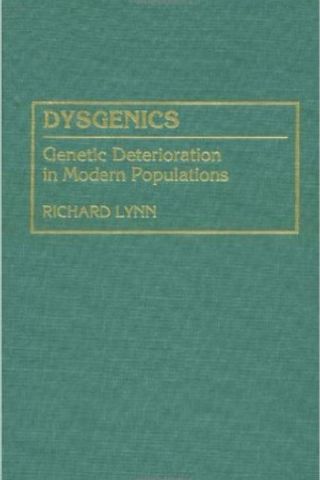
Estatísticas
Avaliações
0 / 0- 5 estrelas0%
- 4 estrelas0%
- 3 estrelas0%
- 2 estrelas0%
- 1 estrelas0%
Richard Lynn
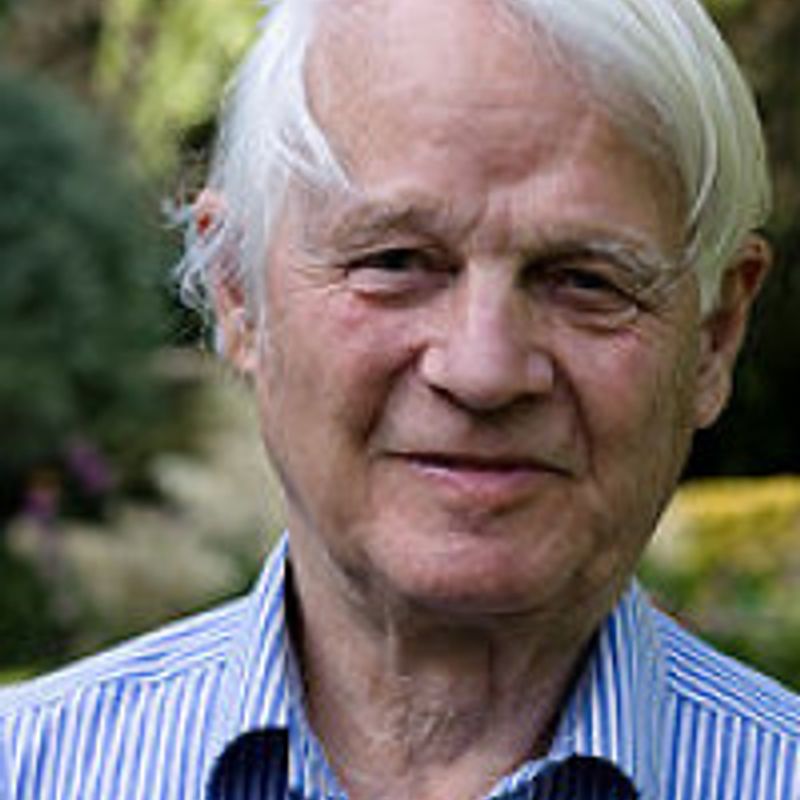
Richard Lynn is an English professor emeritus of psychology at the University of Ulster and assistant editor of the journal Mankind Quarterly. Lynn studies intelligence and is known for his belief in racial differences in intelligence. Lynn was educated at King's College, Cambridge in England. He has worked as lecturer in psychology at the University of Exeter and as professor of psychology at the Economic and Social Research Institute, Dublin, and at the University of Ulster at Coleraine. He has written or co-written 11 books and more than 200 journal articles spanning five decades. Two of his recent books are on dysgenics and eugenics.
4 Livros
10 Seguidores