*Includes pictures *Discusses the mysteries surrounding who started the fire and whether the Nazis were responsible *Includes a bibliography for further reading *Includes a table of contents “These sub-humans do not understand how the people stand at our side. In their mouse-holes, out of which they now want to come, of course they hear nothing of the cheering of the masses.” – Hitler speaking about Communists as the Reichstag burned “I don't care what happens in Russia! I know that the Russians pay with bills, and I should prefer to know that their bills are paid! I care about the Communist Party here in Germany and about Communist crooks who come here to set the Reichstag on fire!” – Hermann Goering The early 1930s were a tumultuous period for German politics, even in comparison to the ongoing transition to the modern era that caused various forms of chaos throughout the rest of the world. In the United States, reliance on the outdated gold standard and an absurdly parsimonious monetary policy helped bring about the Great Depression. Meanwhile, the Empire of Japan began its ultimately fatal adventurism with the invasion of Manchuria, alienating the rest of the world with the atrocities it committed. Around the same time, Gandhi began his drive for the peaceful independence of India through nonviolent protests against the British. It was in Germany, however, that the strongest seeds of future tragedy were sown. The struggling Weimar Republic had become a breeding ground for extremist politics, including two opposed and powerful authoritarian entities: the right-wing National Socialists and the left-wing KPD Communist Party. As the 1930s dawned, these two totalitarian groups held one another in a temporary stalemate, enabling the fragile ghost of democracy to continue a largely illusory survival for a few more years. That stalemate was broken in dramatic fashion on a bitterly cold night in late February 1933, and it was the Nazis who emerged decisively as the victors. A single act of arson against the famous Reichstag building proved to be the catalyst that propelled Adolf Hitler to victory in the elections of March 1933, which set the German nation irrevocably on the path towards World War II. That war would plunge much of the planet into an existential battle that ultimately cost an estimated 60 million lives. Given its importance, the burning of the Reichstag has been viewed as a turning point in history, but the mystery over who was actually responsible still lingers. Officially, a German court convicted and executed a Dutch Communist, Marinus van der Lubbe, and the Nazis would rail against the fire as a Communist plot in the ensuing weeks. Van der Lubbe claimed at trial that he acted alone, and many Communists accused the Nazis of conducting the fire as a false flag operation, but in any case, in the wake of the fire, Communists across Germany were purged, allowing Hitler and the Nazis to strengthen their hold on political power.
The Burning of the Reichstag - The History of the Controversial Fire That Led to the Rise of Nazi Germany
Charles River Editors
Charles River Editors
2014
44 páginas
1h 28m
ISBN-10: B00RM9EKZS
Edições (1)
Ver mais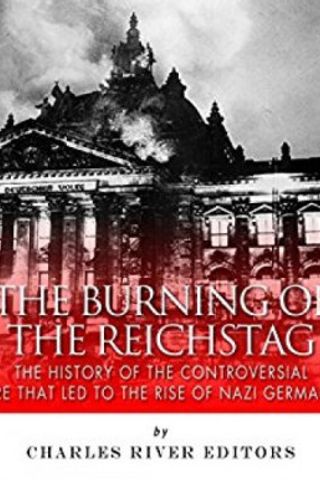
Resenhas (1)Ver mais

Krisley Freitas15/02/2017Resenhou um livro
curtir
Estatísticas
Avaliações
4 / 1- 5 estrelas0%
- 4 estrelas100%
- 3 estrelas0%
- 2 estrelas0%
- 1 estrelas0%