On its surface, the book is presented as a medical textbook in which Burton applies his vast and varied learning, in the scholastic manner, to the subject of melancholia (which includes, although it is not limited to, what is now termed clinical depression). Although presented as a medical text, The Anatomy of Melancholy is as much a sui generis work of literature as it is a scientific or philosophical text, and Burton addresses far more than his stated subject. In fact, the Anatomy uses melancholy as the lens through which all human emotion and thought may be scrutinized, and virtually the entire contents of a 17th-century library are marshalled into service of this goal. “BURTON'S ANATOMY OF MELANCHOLY is a valuable book. It is, perhaps, overloaded with quotation. But there is great spirit and great power in what Burton says when he writes from his own mind.” Dr Johnson “'Tis a book so full of variety of reading, that gentlemen who have lost their time, and are put to a push for invention, may furnish themselves with matter for common or scholastical discourse and writing.” — Wood's Athenae Oxoniensis, vol. i. p. 628. 2d edit. “BURTON'S ANATOMY OF MELANCHOLY, he (Dr. Johnson) said, was the only book that ever took him out of bed two hours sooner than he wished to rise.” — Boswell's Life of Johnson, vol. i. p. 580. 8vo. edit. “THE ANATOMY OF MELANCHOLY is a book which has been universally read and admired. This work is, for the most part, what the author himself styles it, 'a cento;' but it is a very ingenious one. His quotations, which abound in every page, are pertinent; but if he had made more use of his invention and less of his commonplace-book, his work would perhaps have been more valuable than it is. He is generally free from the affected language and ridiculous metaphors which disgrace most of the books of his time.” — Granger's Biographical History. “BURTON'S ANATOMY OF MELANCHOLY, a book once the favourite of the learned and the witty, and a source of surreptitious learning, though written on a regular plan, consists chiefly of quotations: the author has honestly termed it a cento.” — Ferriar's Illustrations of Sterne
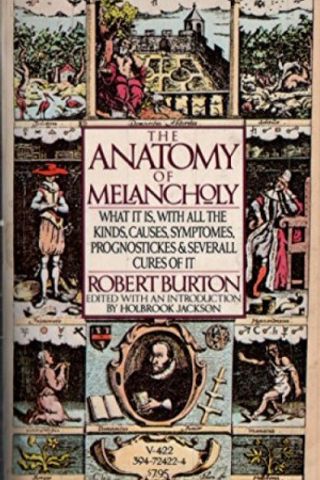
The Anatomy of Melancholy - What it is: With all the Kinds, Causes, Symptomes, Prognostickes, and Several Cures of it.
Robert Burton
Public Domain
2013
676 páginas
22h 32m
ISBN-10: B01FGRWSCE

Resenhas (1)Ver mais

Marcos Augusto18/08/2023Resenhou um livro
2 curtidas
Estatísticas
Avaliações
4 / 2- 5 estrelas50%
- 4 estrelas0%
- 3 estrelas50%
- 2 estrelas0%
- 1 estrelas0%