Where was Brazil in the so-called "Latin American" literary Boom? 'Third World Literary Fortunes' posits a response contrasting the figures of Jorge Amado, "vulgar" but uniquelly sucessful in capturing Brazilian popular energies in literature, and João Guimarães Rosa, "Brazil's Joyce". The Brazilian establishment expected Rosa would win the Nobel Prize. But outside Brazil, Rosa remains utterly obscure. Piers Armstrong probes the gulf between the Brazilian intelligentsia's perception of the world and the world's perception of Brazil - in which the Euro-Brazilian elite is essentially invisible despite the fascination with Afro-Brazilian 'carnaval'. The result is a cultural mapping of the relative rhetorical power of a series of discursive currents: Brazil's sophisticated, Eurocentric literary culture; the extraordinarily rich popular artistic expressions of identity; the brilliant but Utopian national cultural apologias by elite social anthropologists which marry popular culture and official national identity, minimizing race and class conflict. Finally, the study examines the dissonance between Brazilian literature and the supposedly continental dimensions of the Spanish Americann writers apotheosized in the 1960s Boom as the poetic priests of Latin American alterity. (Trecho do texto da orelha do livro)
Third World Literary Fortunes - Brazilian Culture and Its International Reception
Piers Armstrong
Bucknell University Press
1999
262 páginas
8h 44m
ISBN-10: 083875404X
Edições (1)
Ver mais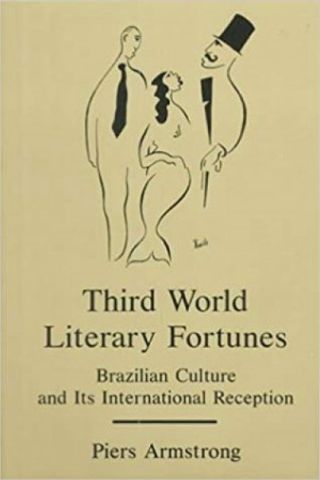
Estatísticas
Avaliações
5 / 1- 5 estrelas100%
- 4 estrelas0%
- 3 estrelas0%
- 2 estrelas0%
- 1 estrelas0%