The translations presented here are the result of a long process that started in my classes of Versão IV, or, to clarify, classes directed towards the task of translating Brazilian literature into English. It became evident throughout each semester in which I taught these classes that there were two important factors for the sucessful outcome of our work: you had to love literature and enjoy translation. It seems simple said like that, but, of course, the work involved went a great deal further. You must love words, their sound and effect, understand how they were chosen for that particular story or paragraph; you must enjoy their subtleness and evasiveness at times, the way words can play jokes on you and escape any attempt to being pinned down to one meaning. You must also have a feeling for literature that goes beyond that of a mere spectator, it should touch you like very few things do. All in all, I believe that the students that worked in those classes contributed to creating a final product (which is evidently never final, or else I would never have used the same stories again and again, always obtaining slightly different results) that was refined by the careful eye of Ian Alexander, a graduate student of our doctoral program at the Instituto de Letras, and writer. I am grateful for having had such a wonderful group of students all these years and for Ian’s readings. The stories chosen are some of the best in Brazilian literature. They certainly offer us moments of enjoyment, laughter and reflection. Midnight Mass, by Machado de Assis, is the perfect study of the impressions a young man has of the object of his desire; The Man Who Knew Javanese, by Lima Barreto, mixes irony and compassion; Turtle Dove, by Lygia Fagundes Teles, is an example of fine storytelling, at times comical, at others, sad; The Other, by Rubem Fonseca, builds up to a surprising ending; Those Two, by Caio Fernando Abreu, portrays the delicate relationship of the main characters; while Pale eyes big White horse, by Jane Tutikian, makes us question how we relate to others and, in the process, are affected by this relationship.
Brazilian short stories (Cadernos de Tradução #22) -
não informado
UFRGS
2008
48 páginas
1h 36m
ISBN-1: 0
Português Brasileiro
Edições (1)
Ver mais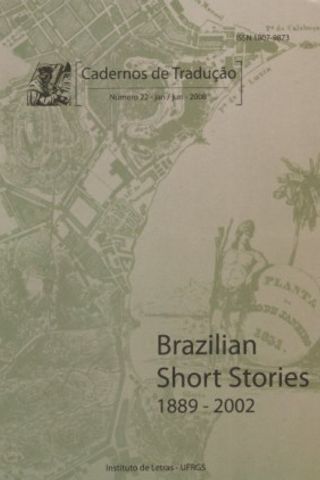
Estatísticas
Avaliações
0 / 0- 5 estrelas0%
- 4 estrelas0%
- 3 estrelas0%
- 2 estrelas0%
- 1 estrelas0%