Today, organizations of all kinds are ruled by the belief that the path to success is quantifying human performance, publicizing the results, and dividing up the rewards based on the numbers. But in our zeal to instill the evaluation process with scientific rigor, we've gone from measuring performance to fixating on measuring itself. The result is a tyranny of metrics that threatens the quality of our lives and most important institutions. In this timely and powerful book, Jerry Muller uncovers the damage our obsession with metrics is causing―and shows how we can begin to fix the problem. Filled with examples from education, medicine, business and finance, government, the police and military, and philanthropy and foreign aid, this brief and accessible book explains why the seemingly irresistible pressure to quantify performance distorts and distracts, whether by encouraging "gaming the stats" or "teaching to the test." That's because what can and does get measured is not always worth measuring, may not be what we really want to know, and may draw effort away from the things we care about. Along the way, we learn why paying for measured performance doesn't work, why surgical scorecards may increase deaths, and much more. But metrics can be good when used as a complement to―rather than a replacement for―judgment based on personal experience, and Muller also gives examples of when metrics have been beneficial. Complete with a checklist of when and how to use metrics, The Tyranny of Metrics is an essential corrective to a rarely questioned trend that increasingly affects us all.
The Tyranny of Metrics -
Jerry Z. Muller
Princeton University Press
2018
240 páginas
8h 0m
ISBN-13: 9780691174952
Edições (1)
Ver mais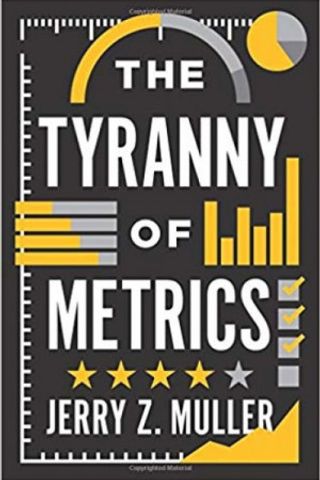
Resenhas (1)Ver mais

Letícia Duarte Hernandez09/12/2021Resenhou um livro
Nem tudo que conta é contável, nem tudo que é contável conta." Einstein.
curtir
Estatísticas
Avaliações
4 / 2- 5 estrelas50%
- 4 estrelas0%
- 3 estrelas50%
- 2 estrelas0%
- 1 estrelas0%