READ IN AN AFTERNOON. REMEMBER FOR A LIFETIME. In his acclaimed new bestseller, James Hawes tells the story of Europe's most admired and feared country, from Julius Caesar to Angela Merkel. With more than 100 maps and images, this is a fresh, conscise and entertaining attempt to answer the question: are the Germans really us, or them? The West is in full retreat. The Anglo-Saxon powers, great and small, withdraw into fantasies of lost greatness. Populists all over Europe cry out that immigration and globalisation are the work of a nefarious System, run by unseen masters with no national loyalties. From the Kremlin, Tsar Vladimir watches his Great Game line up, while the Baltic and Vizegrad states shiver -- and everyone looks to Berlin. But are the Germans really us, or them? This question has haunted Europe ever since Julius Caesar invented the Germani in 58 BC. How Roman did Germania ever become? Did the Germans destroy the culture of Rome, or inherit it? When did they first drive east, and did they ever truly rule there? How did Germany become, for centuries, a power-vacuum at the heart of Europe? How was Prussia born? Did Bismarck unify Germany or conquer it? Where are the roots of Adolf Hitler's Third Reich? Why did it lose? By what miracle did a better Germany arise from the rubble? Is Germany now the last Western bastion of industrial prosperity and rational politics? Or are the EU and the Euro merely window-dressing for a new German hegemony? This fresh, illuminating and concise new history makes sense of Europe's most admired and feared country. It's time for the real story of Germany.
The Shortest History Of Germany -
James Hawes
Old Street
2018
228 páginas
7h 36m
ISBN-13: 9781910400739
Edições (1)
Ver mais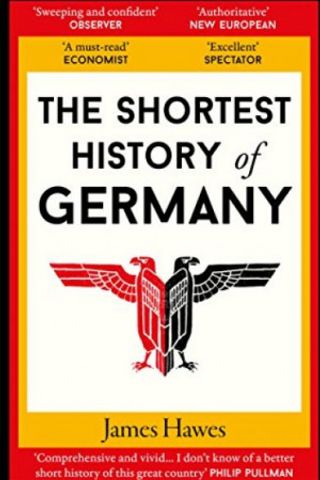
Resenhas (3)Ver mais

Victor Ermlich27/11/2020Resenhou um livro
Peca na superficialidade
3 curtidas
Estatísticas
Avaliações
4 / 17- 5 estrelas29%
- 4 estrelas47%
- 3 estrelas24%
- 2 estrelas0%
- 1 estrelas0%