''Em 2 de agosto de 1944, após a destruição completa do Centro do Grupo do Exército Alemão na Bielorrússia, Winston Churchill zombou de Adolf Hitler na Câmara dos Comuns pelo posto que havia alcançado na Primeira Guerra Mundial. "O sucesso russo foi de certa forma auxiliado pela estratégia de Herr Hitler, do cabo Hitler", brincou Churchill. 'Mesmo os idiotas militares acham difícil não ver algumas falhas em suas ações.' O livro anterior de Andrew Roberts, Masters and Commanders, estudou a criação da grande estratégia aliada; Vencer o cabo Hitler agora analisa como a estratégia do Eixo evoluiu. Examinando a Segunda Guerra Mundial em todas as frentes, Roberts pergunta se, com um processo de tomada de decisão diferente e uma estratégia diferente, o Eixo poderia ter vencido. Aqueles generais alemães que colocaram a culpa de tudo em Hitler depois da guerra estavam corretos, ou eles estavam apenas usando o bode expiatório de seu ex-Führer, uma vez que ele estava seguro além de se defender? Ao pesquisar esta história excepcionalmente vívida da Segunda Guerra Mundial, Roberts percorreu muitos dos principais campos de batalha e locais de guerra da Rússia, França, Itália, Alemanha e Extremo Oriente. O livro está cheio de luzes laterais esclarecedoras sobre os principais atores que trazem seus personagens e as maneiras pelas quais eles tomaram decisões em um novo foco.'' (On 2 August 1944, in the wake of the complete destruction of the German Army Group Centre in Belorussia, Winston Churchill mocked Adolf Hitler in the House of Commons by the rank he had reached in the First World War. 'Russian success has been somewhat aided by the strategy of Herr Hitler, of Corporal Hitler,' Churchill jibed. 'Even military idiots find it difficult not to see some faults in his actions.' Andrew Roberts's previous book Masters and Commanders studied the creation of Allied grand strategy; Beating Corporal Hitler now analyses how Axis strategy evolved. Examining the Second World War on every front, Roberts asks whether, with a different decision-making process and a different strategy, the Axis might even have won. Were those German generals who blamed everything on Hitler after the war correct, or were they merely scapegoating their former Führer once he was safely beyond defending himself? In researching this uniquely vivid history of the Second World War Roberts has walked many of the key battlefield and wartime sites of Russia, France, Italy, Germany and the Far East. The book is full of illuminating sidelights on the principle actors that bring their characters and the ways in which they reached decisions into fresh focus.)
The Storm of War - A New History of the Second World War
Andrew Roberts
Harper Perennial
2012
800 páginas
1d 2h 40m
ISBN-13: 9780061228605
Edições (1)
Ver mais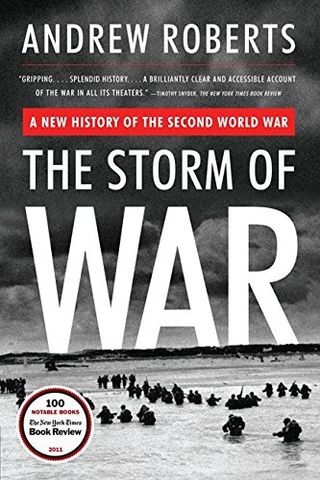
Estatísticas
Avaliações
0 / 0- 5 estrelas0%
- 4 estrelas0%
- 3 estrelas0%
- 2 estrelas0%
- 1 estrelas0%