The Buddha was a human being. He struggled, he succeeded, he failed. He made difficult choices. He made mistakes of the sort we all might make. And he persevered. He lived in childlike innocence until he witnessed the unyielding reality of human suffering—poverty, sickness, old age, and death. He struggled with the implications of this suffering for his life and the lives of others. He had a family. He left his family. He worked as a teacher, a leader, and a community builder. He worried about his legacy. He grew ill as an old man and died. The Buddha was a prince, the foremost younger member of a royal family and heir to the king’s throne. He lived in utter luxury, wanting nothing. He received the finest education possible. He was a master of the arts, literature, athletics, and politics. He had many wives and lovers, and bore a son. He was to be a king, a god on earth. And then he cast the sweet life away when he realized that in spite of his exalted status he would still become ill, grow old, and die. The Buddha was a reincarnation, the rebirth of a person now dead. He was a series of human beings, reborn through countless lifetimes. He had many bodies, many incarnations, though he remained in some sense himself, a “he,” an individual, indivisible yet multiple. And as a reincarnation he is no different, according to Buddhist doctrine, from any other living being, save that he eventually came to understand the fundamental role of ethical cause and effect—the engine of rebirth—in creating his many rebirths, his many experiences in this life and all that had come before it. Because he came to understand rebirth as yet another form of human suffering, he sought, and found, an end to rebirth. The Buddha was a god. He lived in celestial realms, in castles in the sky where gods enjoyed the divine fruits of their good acts over many eons. Yet the Buddha knew that even a god suffers from ethical cause and effect, that gods must descend from their celestial palaces if they wish to find an end to suffering, just like every other living being. He taught the gods the means to liberate themselves from the suffering that even they, as exalted celestial beings, experience. He was a god among gods. The Buddha is a bodhisattva, a living, thinking being whose only goal is to achieve enlightenment—to fundamentally transform his understanding of reality—in order to truly put an end to human suffering. The Buddha is a savior, a being whose empathy for the suffering of others is so profound that he cannot but act on their behalf. The Buddha was, is—ever will be—the cosmos. His “body” is coextensive with all that is. He is reality. As such he seeks, through the drama of human embodiment, to relieve the suffering that comes to those living beings who do not understand that they are this reality as well. According to Buddhist traditions throughout Asia, the Buddha holds each and all of these identities within his capacious form. Stories of the Buddha from ancient, medieval, and modern traditions contain this multiplicity, at times emphasizing one aspect of his identity, at times another, yet always deep with potential meaning, overflowing with possibilities for readers from all walks of life. This is one such story.
The Life of the Buddha - (Penguin Classics)
Tenzin Chogyel
Penguin Classics
2015
160 páginas
5h 20m
ISBN-10: 0143107208
Edições (1)
Ver mais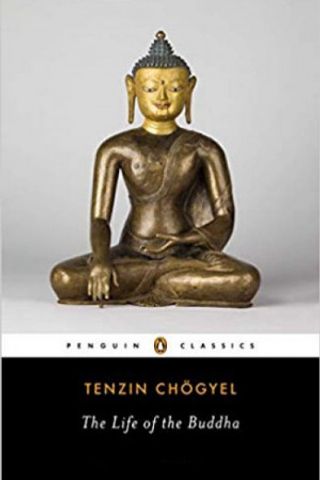
Estatísticas
Avaliações
0 / 0- 5 estrelas0%
- 4 estrelas0%
- 3 estrelas0%
- 2 estrelas0%
- 1 estrelas0%