Zig Ziglar’s Born to Win: Find Your Success Code, compresses four decades of life-changing tools and practices into one inspiring, easy-to-use format for people who want to grow and improve the whole spectrum of their lives now! Zig has always taught that “You were born to win, but to be the winner you were born to be you must plan to win and prepare to win. Then and only then can you legitimately expect to win.” Born to Win guides readers through this plan-prepare-expect strategy. You will learn that when you have the hope that things can change, and a plan to make that change possible, you can take action. Zig Ziglar’s whole-person, balanced-living approach to life has inspired millions to enjoy good health, a new depth of love and gratitude for family and friends, financial security and independence, and spiritual peace of mind. His instruction on how to live a life that leaves no room for regret or worry is the starting point for a joyful, exciting, vibrant life. It is true that when you have prepared yourself to be the right kind of person, you can do what you need to do to expect success. When you truly understand that you were born to win, you can change the world! "It’s going to be the most fun and exciting trip you’ll ever take. It’s filled with more promise of reward than King Solomon’s mines. In short, this journey to the top, which you are going to be taking, is a tremendously exciting trip." —Zig Ziglar
Born to Win - Find Your Success Code
Zig Ziglar
Edições (1)
Ver mais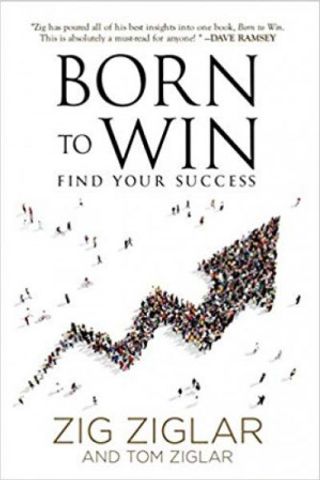

Minhas notas do livro
I can assure you that Zig’s Born to Win philosophy really does work, and I especially appreciate the balanced approach to life that Born to Win teaches. Along with financial wealth, I enjoy good health, a terrific love of my family, and the spiritual peace of mind that only a life of no regrets can offer. I have a deep sense of joy living with Lisa, my beautiful, creative wife of twenty-five years, and my three handsome, energetic sons round out my family heritage. The Born to Win philosophy is both “profoundly simple” and “simply profound.” The concept that you have to plan to win and prepare to win before you can expect to win is simple, but simple doesn’t mean it’s necessarily easy, and when you dig a little deeper, you understand just how profound it really is. There is no such thing as the “status quo.” Coasting in life, in business, or in your family relationships is not an option. All are either improving or getting worse. The same is true for success. You are either moving closer to success, or further from it. This is why Will, Skill, and Refill are so critical on a daily basis. As you plan, prepare, and expect to win in life because you are born to win, never forget that hope is the catalyst that will get you started, and that encouragement keeps hope alive. The daily dose of Will, Skill, and Refill is where you will find encouragement. The great coach of the Green Bay Packers, Vince Lombardi, wisely stated, “Winning isn’t everything but wanting to win is.” The simple truth is that you have to want to do something badly enough before you have the slightest chance of doing it! If you don’t want it badly enough, I absolutely guarantee that you will not be willing to do the planning and preparing it takes to get it. Psychologists will tell you in a New York minute (which, for your information, is thirty-two seconds) that you invariably and inevitably move toward the strongest impression in your mind. The impressions that are most vivid in your mind are the things you want to do. That’s why desire is so powerful and plays a big role in planning. If you really want to do something, it means that it’s something you are going to think about most of the time. When you constantly think about something, you talk about it all the time and you get lots of new ideas about how to make it happen. When you have lots of ideas about something, it makes planning easier and more enjoyable. Desire also makes you willing to become accountable for your plan, and that makes you more willing to create the plan you need to win. You see, my friend, being a winner is much different from having the potential to win. Everyone has the potential; it’s what you do with that potential that really matters. My core philosophy on winning and motivation is summed up by saying that you were born to win, but in order to be the winner you were born to be, you have to plan to win and prepare to win before you can expect to win. The playing field of life is not level, and for you to compete in the game of life, you need an equalizer of some kind. In the old West, the equalizer was the six-shooter. It enabled a little guy to chop a bigger man down to size. Desire is also an equalizer—and nowadays is highly encouraged over a six-shooter! Desire creates an edge Desire produces the energy to get out of bed when you don’t feel like it. Desire gives you the power to run the last one hundred yards of a marathon when you think even one more step is impossible! Desire gives you the will to do the tough things your competition may not be willing to do. Desire is the mother of motivation, because it is where motivation is born. Desire will pull you across the finish line and give you victory! Desire is created when something happens in your life that suddenly changes the way you see yourself in relationship to your future. That type of thinking was the result of my experience growing up. I had no idea that other possibilities might exist for me. I entertained the idea of owning my own store, or meat market to be exact, but I never really felt over-the-top excited about it. I wasn’t excited about it because it was not my vision—it was just an idea that was presented to me by my boss as a possibility. You might say I was a wandering generality instead of a meaningful specific. I was wandering around with no direction and no plan to win. If you could somehow count all the books that have been written on what it takes to be successful, the number would be astronomical. A significant number of those books (including several I have written) emphasize the importance of taking action on the ideas and opportunities that present themselves in life. The fact is that you can have lots of good ideas and you can be exposed to many great opportunities, but if you don’t do something about them, they might as well be non-existent. It’s pretty amazing how most people put off taking the necessary actions to acquire the things they want and then complain about how they never get a break! There are many reasons people find to justify not taking action, but the absence of desire is one of the root causes. They just really don’t want it badly enough. This is a fatal condition when you are trying to be successful. The result of information overload is usually distraction, and it dilutes your focus and takes you off your game. When Muhammad Ali fought George Foreman in 1974 for the heavyweight championship of the world, he used a strategy he called “Rope a Dope.” Ali leaned on the ropes, covered his head, and let Foreman pound on him for seven rounds in hopes that Foreman’s superior strength and punching power would be exhausted and make him vulnerable to Ali’s speed and quickness. I don’t know about you, but the idea of letting someone like George Foreman hit me repeatedly is pretty frightening—and I’d feel that way before he threw his first punch at me. After he actually started pounding on me, I might have second thoughts about maintaining the strategy! But Ali did maintain the strategy, and it paid off for him in round eight when Foreman was so worn out from pounding on Ali he could hardly hold his arms up. Ali suddenly came off the ropes and landed two rights and a massive left hook that sent Foreman to the canvas. Perseverance on the part of Ali had carried him through to victory in one of the greatest fights in history. I have no doubt you were born to win, but remember that before you can win you must plan to win and prepare to win. Then—and only then—can you expect to win. Planning to win is the first step in the winning process and, unfortunately, people resist making a plan. After all, nothing is more embarrassing than creating a plan and then failing to successfully execute the plan. You have to come up with a lot of excuses about why the plan didn’t work! Fear is the fatal killer of desire. Fear of failure is a big part of the reason why people procrastinate and avoid putting their plans in writing. Plus, planning is hard work! Desire is the difference between you being an enthusiastic planner, passionately working through all the things you need to do to be successful, or just going through the motions of planning like an item on a checklist. I hope you see that planning can either be embraced as an exciting opportunity to win, or avoided as an obligatory exercise or task. When you really want something, when you desire it and you are excited about it, you look forward to planning and preparing because you get to do it. What Do You Really Want? Before you go any further in the planning to win process, it’s a good idea to do a desire inspection on yourself. Why? Because if you don’t have a real desire to do something, your heart won’t be in it. The question we need to ask ourselves is, “Why do I want to do or accomplish this?” “You don’t have to be great to get started, but you do have to start to be great.” This means you have to be before you can do, and do before you can have. People make a lot of excuses for not being willing to set goals, but the benefits of setting goals far exceed the excuses for not setting them. There is something about the goal-setting process that makes people approach it in fear, and they can find lots and lots of reasons to avoid it. The biggest reason is an unwillingness to be accountable for results. After all, if you set a goal and fail to reach it, some people will consider it failure. But there is an old saying that goes, “It is better to have tried and failed than not to have tried at all!” I would alter that concept slightly and say, It is better to set goals and have direction than to not have goals and wander around in confusion. Ultimately, people who do not set goals are just making up their life as they go along, which results in unreached potential. If you don’t identify a target, you will never hit it. When you identify a goal, it means that you write it down and describe it clearly. Don’t set any nebulous targets. If you want to have specific success, you must have specific targets. Once you identify a specific goal, you need to list the benefits you will receive when you reach that goal. Let’s face it, we only do the things we want to do and are willing to do. If there are no personal benefits, your motivation for completing the goal will be diminished. Remember that changing your life is not always easy, and you will hit some rough spots in the road as you move forward. You will need all the personal motivation you can muster, and understanding what’s in it for you is vitally important. The Seven Steps of Goal Setting 1. Identify the goal. 2. List the benefits: what’s in it for me? 3. List the obstacles to overcome. 4. List the skills and knowledge required. There is a direct relationship between knowing and doing, and successfully accomplishing your goals will require that powerful combination. 5. Identify the people and groups to work with. 6. Develop a plan of action. 7. Set a deadline for achievement. I want to be certain you have the right attitude about setting your goals. Don’t think of goal setting as a tiresome activity that requires you to do things that are difficult. The real benefit of having goals is what you become by reaching them. Are you convinced that you need to become a goal setter? Have you started thinking about where you are and where you would like to be? Have you started listing the obstacles that stand between you and success? I hope you are sufficiently motivated to begin the goal-setting process, because goals represent the action tools you need to be able to plan to win. Part of planning to win is developing the fuel that will drive you to take the daily actions that will move you in the direction of your dreams. When you skimp on planning, the results you get in the end will be reduced. Have you ever noticed that sports contests are frequently won or lost in the final minutes of a game? One competitor outlasts and outplays their opponent in the final minutes and is able to execute more effectively and move on to victory. Success in life is much the same. You have to have a plan, and you have to execute that plan consistently—even when you don’t feel like it. Vince Lombardi said that “winning is not a sometime thing . . . it’s an all the time thing.” When you make bread, the dough starts out kind of flat; eventually, the yeast in the dough will make it rise. If you cook the dough before it has completely risen, it will get “cooked in the squat.” If you think of the squatting time for bread as being the same as the planning process for success, you will see how this can be a valuable lesson. If you don’t take the time to plan properly (and this includes knowing the purpose and value of what you are working for), chances are you will get cooked in the squat and will never “rise” to your full potential. I believe you have the potential to do and accomplish far more than you believe you are capable of doing and accomplishing! I believe that because history is filled with stories of men and women who have done just that. If you study the lives of great people, you usually discover they came from average families, living average lives, doing very average things. Then, these people have some kind of experience or encounter a turning point that puts them in position to do more than they could even conceive. Or possibly they became sick and tired of living the way they were living and finally said, “Enough is enough!” In every instance they responded to the experience or opportunity and accepted the challenge to grow. The way to correct this thinking is to realize that the mistakes we made in our past are actually assets that we can use for our benefit today. As our choices become more limited, the likelihood of making more bad choices is inevitable. On the other hand, when we make good choices, our circumstances improve. As our circumstances improve, we have better opportunities, and better opportunities make it possible for everything in our lives to become better. Once we begin to make certain types of choices, the likelihood of making similar choices in the future almost becomes a self-fulfilling destiny. If the fear of attempting to do more than you think you can do is a problem for you, let me ask you a couple of questions. Are you afraid to set goals because you are afraid you might not be able to complete them? Are you afraid of failing in front of friends and family? Is that what keeps you from making a commitment to try something new or stretch yourself? I am a firm believer that goals and commitments should be put in writing, but many people avoid doing that. Somehow, by not putting their goals on paper, they believe they have a built-in explanation for failure. Playing it safe by refusing to take risks may seem to be a prudent choice. However, let me point out that it would be safer for ships to stay in the harbor and for airplanes to stay on the ground. Yes, there is danger in setting goals, but the risk is infinitely greater when you don’t set goals. The reason is simple. Just as ships are built to sail the seas and planes to fly the heavens, so is man created for a purpose. That purpose is to get everything out of you that is humanly possible so you can make your contributions to mankind. There’s more in store for you in your life than you can possibly imagine. I promise you it is the truth. To reach your full potential, you have to set goals that will stretch you. You must not be afraid of taking risks. You must learn to recognize opportunities and have the courage to pursue them. You have to make better choices that will provide better results. Finally, you need to avoid the negative influences of other people and surround yourself with successful people who will encourage you to pursue your dreams. A simple fact about success is that it requires a lot of positive, personal motivation to achieve. The motivation is required to get you through the diffi culties and struggles that happen along the way. Have you ever considered what gets you excited? Individuals who understand the principle of having to make an investment in their lives before they can expect success are far more productive and proactively seek out the information and assistance they need to be successful in their endeavors. They are involved in practice without pressure so they can be ready to deliver when the pressure of competition is on. The Born to Win process will inevitably lead you into doing new things. Doing new things involves change, and change is something lots of people avoid because of the fear of failure. In fact, the fear of failure is often strong enough to keep some people from taking the first step. he says that we humans only second-guess ourselves when we’re right. When we’re wrong, we get very stubborn, and we won’t take advice from anybody! The lesson here is that when we feel absolutely certain of our position and we feel we don’t need guidance from anybody at all, that’s the time we most need advice! The second objective in brain exercise is processing all the new information you gain and applying it to your life. This happens as you think about all you have learned and force yourself to use that information to set goals that cause you to stretch out of your comfort zone and take new actions that will make a difference in the way you live. In some cases, encouragement can be elusive, and it is hard to identify the specific thing that gave encouragement to someone who did not have it. But it is usually nothing more than a person being able to completely change a fundamental belief about himself and then allowing that belief to blossom into full-blown hope! I shared this story of Suzan’s death for the purpose of illustrating just how powerful hope can be and how it can transform your attitude. If you can find hope, even in the darkest of events, your attitude will be better, and if your attitude is better, chances are you will perform better and have a superior chance for success. This is a basic truth about the human condition. Hope is the reason some people do well in bad economic times and others fall into disastrous conditions. Hope is the engine of your attitude, and your attitude determines your altitude. My fellow speaker, the late Earl Nightingale, told the story of an alcoholic father who had two sons. One son became an alcoholic and reasoned, “With a father like that, what else could I have done?” The other son made a commitment never to drink alcohol and went on to have a highly successful career and family life. “With a father like that,” he reasoned, “what else could I have done?” For every action you take, there is a result that follows. So take a different action and new opportunities will appear. “The Power of Next.” DeDe says if you attempt something and you fail, you can always count on pulling yourself back up with the power of what you are going to do next. It’s the next opportunity that keeps us motivated. Mind reading also creates unnecessary worry about personal and professional relationships. If you are a reasonable student of human nature, you might be able to anticipate what people will do in specific situations. However, that is not mind reading. Mind reading is when you believe you can accurately discern another person’s motive and intent based on something they may be thinking. Your relationships with others should be based on what they actually do, rather than what you believe they may be thinking! When you start reading people’s minds, you are setting yourself up for a lot of worry and unnecessary concern. The solution to a potentially bad relationship is to have a direct, open, honest conversation with whoever is involved. Remember, mind reading opens the door to unfounded speculation about the motives and intentions of others. And chances are you will be wrong. Mind reading is a great waste of time and energy and something you should avoid at all costs. It’s better to confront a situation peacefully and directly. The truth is seldom as awful as imagined. Positive thinking won’t allow you to do anything, but it will allow you to do everything better than negative thinking will. Doesn’t that make sense? At the beginning of this book I said, “You were born to win, but to be the winner you were born to be, you have to plan to win and prepare to win. Then and only then can you expect to win!” In that statement you will find the complete formula that will take you to the top. And repeated daily throughout your life, it will keep you there. The preceding chapters have discussed the elements of planning, preparation, and positive expectation and how to approach each of those areas. It’s really very simple. You plan your tomorrows by understanding the vision you have for success, and you set your goals to accomplish your vision. Then you prepare and equip yourself with the knowledge, support, and tools you need to execute your goals. When you have planned and prepared, you will earn the right to expect to win, and expecting to win means doing what it takes to recognize hope and opportunity, which will support a great, positive attitude about your life and how you live it. The Six Principles of Performance 1. We generally get from ourselves and others what we expect. I made this point earlier, but it is a huge fact that you will either live up or down to your own expectations. If you expect to lose, you will. If you expect to be average, you will be average. If you expect to feel bad, you probably will. If you expect to feel great, nothing will slow you down. And what is true for you is true for others. Your expectations for others will become what they deliver and achieve. As Gandhi said, “Be the change you wish to see in the world.” 2. The difference between good and excellent companies is training. The only thing worse than training employees and losing them is to not train them and keep them! A football team would not be very successful if they did not train, practice, and prepare for their opponents. When you think of training as practice and preparation, it makes you wonder how businesses survive that do not make significant training investments in their people. 4. You find what you look for in life. If you look for the good things in life, you will find them. If you look for opportunities to grow and prosper, you will find them. If you look for positive, enthusiastic friends and associates who will support you, you will find them. On the other hand, if you look for ways to cheat, you will cheat. If you look for ways to justify leaving your spouse, you will find them. If you look for justifiable reasons to hold a grudge against another person, you will find those, too. It is a natural tendency of us all to look for things that will justify what we think we need or want. If you are not living by the foundation stones of honesty, character, integrity, faith, love, and loyalty, you will be drawn to seeking selfish gratification, and that leads to misery and unfulfilled dreams. Whatever you have will never be enough. Always look for the good and for ways to help others. If you make a future commitment, you must understand and be willing to do whatever it takes to complete that commitment. One of the reasons marriage commitments fail so frequently is because the husband and wife do not understand what it takes to have a great marriage. They do not plan for or understand the sacrifices each must make for the other to enable a long-lasting relationship. But I want to be very clear that the kind of positive attitude I describe is not one that is contrived or falsely manufactured to impress or manipulate others. The positive attitude I talk about is one that you are filled with, and when you are jostled, it just spills out! What I’m saying is that a genuine positive attitude is part of who you are at your core.
Estatísticas
Avaliações
5 / 4- 5 estrelas100%
- 4 estrelas0%
- 3 estrelas0%
- 2 estrelas0%
- 1 estrelas0%