Graveyard Clay: Cré na Cille: Cré na Cille (The Margellos World Republic of Letters) (English Edition)
Máirtín Ó Cadhain
Yale University Press
2016
369 páginas
12h 18m
ISBN-13: 9780300203769
Português Brasileiro
Estatísticas
Avaliações
0 / 0- 5 estrelas0%
- 4 estrelas0%
- 3 estrelas0%
- 2 estrelas0%
- 1 estrelas0%
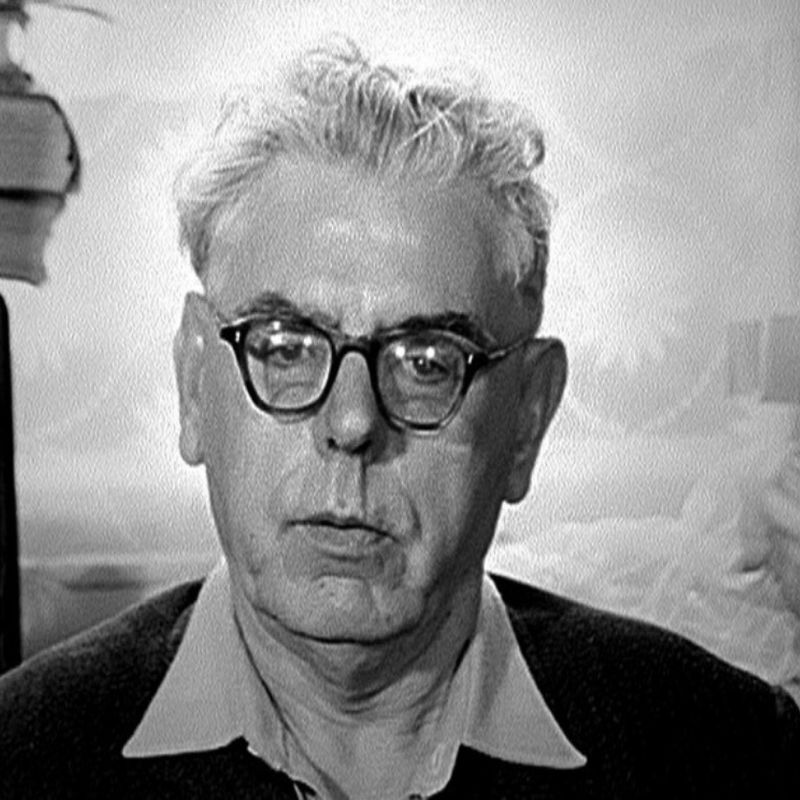
Máirtín Ó Cadhain
Máirtín Ó Cadhain was born on 20 January 1906 in An Cnocán Glas, a townland about half a mile or one kilometer west of the village of An Spidéal, County Galway. (Regardless of the appearence of other dates in various items of official documentation, Máirtín’s family is in absolutely no doubt that this is the correct one.) He was the eldest to survive of thirteen children born to Seán Ó Cadhain and his wife, Bríd Óg Nic Conaola, small farmers who farmed half a holding beside Seán’s brother, Máirtín Beag, who farmed the other half-holding. The Ó Cadhain family moved down from the Oughterard area in 1839, having bought this holding from Lord Kilannin. Seán, Bríd and Máirtín Beag were all noted shanachies, (storytellers; from the Irish seanchaithe), and the young family members were exposed to a rich tradition of Irish folktales, songs and historical lore. Máirtín attended primary school in Spiddal from 1911 until 1924, having spent the last six years or so as a monitor there. He won the King’s Scholarship which allowed him to attend Saint Patrick’s College, Drumcondra in Dublin where he trained as a primary teacher, 1924–26. While teaching in Galway he attended a night-course for primary teachers in the university there and attained a diploma in education in 1927. Thus ended his formal education but he continued to be an avid learner throughout his life through reading voraciously, through learning from others and through travelling widely. He became multilingual, acquiring over time the Celtic languages, French, Spanish, Italian, German and Russian. He took up a permanent teaching post as principal of the primary school in Camus, an Irish-speaking area in Conamara, in 1927 where he taught until 1932, moving then to the school in Carnmore, about 13 kilometers east of Galway. In 1936 he was dismissed from his post by order of the local bishop due to his political activities. He had become a member of Óglaigh na hÉireann (the Irish Volunteers) while still in Camus and continued to be active as a captain while in Carnmore. Thus he sharpened his skills as a political organiser and strategist. He founded a branch of Conradh na Gaeilge (The Gaelic League) there — Carnmore was a breac-Ghaeltacht; an area where some residents speak Irish and others English). He was now an overt language activist, although he had been penning material in Irish since at least 1928, starting with folklore collections, reviews and translations. Máirtín was held in extremely high regard as a teacher by the communities in Camus and Carnmore, but his career as a primary teacher ended in December 1936. He would have other students to teach, however, starting with student teachers on summer Irish-language courses in An Cheathrú Rua (Carrowroe), Conamara, where he met his future wife, Máirín Ní Rodaigh in 1932. Photo of Máirín, Máirtín’s wife Máirín Bean Uí Chadhain Having moved to Dublin in late 1936, he taught Irish to adults in Conradh na Gaeilge. In 1939, he met John Ellis Caerwyn Williams from Wales who taught him Welsh and to whom he in turn taught Irish. He was an active recruiting officer for the Irish Volunteers during 1937–8 and in 1939 he was captured and interned in Arbour Hill prison from September until December, during which time he taught Irish and other languages to other internees. He was again interned from 1940–44 in the Curragh Camp, County Kildare, where he taught Irish, History and French. There he improved his French and started learning Russian. He read works by the major French and Russian dramatists and storytellers, as well as the works of important European philosophers and theologians. He then gave a series of lectures on philosophy and sociology to his fellow internees. Both of his parents died while Máirtín was interned in the Curragh. He was allowed out on special leave to attend the first of these funerals but not the second. On his release and return to Dublin in 1944, Máirtín found it very difficult to find gainful employment. However, as a result of campaigning and canvassing by some influential friends, he was provisionally admitted to a post in the civil service in 1947 as a translator of legislation, where he remained until 1956. As with all his previous placements, he didn’t waste any time in this job. Whenever translation work was at a low ebb, he amused himself by reading books about Old Irish and the old Irish legal system. Having a secure income, Ó Cadhain was now in a position to marry Máirín Ní Rodaigh, who was a primary teacher from County Cavan. In 1952, Máirín began to teach in the newly-founded gaelscoil, Scoil Lorcáin in Blackrock in south County Dublin. The Ó Cadhains often hosted family and friends from Conamara and elsewhere visiting Dublin. They had no children. Máirín died in 1965 and five months later, Máirtín’s younger brother, Seosamh (Joe) who had lived on the north side of Dublin, also died, leaving his widow and nine children in his wake. Máirtín offered to take two of the nine to live with him as a support to the young widow, Cáit Uí Chadhain. Thus, the then teenagers, Bríd and Mairéad Ní Chadhain, went to live with him and Mairéad was still living there when Máirtín himself died in 1970. Máirtín had employed a maid from Conamara who took care of the cooking and housework. While Máirtín worked as a government translator, his friend and publisher, Seán Ó hÉigeartaigh, established a small committee with the aim of finding a university post for the by now blossoming writer. This was no mean task, given Máirtín’s political activism as well as the fact that he had no university qualifications. However, to its great credit, Trinity College, Dublin agreed to the committee’s entreaty and offered Máirtín a post as lecturer in the Irish department of the university. Ó Cadhain gratefully accepted the offer and began his university career at Trinity College on 2 February 1956. He proved to be an industrious and highly successful lecturer who prepared his notes and plans with great diligence. He also initiated a series of night classes open to the general public which were exceptionally well-received and are talked of even to the present day by many enthusiastic ex-students. Máirtín was made Head of the Irish department as Associate Professor in 1967, Professor in 1969, and Fellow in 1970, the year of his death. He is said to have had an informal manner with his students and sought to get to know each of them personally. He arranged to have them go to Conamara every summer to stay with choice Irish-speaking households. Ó Cadhain was dogged by ill-health: blood pressure, headaches and insomnia, which often saw him preparing his university material in the middle of the night. And, of course, he was deeply affected by the untimely death of his wife in 1965. His own death in October 1970 was equally untimely.
3 Livros
0 Seguidor
Galway, Irlanda