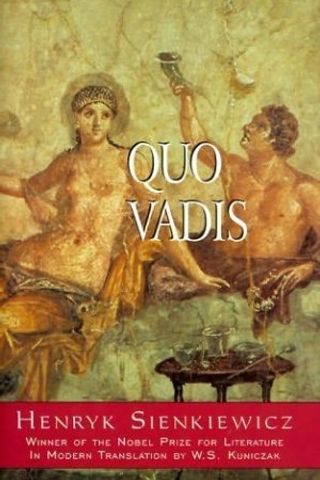
"Quo Vadis: A Narrative of the Time of Nero" is a historical novel that transports readers to the heart of ancient Rome, vividly capturing the tumultuous reign of Emperor Nero. Winner of the 1905 Nobel Prize for Literature, H. Sienkiewicz has crafted a masterpiece that is not only a gripping love story but also a poignant exploration of the human spirit’s capacity for courage and redemption in the face of overwhelming adversity. Quo Vadis, the record-breaking international bestseller for which Henryk Sienkiewicz won the fifth Nobel Prize for Literature, is as compelling today as the moment it was written. An epic saga of love, courage, and devotion in the days of the First Century of the Roman Empire... This glorious saga unfolds against the backdrop of ancient Rome―from the Forum to the Coliseum, from banquet halls to summer retreats in Naples, from the luxurious houses of the nobility to the hovels of the poor, Quo Vadis richly depicts a place and time still captivating to the modern imagination. This radiant translation by W. S. Kuniczak restores the original glory and richness of master storyteller Henryk Sienkiewicz's epic tale. Set at a turning point in history (A.D. 64), Quo Vadis abounds with compelling characters, including: Marcus Vinicius, the proud noble roman centurion who has fallen deeply in love with a mysterious young woman who disappears the night they meet; Lygia (Callina), the elusive beauty. Vinicius will not easily win her love, for she is a Christian, one of the group of dedicated believers led by the apostle Peter. Christians are rare in pagan, hedonistic Rome, and suffer great persecution; Petronius, uncle to Vinicius, an elegant, witty courtier who scoffs at love and religion but finds his nephew’s passion charming; and Nero himself, enemy of all Christians, a despotic emperor who plunges Rome deeper and deeper into depravity. The decadence of his banquets is staggering; and even worse, his mad laughter is heard echoing in the amphitheater as gladiators duel to the death. As Nero’s appalling plans for the Christians become ever clearer, time appears to be running out for the young lovers. Vinicius must come to understand the true meaning of Ligia’s religion before it is too late.... |....| As Rome swelters under the lecherous tyranny of Emperor Nero, the young patrician Marcus Vinicius finds himself ruled by a far gentler (yet perhaps more dangerous) power: his love for the pure and beautiful Lygia. Yet Lygia is a member of that strange and fledgling cult of Christians, and as such refuses to make the Roman ways her ways. In pursuit of this seemingly unattainable woman, Vinicius is drawn into her world, the world of this Jesus and his followers and his heralds, the fisherman Peter and the Pharisee Paul, and their mysterious message of life everlasting. When the maniacal caprice of Nero lays a terrible charge against the Christians, Vinicius and Lygia and, indeed, every Roman citizen, must decide to whom they will pledge their ultimate allegiance: God or Caesar. Since its publication in 1896, Quo Vadis has been one of historical fiction’s most beloved works, translated into fifty-plus languages and adapted for film numerous times, most famously in the 1951 version, with Robert Taylor and Deborah Kerr starring. Weaving romance, intrigue, violence, human passion, and divine mercy into a seamless literary garment, Sienkiewicz communicates both the intricacy of human history and the invincibility of the living truth. ==== [Quo Vadis — Characters]: Lygia Callina, Marcus Vinicius, Aulus Plautius, Pomponia Graecina, Chilon Chilonides, Ursus, Eunice, Crispus, Acté, Cróton, S. Pedro Apóstolo, Paulo de Tarso, Miriam, Nazarius, Gaius Petronius, Nero, Poppaea Sabina, a Jovem, Marcus Salvius Otho (Otão), Lucius Annaeus Sêneca, Lucanus, Flavius, Galba, Nerva, Tigellinus, Epaphroditus... ==== [Nero Sings!] https://youtu.be/pBIswXv28GI https://pt.wikipedia.org/wiki/Quo_Vadis_(livro) https://en.wikipedia.org/wiki/Quo_Vadis_(novel) https://en.wikipedia.org/wiki/Quo_vadis? https://pt.m.wikipedia.org/wiki/Grande_incêndio_de_Roma https://tvtropes.org/pmwiki/pmwiki.php/Characters/QuoVadis http://faculty.webster.edu/corbetre/personal/reading/sienkiewicz-quo-vadis.html https://classicalcarousel.com/quo-vadis-henryk-sienkiewicz/ https://www.supersummary.com/quo-vadis-a-narrative-of-the-time-of-nero/summary/ https://pt.m.wikipedia.org/wiki/Igreja_Domine_Quo_Vadis ==== '(...) Sienkiewicz was said to have been inspired to write the novel when visiting the Chiesa del Domine Quo Vadis, Rome, and the novel is strongly imbued with a pro-Christian sentiment, along with many detailed descriptions of the opulence and debauchery of Nero’s Rome. It is informative, exciting, and ultimately uplifting! '-'
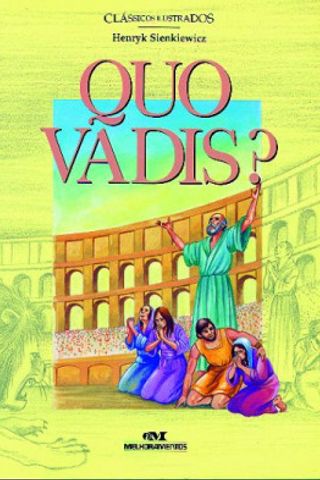
Quo Vadis? - A Narrative of the Time of Nero
Henryk Sienkiewicz, H. Sienkiewicz
Melhoramentos
1997
589 páginas
19h 38m
ISBN-13: 9780781805506




Resenhas (2)Ver mais

Sofia Meneghel16/08/2021Resenhou um livro
Um pouco (muito) exagerado
1 curtida
Estatísticas
Avaliações
3.8 / 22- 5 estrelas45%
- 4 estrelas18%
- 3 estrelas23%
- 2 estrelas9%
- 1 estrelas5%