(1928) / [ASIN: B00TKXUJRC] - Um homem transformado em fantástica criatura marinha aparece no Rio da Prata... Pedro Zurita, un porteño propietario de la goleta "Medusa", cuja ambição supera qualquer limite ou superstição, tenta aprisionar o "monstro" e obrigá-lo a pescar pérolas para ele, mas falha. Enquanto a ação se desloca do "fundo do mar" para o barco de Zurita e volta novamente, com intervalos na ensolarada Buenos Aires e no campo, o mistério de Iquitiandro, o monstro marinho (Ichthyander, the Sea-devil), é desenvolvido diante do leitor numa narrativa tão emocionante quão informativa. O Anfíbio levá-lo-á de volta ao tempo em que a pesca submarina ainda não fizera o "Mundo do Silêncio" contar seus segredos em grande escala, como hoje, e apresentará ao leitor a previsão do Oceano controlado pela Humanidade feita em 1927 por Alexandr Belyaev. El Hombre Anfibio: la mejor ficción rusa en español by Alexander Beliaev [ASIN: B00SG55BUA] - ' En Buenos Aires, las aguas del Río de la Plata ocultan un monstruo marino, ser que rasga las redes de los pescadores, cabalga a lomos de los delfines y aterroriza a los hombres con sus extraños lamentos... Eran los tiempos en los que la investigación submarina apenas había empezado a nacer como disciplina. No existían cámaras acuáticas, equipos de submarinismo con respiradores autónomos ni minisubmarinos. Los fondos marinos y sus criaturas continuaban siendo un misterio por lo que no puede extrañar que el temor supersticioso hubiera hecho presa de la gente. Un agente español, Pedro Zurita, decide sin embargo que merece la pena investigar el fenómeno en aras de obtener un beneficio económico, y aunque fracasa al intentar atrapar a la criatura, obtiene cierta información que le lleva a seguir otra pista. Efectivamente, en una desierta zona de la costa cercana a la capital, el Doctor Salvatore vive recluido tras los muros de una Villa cuyas puertas sólo se abren para atender a sus pacientes indios. Éstos lo reverencian como a un Dios (Salvador) y a Zurita se le ocurre que puede existir alguna relación entre esa "divinidad" terrestre y el demonio marino'.' |...| en los años cuarenta del siglo XX fue ideada la adaptación de la película The Amphibian Man / "El hombre de los Anfibios" —"como los cineastas estadounidenses... Sin embargo, el riesgo y la complejidad de la filmación bajo el agua era tal que antes se consideraba imposible la versión cinematográfica soviética de la película hasta el mejor maestro de Hollywood! En 1962 — "Chelovek-Amfibiy" [aka] Человек-амфибия [aka] El hombre anfibio / Le Tarzan des Mers / L'homme amphibie / Der Amphibienmensch / The Amphibian Man: 'People living in a seaside town are frightened by reports about an unknown creature in the ocean. Nobody knows what it is, but it's really the son of Doctor Salvatore, Ichtyandr Salvator. The doctor performed surgery on his son and now young Ichtiandr can live underwater. This gives him certain advantages, but creates a lot of problems. Written by Boris Shafir En 2004: La Serie "Sea-Devil" basada en la novela «Человек-амфибия» ("El hombre de los Anfibios"). En 2009: Человек-амфибия II. [In development]— The Amphibian Man (2015 Drama): 'Sea-devil has appeared in the Rio de la Plata. On a lonely stretch of the shore, not far from Buenos Aires, Dr. Salvator lives in seclusion, behind a high wall and steel gate. The mystery of The Amphibian Man unfolds in a tragic story of the Man-fish'.'.— Written by Alexander Belyaev & Anatoly Fradis. === http://www.imdb.com/name/nm0069762/ http://www.imdb.com/title/tt0055844/
O Anfíbio (Coleção Jovens do Mundo Todo #27) - Ictiandro, el Hombre Anfibio
Alexander Beliaev
Brasiliense
1962
220 páginas
7h 20m
ISBN-10: 9871489730
Português Brasileiro







Resenhas (1)Ver mais
Vinícius Braga27/04/2026Resenhou um livro
curtir
Estatísticas
Avaliações
3.9 / 6- 5 estrelas33%
- 4 estrelas33%
- 3 estrelas17%
- 2 estrelas17%
- 1 estrelas0%
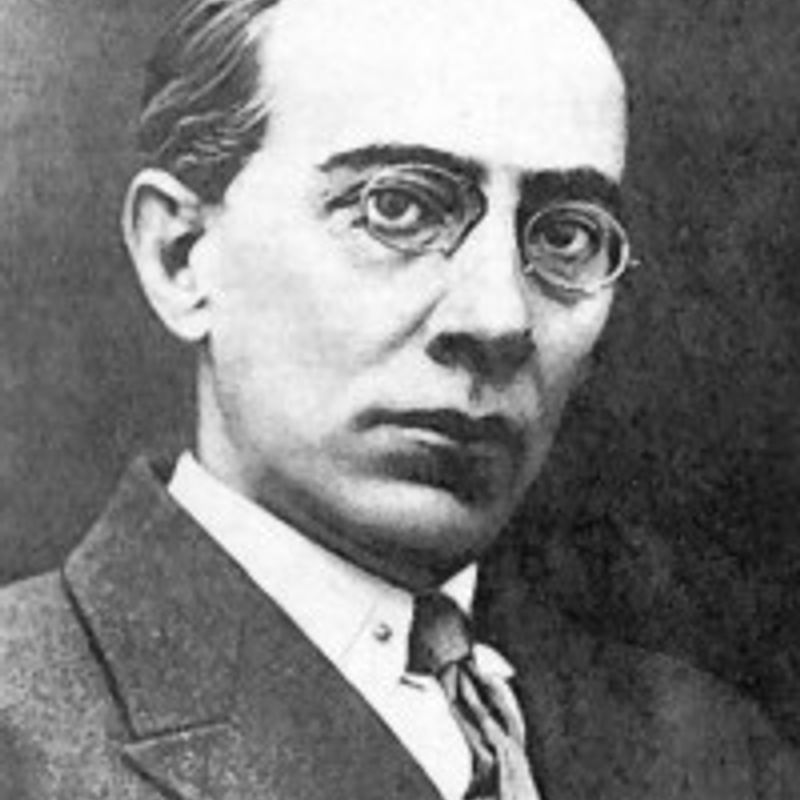
Alexander Romanovich Belyaev
Alexander Belyaev was born in Smolensk in the family of an Orthodox priest. His father, after losing two other children (Alexander's sister Nina died at childhood from sarcoma and his brother Vasiliy, a veterinary student, drowned during a boat trip), wanted him to continue the family tradition and enrolled Alexander into Smolensk seminary. Belyaev, on the other hand, didn't feel particularly religious and even became an atheist in seminary. After graduating he didn't take his vows and enrolled into a law school. While he studied law his father died and he had to support his mother and other family by giving lessons and writing for theater. After graduating from the school in 1906 Belyaev became a practicing lawyer and made himself a good reputation. In that period his finances markedly improved, and he traveled around the world extensively as a vacation after each successful case. During that time he continued to write, albeit on small scale. Literature, however, proved increasingly appealing to him, and in 1914 he left law to concentrate on his literary pursuits. However, at the same time, at the age of 30, Alexander became ill with tuberculosis. Treatment was unsuccessful; the infection spread to his spine and resulted in paralysis of the legs. Belyaev suffered constant pain and was paralysed for six years. His wife left him, not wanting to care for the paralyzed. In search for the right treatment he moved to Yalta together with his mother and old nanny. During his convalescence, he read the work of Jules Verne, H. G. Wells, and Konstantin Tsiolkovsky, and began to write poetry in his hospital bed. By 1922 he had overcome the disease and tried to find occupation in Yalta. He served a brief stint as a police inspector, tried other odd jobs such as a librarian, but life remained difficult, and in 1923 he moved to Moscow where he started to practice law again, as a consultant for various Soviet organizations. At the same time Belyaev began his serious literary activity as writer of science fiction novels. In 1925 his first novel, Professor Dowell's Head (Голова Профессора Доуэля) was published. From 1931 he lived in Leningrad with his wife and oldest daughter; his youngest daughter died of meningitis in 1930, aged six. In Leningrad he met H. G. Wells, who visited the USSR in 1934. In the last years of his life Belyaev lived in the Leningrad suburb of Pushkin (formerly Tsarskoye Selo). At the beginning of the German invasion of the Soviet Union during the Second World War he refused to evacuate because he was recovering after an operation that he had undergone a few months earlier.
6 Livros
3 Seguidores