Peace and War by Raymond Aron is one of the greatest books ever written on international relations. Aron’s starting point is the state of nature that exists between nations, a condition that differs essentially from the civil state that holds within political communities. Ever keeping this brute fact about the life of nations in mind and ranging widely over political history and many disciplines, Aron develops the essential analytical tools to enable us to think clearly about the stakes and possibilities of international relations. In his first section, “Theory,” Aron shows that, while international relations can be mapped, and probabilities discerned, no closed, global “science” of international relations is anything more than a mirage. In the second part, “Sociology,” Aron studies the many ways various subpolitical forces influence foreign policy. He emphasizes that no rigorous determinism is at work: politics—and thus the need for prudent statesmanship—are inescapable in international relations. In part three, “History,” Aron offers a magisterial survey of the twentieth century. He looks at key developments that have had an impact on foreign policy and the emergence of what he calls “universal history,” which brings far-flung peoples into regular contact for the first time. In a final section, “Praxeology,” Aron articulates a normative theory of international relations that rejects both the bleak vision of the Machiavellians, who hold that any means are legitimate, and the naiveté of the idealists, who think foreign policy can be overcome. This new edition of Peace and War includes an informative introduction by Daniel J. Mahoney and Brian C. Anderson, situating Aron’s thought in a new post-Cold War context, and evaluating his contribution to the study of politics and international relations.
Peace and War - A Theory of International Relations
Raymond Aron
Estatísticas
Avaliações
0 / 0- 5 estrelas0%
- 4 estrelas0%
- 3 estrelas0%
- 2 estrelas0%
- 1 estrelas0%
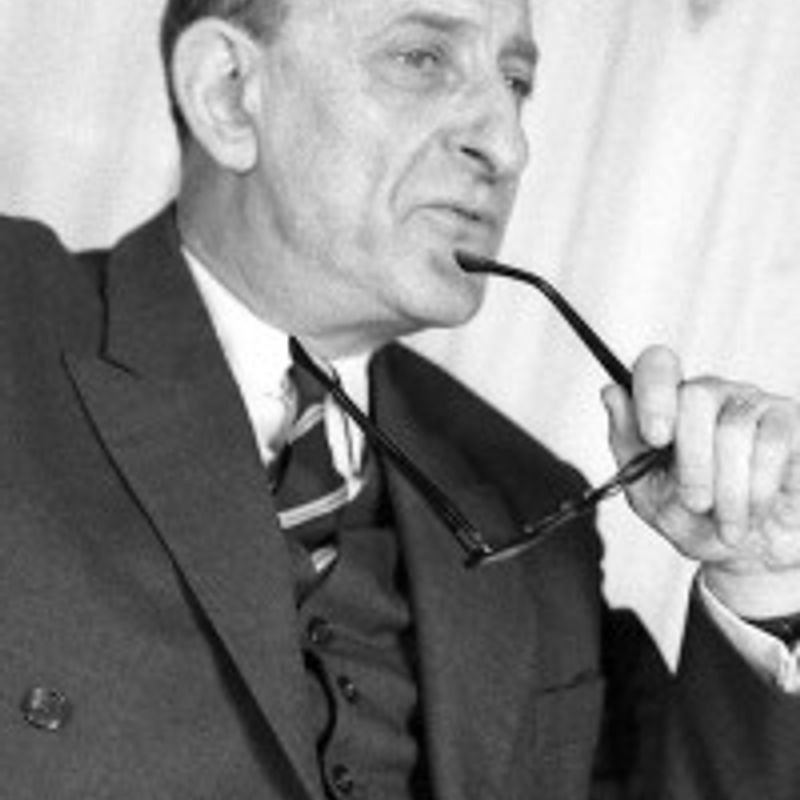
Raymond-Claude-Ferdinand Aron
Foi um importante filósofo, sociólogo, jornalista, comentarista e cientista político francês. <br /> <br /> Seguiu a carreira de um acadêmico extraordinariamente bem-sucedido, superando seus pares em todas as etapas. Frequentou as classes de elite do Lycée Condorcet, foi admitido na École Normale Supérieure em um momento em que ela ainda era a principal grande école do país, prestou exame de agrégation nacional em filosofia em 1928 e foi premiado com o primeiro lugar. Preparou e defendeu uma tese de doutorado em filosofia e era universalmente considerado o filósofo mais promissor de sua geração quando a Segunda Guerra Mundial deu um fim temporário a sua carreira acadêmica. <br /> <br /> Depois da guerra, ele adiou seu retorno à universidade por algum tempo, voltando suas atenções para o jornalismo - ele escreveria cerca de 4 mil artigos editoriais para Le Figaro e outros jornais no decorrer das décadas do pós-guerra -, mas em 1954 foi nomeado para a cátedra na Sorbonne (embora em sociologia) para a qual havia muito tempo ele parecia destinado. Desde então, até sua eleição tardia para uma cátedra no Collège de France, em 1971, o progresso de Aron foi sempre bloqueado por uma aliança de facto de adversários de esquerda e de direita, mas foi mesmo assim eleito membro da Académie de Sciences Morales et Politiques em 1963, e lecionou em um seminário regular na École des Hautes Érudes em Sciences Sociales. Quando de sua morte, era amplamente respeitado, nas palavras de François Furet, "não apenas um grande professor, mas o maior professor na universidade francesa."