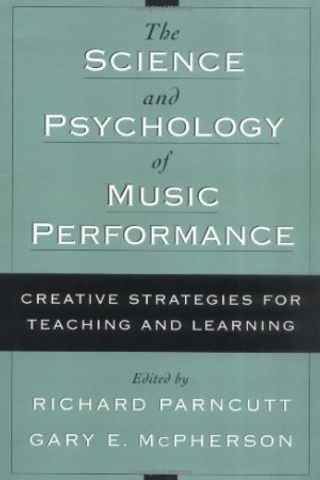
What type of practice makes a musician perfect? What sort of child is most likely to succeed on a musical instrument? What practice strategies yield the fastest improvement in skills such as sight-reading, memorization, and intonation? Scientific and psychological research can offer answers to these and other questions that musicians face every day. In The Science and Psychology of Music Performance, Richard Parncutt and Gary McPherson assemble relevant current research findings and make them accessible to musicians and music educators. This book describes new approaches to teaching music, learning music, and making music at all educational and skill levels. Each chapter represents the collaboration between a music researcher (usually a music psychologist) and a performer or music educator. This combination of expertise results in excellent practical advice. Readers will learn, for example, that they are in the majority (57%) if they experience rapid heartbeat before performances; the chapter devoted to performance anxiety will help them decide whether beta-blocker medication, hypnotherapy, or the Alexander Technique of relaxation might alleviate their stage fright. Another chapter outlines a step-by-step method for introducing children to musical notation, firmly based on research in cognitive development. Altogether, the 21 chapters cover the personal, environmental, and acoustical influences that shape the learning and performance of music.