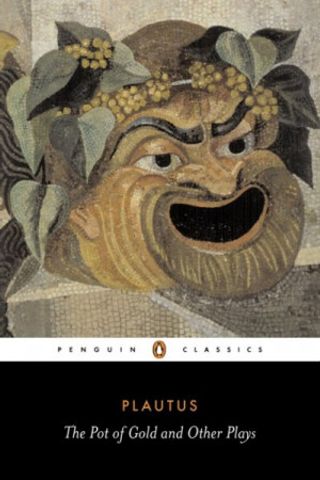
'.' Plautus's broad humor, reflecting Roman manners and contemporary life, is revealed in these five plays: The Pot of Gold (Aulularia), The Prisoners (Captivi), The Brothers Menaechmus (Menaechmi), The Swaggering Soldier (Miles Gloriosus), and Pseudolus. |...| One of the supreme comic writers of the Roman world, Plautus (c.254-184 BC), skilfully adapted classic Greek comic models to the manners and customs of his day. This collection features a varied selection of his finest plays, from the light-hearted comedy Pseudolus, in which the lovesick Calidorus and his slave try to liberate his lover from her pimp, to the more subversive The Prisoners, which raises serious questions about the role of slavery. Also included are The Brothers Menaechmus, which formed the prototype for Shakespeare's The Comedy of Errors, and The Pot of Gold, whose old miser Euclio is a glorious study in avarice. Throughout, Plautus breathes new, brilliant life into classic comic types - including deceitful twins, scheming slaves, bitter old men and swaggering soldiers - creating an entertaining critique of Roman life and values'.' [About the Author & Translator] Titus Maccius Plautus was born in Sarsina, Umbria, in about 254 BC, and was originally named, after his father, Titus. Little is known of his life, but it is believed that he went to Rome when young and worked as a stage assistant. His potential as an actor was discovered and he acquired two other names: Maccius, derived perhaps from the name of a clown in popular farce, and Plautus, a cognomen meaning ‘flat-footed’. Somehow Plautus saved enough capital to go into business as a merchant shipper, but this venture collapsed, and he worked (says the tradition) as a miller’s laborer, and in his spare time studied Greek drama. From the age of forty onwards he achieved increasing success as an adaptor of Greek comedies for the Roman stage. Much of his work seems to be original, however, and not mere translation. He was rewarded by being granted Roman citizenship. According to Cicero he died in 184 BC. E.F. Watling was educated at Christ's Hospital and University College, Oxford. His translations of Greek and Roman plays for the Penguin Classics include the seven plays of Sophocles, nine plays of Plautus, and a selection of the tragedies of Seneca.
The Pot of Gold and other plays (Penguin Classics) - Translated by E. F. Watling
Plauto
Penguin
1965
272 páginas
9h 4m
ISBN-13: 9780140441499

Estatísticas
Avaliações
3 / 1- 5 estrelas0%
- 4 estrelas0%
- 3 estrelas100%
- 2 estrelas0%
- 1 estrelas0%

Titus Maccius Plautus
Tito Mácio Plauto (em latim Titus Maccius Plautus; Sarsina, cerca de 230 a.C. - 180 a.C.) foi um dramaturgo romano, que viveu durante o período republicano. As 21 peças suas que se preservaram até os dias atuais datam do período entre os anos de 205 a.C. e 184 a.C.. Suas comédias estão estão entre as obras mais antigas em latim preservadas integralmente até os dias de hoje, são quase todas adaptações de modelos gregos para o público romano, tal como ocorria na mitologia e na arquitetura romanas. Seus trabalhos foram também fonte de inspiração para muitos renomados escritores, tais como Shakespeare, Molière e outros.
16 Livros
12 Seguidores