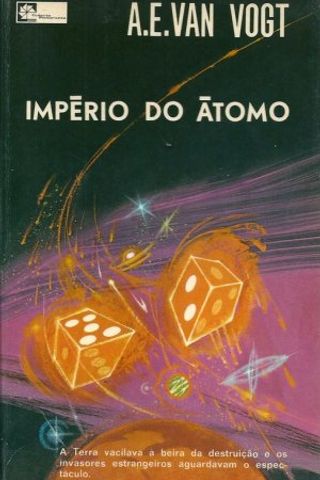
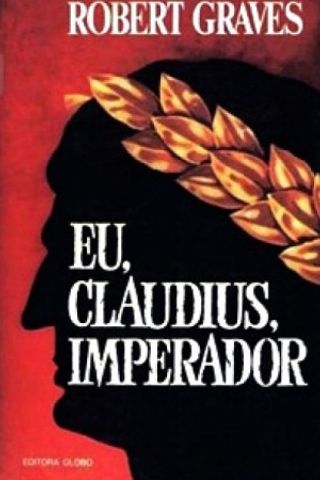
"Empire of the Atom", ©1957. Space Opera de A. E. van Vogt: The First Book of the Mutant Mage Series '-' A Guerra Nuclear havia destruído o mundo. Perdidas as memórias da História, as escassas pessoas surpreendidas pela guerra que ficaram vivas desconheciam o que tinha "disparado" a destruição atômica. Van Vogt toma como ponto de partida a trama e a situação de "Eu, Claudius Imperador" de Robert Graves: Van Vogt "segue a trama mais de perto, concentrando sua invenção no plano de fundo de seu Império enquanto enfatiza a vulnerabilidade do herói". "Empire of the Atom" is a science fiction novel by A. E. van Vogt. The novel concerns adventures of a mutant genius in a barbaric future where spaceships and other forms of advanced technology are used without being understood, most knowledge having been destroyed in an atomic war with an alien species long before the opening of the story. It was first published in 1957 by Shasta Publishers in an edition of 2,000 copies. The novel is a fix-up of the first five of Van Vogt's Gods series stories which originally appeared in the magazine Astounding Science-Fiction [under editor John W. Campbell Jr. His editorship (1937-1971) influenced the 'Golden Age of the Science-Fiction' and the careers of Isaac Asimov, Robert A. Heinlein, Theodore Sturgeon, L. Ron Hubbard, L. Sprague de Camp, Poul Anderson, Lester del Rey, Cleve Cartmill and many others. ] . The remaining Gods stories are collected in The Wizard of Linn. Author and critic James Blish observed that the plot of the Gods stories resembled that of Robert Graves' Claudius novels. Author and critic Damon Knight said that the plot was "lifted almost bodily" from the plot of I, Claudius -- A genealogy chart of the ruling family of the Empire of Linn is included. ==== [Amazon Customer Reviews] Sci-Fi Retelling of "I, CLAUDIUS" by Melissa McCauley on May 6, 2009]: "To the noble house of Emperor Medron Linn (Augustus Caesar) is born the atomic mutation Clane (Claudius). Everyone thinks the physically deformed boy should be disposed of, but a temple scientist takes the youngster under his wing and trains him to use his brilliant mind. Clane survives the many plots and intrigues in the Capitoline Palace and outwits his scheming grandmother Lydia (Livia), quietly pursuing his scientific studies while she advances her son Tews (Tiberius) to the Linnan throne. Clane offers brilliant tactical advice to his uncle Tews and his brother Jerrin (Germanicus) as they continue the imperial policy of conquering the barbarians. Mars and Venus fall to the empire, but Europa unexpectedly sacks the eternal city and kills Tews, leaving Clane the only imperial family member available to take charge of the army. This book seems even more silly and quaint than most science fiction from the 1950s, because the imperial troops zip out in their spaceships to battle the barbarians from horseback with bows and arrows. This book is very obviously a retelling of I, Claudius by Robert Graves'.'
O Império do Átomo (Série Antecipação #23) - Coleção FC nr 23
A. E. Van Vogt
[Alfragide] Galeria Panorama
1968
232 páginas
7h 44m
ISBN-13: 9780020259916
Português

Estatísticas
Avaliações
3.3 / 6- 5 estrelas17%
- 4 estrelas33%
- 3 estrelas17%
- 2 estrelas33%
- 1 estrelas0%

Alfred Elton van Vogt
Foi um dos escritores de ficção científica mais famosos da década de 1940, que é considerada a Era Dourada deste tipo de livros. Começou a sua carreira de escritor com pequenos trabalhos publicados em revistas, mas decidiu mudar e escrever algo que lhe interessava, ficção científica. Em 1941 decidiu tornar-se num escritor a tempo inteiro e desistiu do seu trabalho no Departamento da Defesa canadiano. Durante alguns anos van Vogt escreveu um grande número de "short stories". Na década de 1950 muitos desses livros foram agrupados formando pequenas séries ou "fixups". Este termo foi inventado por van Vogt e começou a ser usado no vocabulário de ficção científica.
43 Livros
14 Seguidores
Winnipeg, Canadá