"Gimpel the Fool" first appeared in English translation in a 1953 edition of the Partisan Review, and is considered one of Isaac Bashevis Singer's most notable and representative works of short fiction. Singer wrote the story, as he did most of his early works, in Yiddish, and its Jewish themes of the individual's search for faith and guidance in a cruel world are explored in a parable form with exaggerated details common to folktales. Saul Bellow translated the story into English, as he did many of Singer's early works, thus introducing him to a wide audience for the first time, even though Singer had been writing for many years. The character of Gimpel has been praised by critics as an example of the "schlemiel"— a foolish, unlucky man—common to Jewish lore, whose follies are delineated in order to present a moral lesson. Set in a bygone era in the imaginary eastern European village of Frampol, the story centers on Gimpel, a baker and a gullible man, who responds to a lifetime of betrayal, heckling, and deception with childlike acceptance and complete faith. Though aware of his own suffering, he is never cynical or resentful; no matter what befalls him, he retains a steadfast belief in human goodness. He accepts life as it unfolds, with all its paradoxes, even enduring the constant and flagrant infidelities of Elka, his wife. Her deathbed confession that none of their children were fathered by him does not alter his love for the children. Gimpel is able to resist the Devil's temptations to take revenge against his deceivers only after Elka's ghost materializes, urging him to continue in the path of righteousness. After his wife dies, Gimpel leaves his family and wanders from village to village as a storyteller. Years later, he waits for death, the one experience by which even he will not be fooled. In the fall of 1978, when Isaac Bashevis Singer was 74 years old, he was awarded the Nobel Prize for literature. His “impassioned narratives,” the citation read, “with roots in a Polish-Jewish cultural tradition, bring the universal human condition to life.” Receiving the Nobel Prize was an astonishing event in the life of Singer, who was born in a small polish village in 1904, and who always wrote in Yiddish. Singer never sought popularity, and he refused to compromise himself by catering to any particular group or audience; he is nonetheless admired by readers all over the world who follow is work in translation in dozens of languages. It has been said that Singer represents the best in the notable Yiddish storytelling tradition, and Gimpel the Fool and Other Stories is Singer at his best. In the 12 stories contained in this beautiful hand-signed volume (including: “The Gentleman from Cracow,” “The Wife Killer,” “By the Light of Memorial Candles,” “The Mirror,” “The Little Shoemakers,” “Joy,” “From the Diary of One Not Born,” “The Old Man,” “Fire,” and “The Unseen”), Singer takes us into a world that few of his readers have known firsthand; it is a world that transcends the tiny Polish villages in which the stories evolve. Focusing sharply on a small community he knows intimately, Singer writes with a vision both profound and cosmic. Isaac Bashevis Singer died on July 24, 1991.
Gimpel the Fool - And Other Stories
Isaac Bashevis Singer
The Franklin Library
1980
223 páginas
7h 26m
ISBN-1: 0
Estatísticas
Avaliações
5 / 1- 5 estrelas100%
- 4 estrelas0%
- 3 estrelas0%
- 2 estrelas0%
- 1 estrelas0%
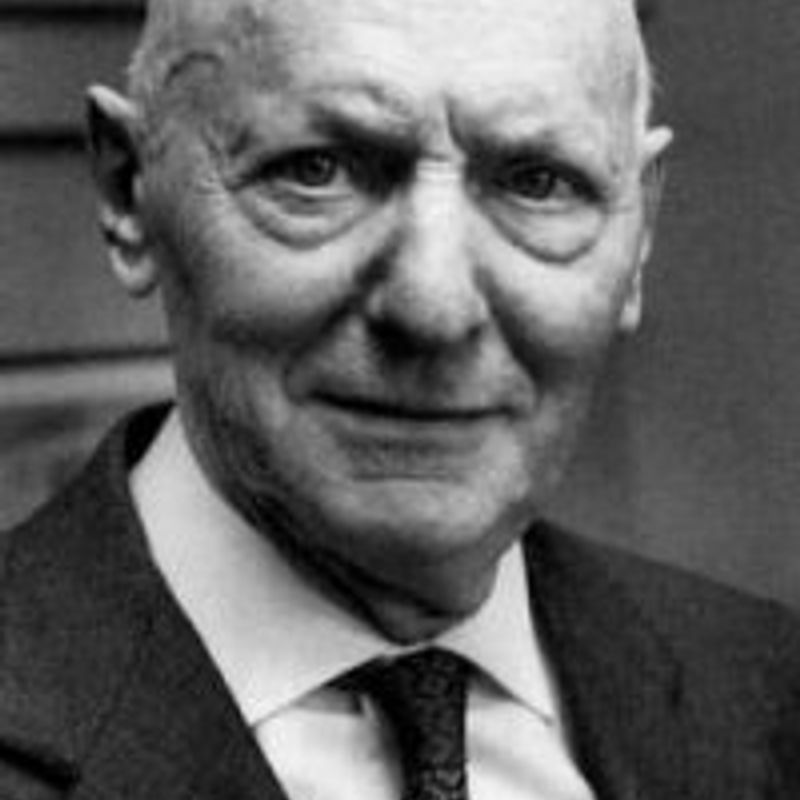
Icek-Hersz Zynger
Isaac Bashevis Singer foi um escritor judeu americano ganhador do Prêmio Nobel. Nasceu na Polônia, filho e neto de rabinos hassídicos, mas viveu muitos anos nos Estados Unidos, onde escreveu e publicou sua obra. A obra de Singer ocupa posição destacada na literatura mundial e o escritor, reconhecido pela Academia Sueca com o Nobel de Literatura de 1978, faz parte daquele conjunto relevante de escritores que fizeram da literatura uma forma de representar a vida, o mundo, a sociedade e o ser humano.
60 Livros
27 Seguidores