Antonio Lucio Vivaldi was born in Venice on 4 March 1678. The son of a barber-violinist, he took orders and was known for the rest of his life as the Red Priest, both from the distinctive colour of his hair and his fiery temperament. Unable to say Mass because of persistent illness, he rapidly became one of the most famous violinists of his day, as well as a composer, impresario and teacher. He travelled the length and breadth of Europe, winning acclaim wherever he went. At the height of his career kings and nobles were his patrons, and yet he died in poverty in Vienna in 1741. For many people, Vivaldi's name is synonymous with that of Venice itself, and no consideration of his life can be divorced from his origin as a son of the Republic - La Serenissima - whose exotic, extravagant culture in the last century in the last cedntury of her existence placed music high on its list of priorities. There was the long tradition at S. Marco, where Vivaldi's father played the violin and where antonio himself, though never on the establishment, deputised. There were the female orphanages, the ospedali, one of which - the Pietà - gave Vivaldi employment intermittently for most of his working life. More important for his significantce in the history of music, however, was the fact that the Pietà orchestra inspired Vivaldi to indulge in the daring experiments in form and texture that remain his lasting monument. Aboce all, there was the amazing world of Venetian opera, with which Vivaldi became involved as violinist, impresario, composer and conductor and for which, at the height of his powers, he sometimes wrote three operas a year. All these aspects of Venetian musical life are given extensive coverage, as well as the chronology of Vivaldi's operatic and instrumental output; his working relationships with his colleagues, including Goldoni; his use - and misuse - of noble patronage; the attitude to his music shown by his contemporaries, including Bach, and the story of his decline in popularity and return to favour. Using letters, diaries, travellers' eyewitness accounts, diplomatic despatches, the venetian State Archives and similar sources of contemporary documentation, Alan Kendall recreates the life and times of one of the most elusive, yet best-loved composers.
Vivaldi
Alan Kendall
Chappell & Company / Elm Tree Books
1978
130 páginas
4h 20m
ISBN-10: 0903443260
Edições (1)
Ver mais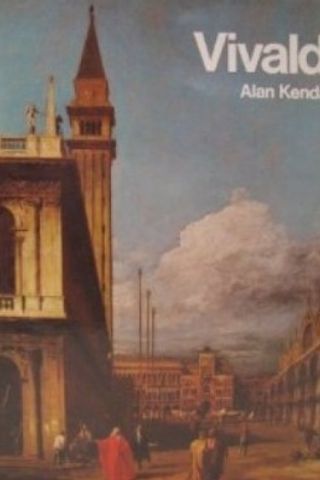
Estatísticas
Avaliações
4 / 1- 5 estrelas0%
- 4 estrelas100%
- 3 estrelas0%
- 2 estrelas0%
- 1 estrelas0%