Life of Pi is a masterful and utterly original novel that is at once the story of a young castaway who faces immeasurable hardships on the high seas, and a meditation on religion, faith, art and life that is as witty as it is profound. Using the threads of all of our best stories, Yann Martel has woven a glorious spiritual adventure that makes us question what it means to be alive, and to believe. Growing up in Pondicherry, India, Piscine Molitor Patel -- known as Pi -- has a rich life. Bookish by nature, young Pi acquires a broad knowledge of not only the great religious texts but of all literature, and has a great curiosity about how the world works. His family runs the local zoo, and he spends many of his days among goats, hippos, swans, and bears, developing his own theories about the nature of animals and how human nature conforms to it. Pi’s family life is quite happy, even though his brother picks on him and his parents aren’t quite sure how to accept his decision to simultaneously embrace and practise three religions -- Christianity, Hinduism, and Islam. But despite the lush and nurturing variety of Pi’s world, there are broad political changes afoot in India, and when Pi is sixteen his parents decide that the family needs to escape to a better life. Choosing to move to Canada, they close the zoo, pack their belongings, and board a Japanese cargo ship called the Tsimtsum. Travelling with them are many of their animals, bound for zoos in North America. However, they have only just begun their journey when the ship sinks, taking the dreams of the Patel family down with it. Only Pi survives, cast adrift in a lifeboat with the unlikeliest of travelling companions: a zebra, an orang-utan, a hyena, and a 450-pound Royal Bengal tiger named Richard Parker. Thus begins Pi Patel’s epic, 227-day voyage across the Pacific, and the powerful story of faith and survival at the heart of Life of Pi. Worn and scared, oscillating between hope and despair, Pi is witness to the playing out of the food chain, quite aware of his new position within it. When only the tiger is left of the seafaring menagerie, Pi realizes that his survival depends on his ability to assert his own will, and sets upon a grand and ordered scheme to keep from being Richard Parker’s next meal. As the days pass, Pi fights both boredom and terror by throwing himself into the practical details of surviving on the open sea -- catching fish, collecting rain water, protecting himself from the sun -- all the while ensuring that the tiger is also kept alive, and knows that Pi is the key to his survival. The castaways face gruelling pain in their brushes with starvation, illness, and the storms that lash the small boat, but there is also the solace of beauty: the rainbow hues of a dorado’s death-throes, the peaceful eye of a looming whale, the shimmering blues of the ocean’s swells. Hope is fleeting, however, and despite adapting his religious practices to his daily routine, Pi feels the constant, pressing weight of despair. It is during the most hopeless and gruelling days of his voyage that Pi whittles to the core of his beliefs, casts off his own assumptions, and faces his underlying terrors head-on. As Yann Martel has said in one interview, “The theme of this novel can be summarized in three lines. Life is a story. You can choose your story. And a story with an imaginative overlay is the better story.” And for Martel, the greatest imaginative overlay is religion. “God is a shorthand for anything that is beyond the material -- any greater pattern of meaning.” In Life of Pi, the question of stories, and of what stories to believe, is front and centre from the beginning, when the author tells us how he was led to Pi Patel and to this novel: in an Indian coffee house, a gentleman told him, “I have a story that will make you believe in God.” And as this novel comes to its brilliant conclusion, Pi shows us that the story with the imaginative overlay is also the story that contains the most truth.
Life of Pi -
Yann Martel
Edições (1)
Ver mais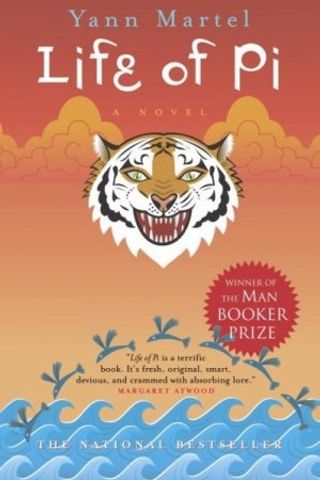

Um indiano, um tigre, um plágio
O livro do espanhol Yann Martel é o relato de um menino indiano chamado Piscine Molitor Patel, “Pi” Patel, que sofre um acidente em alto mar quando o navio em que viajava com sua família e alguns animais do zoológico de sua família afunda. Salvo – ou não – num bote salva vidas, ele vê seu navio mergulhando nas águas do pacífico, sem nenhum membro de sua família consigo – ou não – para lhe fazer companhia. Entretanto, ele conta com uma zebra, um orangotango e um tigre como colegas de viagem – ou não. E isso é apenas o início da narrativa. Pi é um menino muito curioso que, ainda bem jovem, decide abraçar três religiões ao mesmo tempo: o hinduísmo, o cristianismo e o islamismo. Além do mais, por ser o filho de um dono de zôo, ele tem grande conhecimentos sobre a vida e o comportamento dos mais diversos animais. A Vida de Pi é um livro de auto-ajuda romanceado. É a malfadada saga de um menino temente a Deus e de um tigre – ou não – jogados num barco salva-vidas por 227 dias e se deparando com peixes-voadores, tartarugas e uma ilha carnívora (gulp!). Ou seja, é um daqueles livros menores imbuído com a mensagem “se você lutar, você conseguirá!” e alguns toques de religião e veterinária permeando a tragédia oceânica do personagem central. Ainda que possivelmente bom para ser indicado para adolescentes, a aventura do super-religioso, veterinário proficiente e explorador da national geographic Pi Patel é irreal e deixa poucas lembranças após sua leitura. É a força vital e o desejo de sobreviver versus um tigre e um oceano imprevisível e impiedoso, contados no melhor estilo “filosofia para dummies”. A obra teria sido um plágio do livro “Max e os Felinos”, do escritor Moacyr Scliar, segundo dizem. Segundo consta, a única semelhança entre os dois livros é o fato de o personagem principal estar preso num barco com um felino selvagem, aqui um tigre, lá um jaguar. Yann Martel teria dito que não poderia ter escrito um plágio, pois Scliar seria “um escritor menor que eu jamais li.” Bem, Max and the Cats está no mercado americano a bem mais de 20 anos, enquanto que o livro de Martel acaba de completar 10 anos. Depois de anos de críticas e cutucadas entre os dois, Yann colocou panos quentes na polêmica com um telefonema a Scliar e uma tonelada de explicações à imprensa. Comparando os dois é possível ver que não há chance de plágio, fora o ambiente retratado ser o mesmo – mar, bote, tigre. Seja como for, Scliar faleceu e nos deixou com seu legado de maravilhosas obras, Martel publicou seu segundo volume no Brasil, “Beatriz e Virgílio”, e poucos leitores sabem da coexistência das obras. Além do mais, o livro de Scliar continua sendo melhor.
Estatísticas
Avaliações
4 / 184- 5 estrelas36%
- 4 estrelas38%
- 3 estrelas17%
- 2 estrelas5%
- 1 estrelas4%