The Village of Hommlet has grown up around a crossroads in a woodland. Once far from any important activity, it became embroiled in the struggle between gods and demons when the Temple of Elemental Evil arose but a few leagues away. Luckily of its inhabitants, the Temple and its evil hordes were destroyed a decade ago, but Hommlet still suffers from incursions of bandits and strange monsters. This adventure contains a map of the village and lands around, a large scale map of the inn, church, trading post, and guard tower (main floor, upper rooms and cellars), an informational key regarding the inhabitants, and a map and exploration key for a destroyed moat house, a former outpost of the Temple of Elemental Evil. The whole provides a complete, ready-to-play scenario, and is a lead-in to T1-4: The Temple of Elemental Evil. Product History T1: "The Village of Hommlet" (1979), by Gary Gygax, was released in 1979 and was probably TSR's ninth adventure. It was released at GenCon XII (1979) alongside S2: "White Plume Mountain" (1979). As with other early adventures, "Hommlet" was originally published with a monochrome cover - here, orange. It was later reprinted (1981) with the full-color cover that had become standard for TSR a few years later. Adventure Origins. "The Village of Hommlet" was derived directly from Gary Gygax's AD&D house campaign. He started running "The Temple of Elemental Evil" after giving his classic Castle Greyhawk campaign entirely over to his co-GM, Rob Kuntz. At the time, Gygax was purposefully merging his profession with his advocation - creating a new campaign to test out ideas about outdoor terrain and random dungeons that he later planned to publish. A Secret Cover. The cover for Basic D&D supplement AC5: Player Character Record Sheets (1984) was originally produced by Clyde Caldwell for an adventure he was told was called "The Moathouse." It depicts locations 1 and 2 from the upper level of the Moathouse in Hommlet, full of giant frogs and a rotting drawbridge. A Few Firsts. "Village of Hommlet" was the first TSR adventure to depict an urban locale: Hommlet takes up almost three-quarters of the module. Judges Guild had begun depicting City-State of the Invincible Overlord (1976+) building by building a few years earlier, but this was a first for the actual producers of D&D. "Hommlet" garnered lots of acclaim, and this was probably why: It started to depict a world wider than just subterranean adventure locales, and it was as much about roleplaying as fighting. Thanks to the village of Hommlet, this adventure also marks TSR's first use of the "home base + adventure" trope, which Gygax would use to best effect in B2: "Keep on the Borderlands" (1979). Most other adventures using this formula would use a town, just like Gygax did, whether it be Orlane, Restenford, or some other facsimile. T1 was also Gygax's first low-level adventure, for 1st-level characters. Despite that, the adventure was not truly "introductory": Players and GMs looking for advice on how to play D&D would instead need to have sought - not unironically - for B1: "In Search of Adventure" (1978), published late the previous year. Expanding Greyhawk. The depiction of Hommlet marks the first in-depth description of any part of the world of Greyhawk. It also offers up the first serious depiction of a Greyhawk god: St. Cuthbert, who has a detailed church in Hommlet. Cuthbert had been mentioned a few times previously, in Eldritch Wizardry (1976) and as "St. Cuthburt" in The Dragon #2 (August 19776). The Adventure Continues. Though T1 offers a nice introductory dungeon, it's also a big tease for the big dungeon, the Temple of Elemental Evil, which should have been adventure T2. Gygax started talking about T2 being delayed as early as The Dragon #35 (March 1980). In fact, it would take another five years for the adventure to actually appear! As such, it was a matched pair with Q1: "Queen of the Demonweb Pits" (1981), the module intended to complete the DGQ series (though that one only got delayed for two years). Future History. Hommlet was eventually rereleased as part of the "mega-module" T1-4: The Temple of Elemental Evil (1985). It was much later revised not once, but twice for 4e, first for sanctioned RPGA play (without the village!) as Return to the Moathouse (2008), by Mike Mearls, then as an exclusive reward for RPGA members as The Village of Hommlet (2009), by Andy Collins. About the Creators. Though Gygax would create a few more adventures in 1979 and 1980, "Hommlet" marked the beginning of the end of his time as TSR's (almost) sole creator of adventures.
Edições (1)
Ver mais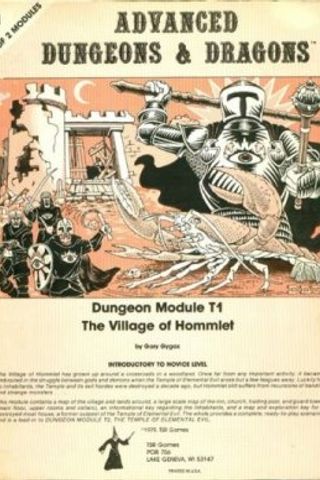
Estatísticas
Avaliações
4 / 1- 5 estrelas0%
- 4 estrelas100%
- 3 estrelas0%
- 2 estrelas0%
- 1 estrelas0%
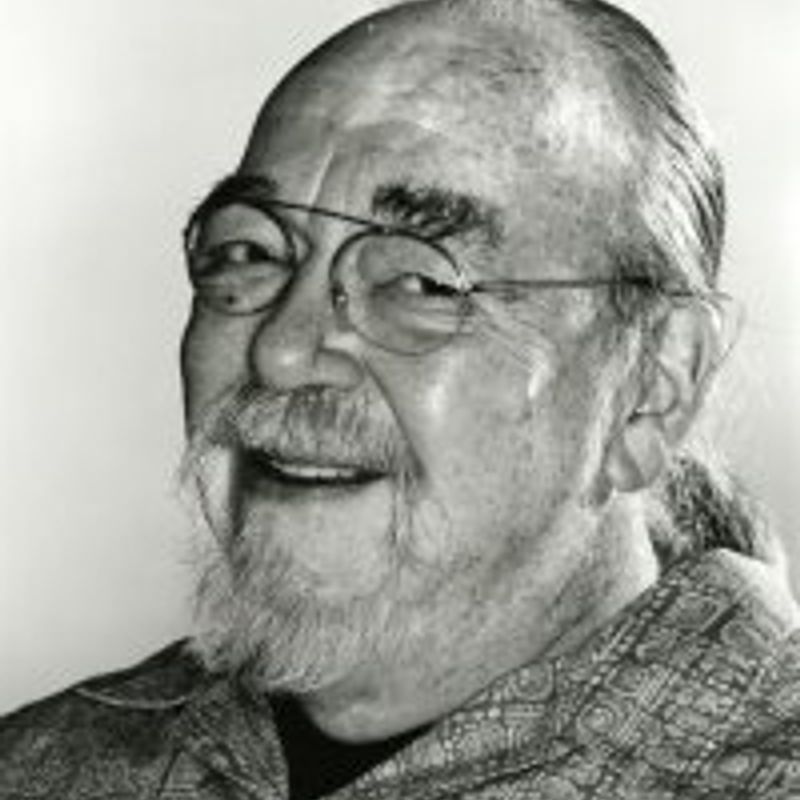
Ernest Gary Gygax
Ernest Gary Gygax (27/06/1938 a 04/03/2008), foi um escritor americano e designer de jogos, melhor conhecido pela (co-)criação do pioneiro jogo de interpretação Dungeons & Dragons (D&D) em conjunto com Dave Arneson. Gygax é geralmente conhecido como um dos pais do jogo de interpretação de mesa. Nos anos 60, Gygax criou uma organização de clubes de wargames e fundou a convenção de jogos Gen Con. Em 1971 ele ajudou a desenvolver o wargame de miniaturas chamado Chainmail o qual foi baseado sobre guerra medieval. Ele foi o co-fundador da compania Tactical Studies Rules (TSR, Inc.) com um amigo de seu filho Don Kaye em 1973. No ano seguinte ele criou o jogo Dungeons & Dragons com Dave Arneson, expandindo seu trabalho anterior, Chainmail, e incluindo elementos de histórias de fantasia os quais ele amava como uma criança. Ele também fundou a revista The Dragon no mesmo ano para dar suporte ao novo jogo. Em 1977, Gygax começou a trabalhar em uma versão mais compreensível do jogo chamada Advanced Dungeons & Dragons. Gygax designou vários manuais para o sistema de jogo, como também várias aventuras pré-feitas chamadas "módulos" que deu à pessoa responsável pela condução do jogo de D&D (o mestre) o esboço do roteiro e idéias sobre como conduzir um jogo particular em cenário de aventuras. Em 1983 ele trabalhou para licenciar a linha de produtos D&D na série de desenhos animados de sucesso "Dungeons & Dragons", que no Brasil fora lançado com o nome "Caverna do Dragão". Depois de deixar a TSR em 1985 sobre assuntos com seu mais novo dono, Gygax continuou a produzir títulos de jogos de interpretação independentemente, começando com o multi-gênero Dangerous Journeys em 1992. Ele designou outro sistema de jogo chamado de Legendary Adventure, lançado em 1999. Em 2005, Gygax se envolveu com o jogo de interpretação Castles & Crusades o qual foi concebido como um híbrido entre os jogos da 3ª edição e os jogos da versão clássica feitos por Gygax. Gygax se casou duas vezes e teve seis filhos no total. Em 2004 ele sofreu dois AVCs (Acidente Vascular Cerebral, popularmente conhecido como derrame), evitou por pouco um infarto e foi então diagnosticado um aneurisma aórtico abdominal, do qual veio a falecer em março de 2008.
17 Livros
7 Seguidores
Wisconsin, Estados Unidos