The portion of total "profit" obtained by the private employer or undertaker, as such, is here eliminated; or, rather, it is made definite and measurable in being divided among the managing director, the ordinary directors, and the secretary, who are paid a fixed fee, salary, or, accurately and simply, a wage. A careful consideration of the balance sheet of any such company will guard us against a common misunderstanding. Such a balance sheet will generally show two funds - a Depreciation Fund and an Insurance Fund. The former, sometimes called Sinking, Wear and Tear, Repairs, or Replacement of Capital Fund, secures that fixed capital, or its value, is replaced in the proportion in which it is worn out, and thus provides a guarantee that the value of the parent capital is not encroached upon, or inadvertently paid away in dividend. The latter, sometimes called Equalisation of Dividend Fund, is a provision for averaging the losses that are sure to occur over a series of years, and are really a portion of the current expenses. It is only after these funds are provided for that the dividend is paid over to the shareholders, and this accentuates two important facts: (1) that interest properly so called is something distinct from any portion of parent capital, and (2) that it is not accounted for by insurance against risks. The question now is, Is such a dividend pure interest? Here we have to reckon with the familiar fact that limited companies, under similar conditions, pay the most various rates of dividend. If then we accept "dividend" as the equivalent of "interest" we shall have to conclude that varying rates of interest are obtainable on equal amounts of capital. On looking closer, however, we find the dividing line again reasserting itself. If a sound industrial company is known to be paying a dividend higher than a certain definite percentage on its capital, the value of the stock, or parent capital, will rise to the point where dividend corresponds to an interest no greater than this definite percentage - e.g. the £100 stock of a great railway paying 5 per cent will rise to something like £125, at which price the 5 per cent dividend on the original capital shows a return of 4 per cent on the new value of the capital.
Capital And Interest - A Critical History Of Economical Theory
Eugen von Böhm-Bawerk
Forgotten Books
2015
480 páginas
16h 0m
ISBN-13: 9781163517833
Edições (1)
Ver mais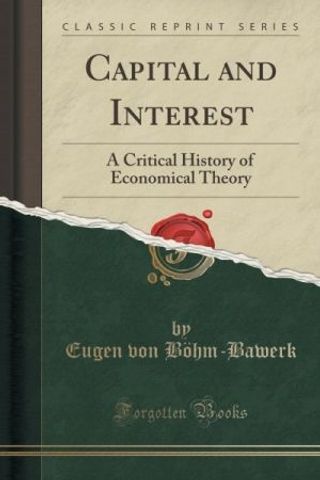
Estatísticas
Avaliações
0 / 0- 5 estrelas0%
- 4 estrelas0%
- 3 estrelas0%
- 2 estrelas0%
- 1 estrelas0%
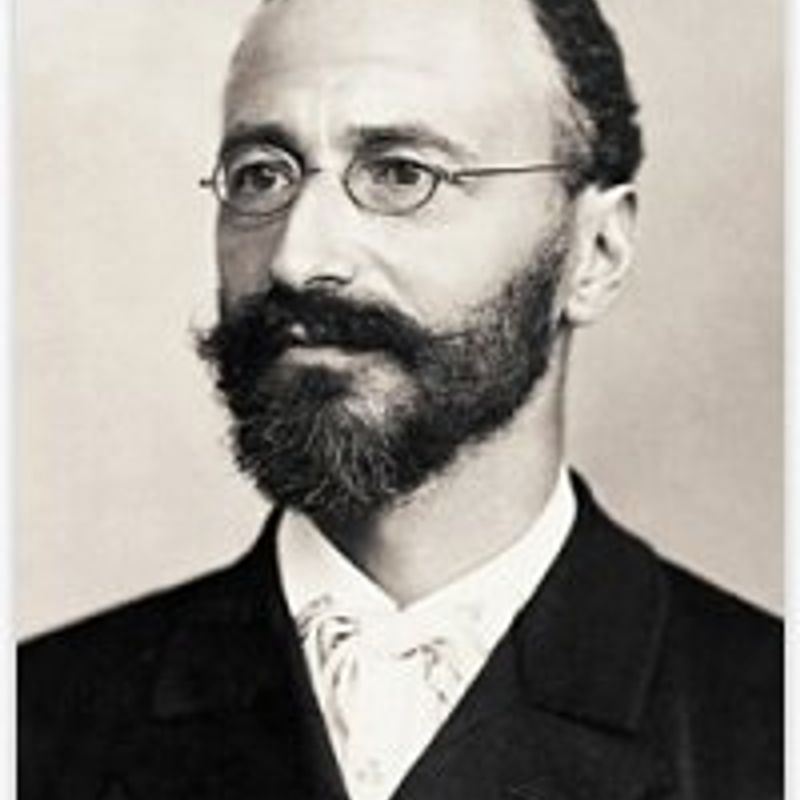
Eugen Böhm Ritter von Bawerk
Böhm-Bawerk foi um economista austríaco que fez importantes contribuições para o desenvolvimento da chamada Escola Austríaca de Economia. Nascido Eugen Böhm, seu nome foi mudado para Eugen Böhm Ritter von Bawerk, em 1854, quando seu pai foi elevado a cavaleiro (Ritter, em alemão). Entretanto, normalmente assinava Eugen von Böhm-Bawerk ou Eugen Böhm-Bawerk. Estudou direito na Universidade de Viena, onde leu o livro Princípios de Economia, de Carl Menger. Embora ele nunca tenha sido aluno de Menger, ele rapidamente tornou-se um partidário de suas teorias. Joseph Schumpeter disse que Böhm-Bawerk "era tão completamente entusiasmado discípulo de Menger que dificilmente é necessário procurar outras influências". Durante o período na Universidade de Viena, Böhm-Bawerk tornou-se amigo de Friedrich von Wieser, quem mais tarde foi também seu cunhado. Após completar seus estudos, ele entrou no ministério das finanças austríaco. Böhm-Bawerk passou boa parte da década de 1880 na Universidade de Innsbruck (1881-1889). Durante esse tempo ele publicou os primeiros dois (em um total de três) volumes de sua magnum opus, Capital e Juro (Capital and Interest). Em 1889 ele foi chamado a Viena pelo ministério das finanças para esboçar uma proposta para a reforma tributária. O sistema austríaco naquele momento tributava de forma pesada a produção, especialmente durante a guerra, fornecendo desincentivos maciços ao investimento. A proposta de Böhm-Bawerk sugeria um moderno imposto de renda, o qual foi logo aprovado e teve grande sucesso nos anos seguintes. Ele então tornou-se ministro das finanças austríaco em 1895. Ele serviu brevemente, e novamente em uma outra ocasião, embora uma terceira vez ele tenha permanecido no cargo de 1900 até 1904. Como ministro das finanças ele lutou continuamente pela estrita manutenção do padrão ouro legalmente fixado e um orçamento equilibrado. Em 1902 ele eliminou o subsídio ao açúcar, o qual tinha sido uma característica do Império Austríaco por quase dois séculos. Renunciou finalmente em 1904, quando as crescentes demandas fiscais do exército ameaçaram desequilibrar o orçamento. Ele escreveu extensivas críticas ao pensamento econômico de Karl Marx nas décadas de 1880 e 1890, e vários proeminentes marxistas —incluindo Rudolf Hilferding— estiveram em seu seminário em 1905-06. Ele voltou a lecionar em 1904, com uma cadeira na Universidade de Viena. Ele ensinou muitos estudantes, entre eles Joseph Schumpeter, Ludwig von Mises e Henryk Grossman. Böhm-Bawerk morreu em 1914.
11 Livros
15 Seguidores
Morávia, Áustria-Hungria