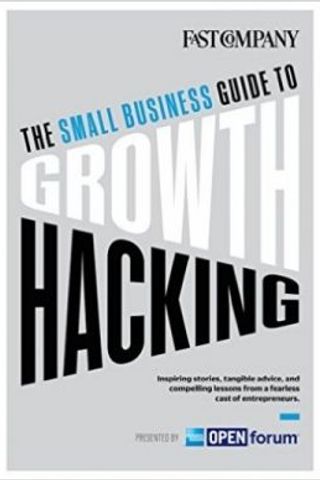
For many entrepreneurs, the most confounding aspect of business is growth. How do you generate enough business to get started? And, later, how do you manage the many complex changes that accompany growth? How do you keep innovating to expand your business in new directions? Fast Company’s The Small Business Guide to Growth Hacking, presented by OPEN Forum from American Express OPEN, explores these questions and more. This exclusive collection is drawn from articles in Fast Company and openforum.com and focuses on what it takes to build a thriving business that manages to both grow and adapt to the demands of a bigger company. The solutions here are rooted in ultra-clever problem solving that short-circuits conventional sales, marketing, and product-development approaches—what many refer to as “growth hacking.” There’s Dropbox founder Drew Houston creating a popular storage service to take on web giants; Sophia Amoruso using street smarts to turn a modest eBay store into the $100 million retail brand Nasty Gal; and best-selling author Guy Kawasaki offering the do’s and don’ts of pitching your business. From common mistakes that undermine small businesses to a constructive framework for thinking about vision and investments, this indispensable book arms entrepreneurs with strategies for smart growth.
The Small Business Guide to Growth Hacking (1 #1) -
Ryan Holiday
Fast Company
2015
57 páginas
1h 54m
ISBN-10: B0167KPTLQ
Resenhas (2)Ver mais

Felipe Moitta29/08/2018Resenhou um livro
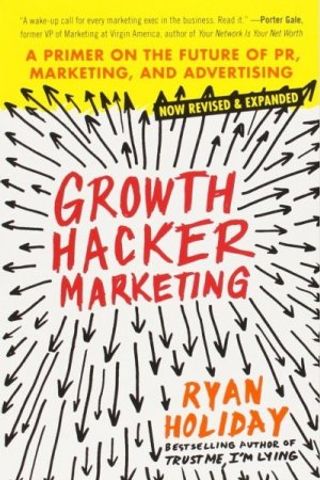
Growth Hacker Marketing
Since Hotmail, many others—particularly in the tech space—have begun to push and break through the limits of marketing. With a mind for data and a scrappy disregard for the “rules,” they have pioneered a new model of marketing designed to utilize the many new tools that the Internet has made available: E-mail. Data. Social media. Lean methodology. A growth hacker is someone who has thrown out the playbook of traditional marketing and replaced it with only what is testable, trackable, and scalable. Their tools are e-mails, pay-per-click ads, blogs, and platform APIs instead of commercials, publicity, and money. While their marketing brethren chase vague notions like “branding” and “mind share,” growth hackers relentlessly pursue users and growth—and when they do it right, those users beget more users, who beget more users. Deep down, traditional marketers have always considered themselves artists. That’s fine—it’s an image I aspired to myself. It’s a sentiment responsible for spectacular and moving work. But this sentiment is also responsible for some appalling ignorance and waste. One Harvard Business Review study found that 80 percent of marketers are unhappy with their ability to measure marketing return on investment (ROI). Not because the tools aren’t good enough, but because they’re too good, and marketers are seeing for the first time that their marketing strategies are “often flawed and their spending is inefficient.” “Marketing has always been about the same thing—who your customers are and where they are.” What growth hackers do is focus on the “who” and “where” more scientifically, in a more measurable way. Whereas marketing was once brand based, with growth hacking it becomes metric and ROI driven. Suddenly, finding customers and getting attention for your product become no longer a guessing game. Growth hackers trace their roots back to programmers—and that’s how they see themselves. They are data scientists meets design fiends meets marketers. They welcome this information, process it and utilize it differently, and see it as desperately needed clarity in a world that has been dominated by gut instincts and artistic preference for too long. growth hacking is more of a mind-set than a tool kit. Growth hacking at its core means putting aside the notion that marketing is a self-contained act that begins toward the end of a company’s or a product’s development life cycle. It is, instead, a way of thinking and looking at your business. But in 2007, the business started as a way for the founders to turn the living room of their loft apartment into a little bed and breakfast. The founders named it Airbedandbreakfast.com and put out air mattresses on their floor and offered free homemade breakfast to guests. But the founders wanted more. Going back to the drawing board and hoping to capitalize on popular technology and design conferences, the founders repositioned the service as a networking alternative for attendees when hotels were booked up. This was clearly a better market, but the founders sensed they could improve the idea further, so they pivoted slightly to target the type of traveler who didn’t want to crash on couches or in hostels but was looking to avoid hotels. This did better still. Finally, based on feedback and usage patterns, they shortened the name to Airbnb, abandoned the breakfast and networking parts of the business, and redefined the service as a place for people to rent or book any kind of lodging imaginable (from rooms to apartments to trains, boats, castles, penthouses, and private islands). This was explosive—to the tune of millions of bookings a year in locations all over the world. Airbnb had a good idea in 2007. The founders could have spent all their time and energy trying to force the “let people crash on your floor and feed them breakfast” angle and created a small business around it. Instead, they treated their product and service as something malleable and were able to change and improve it until they found its best iteration. They went from a good idea to an explosive idea and, soon, a billion-dollar valuation. It was undoubtedly the best marketing decision they ever could have made. No longer content to let the development happen as it happens, we can influence it with input, with rules and guidelines, and with feedback. The growth hacker helps with iterations, advises, and analyzes every facet of the business. In other words, Product Market Fit is a feeling backed with data and information. Part of this new approach is having the humility to accept that marketers are not necessarily the most critical members of the team. It’s true. Sometimes the best thing marketers can do is to not let people get distracted by “marketing” for a minute. Sometimes the outward-facing part of the job is exactly the least important part. From Google to Optimizely to KISSmetrics, there are great services that allow you to see what your users are actually doing and responding to on your site. This insight will get you closer to a fit than gut instincts ever will. But the most effective method is simply the Socratic method. We must simply and repeatedly question every assumption. Who is this product for? Why would they use it? Why do I use it? Ask your customers questions, too: What is it that brought you to this product? What is holding you back from referring other people to it? What’s missing? What’s golden? Don’t ask random people or your friends—be scientific about it. With growth hacking, we begin by testing until we can be confident we have a product worth marketing. Only then do we chase the big bang that kick-starts our growth engine. This means that our outward-facing marketing and PR efforts are needed simply to reach out to and capture, at the beginning, a group of highly interested, loyal, and fanatical users. Then we grow with and because of them. It doesn’t matter how many people know about you or how they find out about you. It matters how many sign up. If handing out flyers on the street corner accomplishes that, then consider it growth hacking. Today, as a marketer, our task isn’t necessarily to “build a brand” or even to maintain a pre-existing one. We’re better off building an army of immensely loyal and passionate users. Which is easier to track, define, and grow? Which of these is real and which is simply an idea? And when you get that right—a brand will come naturally. “Focusing on customer acquisition over ‘awareness’ takes discipline. . . . At a certain scale, awareness/brand building makes sense. But for the first year or two it’s a total waste of money.” The most insidious part of the traditional marketing model is that “big blowout launch” mythology. Of course, equally seductive is the “build it and they will come” assumption that too many people associate with the web. Both are too simple and rarely effective. Remember what Aaron Swartz realized. Users have to be pulled in. A good idea is not enough. Your customers, in fact, have to be “acquired.” But the way to do that isn’t with a bombardment. It’s with a targeted offensive in the right places aimed at the right people. You’ve heard it in a million meetings. And clients are so flip about it: “We want to go viral. Make people share this online.” Everyone wants it. As though massive viral sharing is as simple as asking for it. The growth hacker has a response: Well, why should customers do that? Have we actually made it easy for them to spread your product? Is the product even worth talking about? Only a specific type of product or business or piece of content will go viral—it not only has to be worth spreading, it has to provoke a desire in people to spread it. Until you have accomplished that, or until your client is doing something truly remarkable, it just isn’t going to happen. Remember, a growth hacker doesn’t think branding is worthless, just that it’s not worth the premium that traditional marketers pay for it. You need the kind of objectivity that makes you forget everything you’ve heard, clear the table, and do a factual study like a scientist would. —Steve Wozniak Aaron Ginn explained to me that even the best growth hacker cannot “grow a broken product.” Just because you’ve achieved product market fit doesn’t mean that your idea is flawless, that there aren’t huge areas that still need to be tweaked and improved. According to Bain & Company, a 5 percent increase in customer retention can mean a 30 percent increase in profitability for the company. And according to Market Metrics, the probability of selling to an existing customer is 60–70 percent, while to a new prospect it’s just 5–20 percent. Bronson Taylor, host of Growth Hacker TV, puts it in a phrase: “Retention trumps acquisition.” Before he became the most brilliant and famous man in the ad business, David Ogilvy sold ovens door-to-door. Because of that, he never forgot that advertising is just a slightly more scalable form of creating demand than door-to-door sales. But the rest of us, decades away from a world of traveling salesmen and mail-order catalogs, have lost sight of this fundamental reality. We forget the function behind the form and miss out on new opportunities because we can’t see what’s in front of us. At the core, marketing is lead generation. Ads drive awareness . . . to drive sales. PR and publicity drive attention . . . to drive sales. Social media drives communication . . . to drive sales. Marketing, too many people forget, is not an end unto itself. It is simply getting customers. And by the transitive property, anything that gets customers is marketing. The thing about marketers—and, well, everyone—is that we’re wrong all the time. We think we make good gut decisions, but we don’t. The old model makes being wrong incredibly expensive. Who can afford to learn that the product isn’t resonating after they’ve spent months planning a campaign? Growth hacking fundamentally reduces the costs of being wrong, giving us freedom to experiment and try new things. We’re no longer going to tolerate being part of the former category. As I interviewed and read about the dozens of growth hackers whose many insights contributed to this short e-book, I noticed that each one had used an almost entirely different set of tactics than the others. Some had relied on viral features; others leaned more heavily on product and optimization. Some were expert e-mail marketers, while others knew how to use platforms and APIs to reach equally large amounts of people. For all the tactical differences, the strategic goal was the same: to reach people in an effective, scalable, and data-driven way.
curtir
Estatísticas
Avaliações
3.7 / 19- 5 estrelas16%
- 4 estrelas37%
- 3 estrelas26%
- 2 estrelas21%
- 1 estrelas0%

Ryan Holiday
Ryan Holiday é um estrategista de mídia para clientes como a American Apparel, um dos maiores fabricantes de roupas nos Estados Unidos. Aos 19 anos, largou a faculdade para trabalhar com Robert Greene, autor de As 48 leis do poder. Aos 25 anos, é diretor de marketing da American Apparel, onde seu trabalho de publicidade é conhecido internacionalmente. Suas estratégias são usadas como estudo de caso no Twitter, Youtube e Google e foram publicadas na AdAge, New York Times, Fast Company e no blog Gawker. Em 2012, esteve em São Paulo para participar do The Next Web Conference Latin America, um dos principais eventos ligados à internet do mundo. Atualmente vive em New Orleans.
44 Livros
74 Seguidores