[This is a] clearly written, and easily digested book by Neal Leavitt. . . .Overall, it is easy to recommend Leavitt’s book as a resource for those teaching The Law of Peoples. . . .For research scholars, this book, easily and quickly read, repays with not only some valuable foreign policy insights but also an important reminder of the historical and political context and concerns that ought to frame and inform foreign policy research. (Perspectives on Politics) In times where violent conflicts and protests, sometimes amounting to civil war, conflicts on nuclear weapon programmes, and spy scandals causing mistrust between democracies dominate news reports, Neal Leavitt’s book The Foreign Policy of John Rawls and Amartya Sen generates valuable insights into how the ideas of Rawls and Sen might make the foreign policy of democratic regimes 'a little better' – as Leavitt characterises the core of Rawls’ political philosophy – and to understand the dynamics of world politics and their effect on the everyday life of people (44). . . .Leavitt makes a valuable contribution to the understanding of both Rawls and Sen in relation to one another, and generates insights into how both theories can help to understand and inform the foreign policies of democratic regimes. (E-International Relations) Neal Leavitt offers a lucid and timely analysis of the political philosophies of John Rawls and Amartya Sen and the alternatives they offer to realist foreign policies that have perpetuated international hostilities and war. Leavitt’s important and highly relevant study illuminates perspectives that will help readers sift through complex political and philosophical debates concerning nuclear proliferation, justifications for war, and basic human rights, such as the rights to health care, food and education. If our political leaders thought this clearly and wisely, the world would be a far better place. (Natalie McKnight, professor of humanities, Boston University) In this concise, clearly written book, Neal Leavitt discusses ideas from the writings of John Rawls and Amartya Sen and applies them to a wide range of central issues in both foreign and domestic policy. This very readable book is rich both in its consideration of political theory and in its treatment of real world problems, ranging from education and health care to nuclear weapons. (Stephen Nathanson, professor of philosophy, Northeastern University) This book provides a thorough overview of Rawls’s views on foreign policy. Leavitt shows the continuing relevance of Rawls’s political philosophy to contemporary discussions of foreign policy. By putting Rawls and Sen into dialogue with each other over issues such as defense, nuclear weapons, and foreign aid, Leavitt provides a helpful way to think about the work of these two great thinkers. (Serena Parekh, assistant professor of philosophy, Northeastern University) In this engaging study, Neal Leavitt brings the foreign policy of John Rawls and Amartya Sen into sharper focus. In a thorough review of Rawls’ late work and Sen’s ongoing investigations, Leavitt argues that a foreign policy premised on the doctrine of political realism can have pernicious effects on domestic economies and the relationships between leaders and civilians. In Leavitt’s work, Rawls and Sen emerge as essential voices to be reckoned with in discussions of globalization, security, and human dignity. (Adam W. Sweeting, acting chair, division of humanities, Boston University College of General Studies) This should be essential reading for all future U.S. Presidents. Neal Leavitt makes a strong case that moral considerations are ignored at our own peril when dealing with crises here at home and abroad. A terrific debut for a promising young political thinker. (Thomas Whalen, professor of social sciences, Boston University College of General Studies) Leavitt’s analysis shows the importance and the limits of Rawls’ theory of international relations, laying out Rawlsian theory and revealing its inconsistent remainders of political realism. Leavitt’s is a Rawlsian project informed by the work of Amartya Sen, taking into account the facts of the real world and adhering to greater idealism in its principles than Rawls himself. It is important reading for anyone trying to think both idealistically and realistically about the problems facing the peoples of the world today. (Eileen Sweeney, professor of philosophy, Boston College)
The Foreign Policy of John Rawls and Amartya Sen -
Neal Leavitt
Lexington Books
2015
134 páginas
4h 28m
ISBN-13: 9781498515474
Edições (1)
Ver mais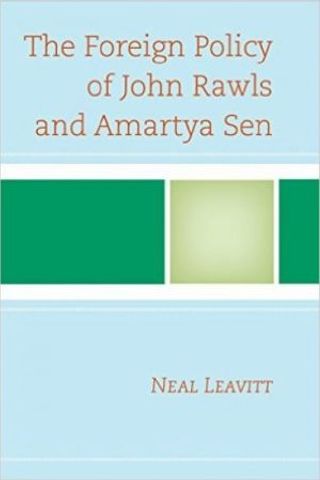
Estatísticas
Avaliações
2 / 1- 5 estrelas0%
- 4 estrelas0%
- 3 estrelas0%
- 2 estrelas100%
- 1 estrelas0%