Kuehnelt seeks to redefine the political spectrum. His background as an Austrian nobleman gives him a perspective on politics that is very different and unique compared with the vast majority of Americans. Kuehnel also openly writes from a Roman Catholic viewpoint and pro-Christian viewpoint. He defines as "leftist" as any movement that emphasizes "identitarianism" (i.e. sameness) and either the total rule of the state or "the will of the people" over the populace's affairs. The political writings of Aristotle identify three poor forms of government: democracy, oligarchy and tyranny; and three good forms: constitutional republic, aristocracy and monarchy. Democracies tend to degenerate into tyranny as witness by the chaotic Weimar republic sowing the seeds for the Nazi takeover because it lacked any foundations in traditional German politics, which was dominated by the nobility. What is especially odd about Kuehnelt's study is he classifies Nazism and Fascism as "leftist" movements. The Nazis were anti-aristocratic and anti-tradition, and tried to create a revolutionary state. Since left wing movements tend to want to standardize everything and make everything the same, Nazism had a leftist tendency when it emphasized the "Aryan race" as the ideal for all humanity. Hitler was a product of the mass society of the early 1900s. Nazism is similar to the more familiar liberal, internationalist Leftism, which denies racial and gender differences and seeks to make the world a giant unisex, brown conglomerate. In both perspectives, one race (the Aryan or the hybrid) is given the key to the future as the harbinger of a worldly, conflict free paradise. Marxism and socialism during the 19th and 20th centuries was of course profoundly leftist. They tried (and were successful in Russia) to overthrow all of the "bourgeoisie" establishments in society and set up a totally ahistorical new form of government that supposedly would accommodate the interests of the majority of humanity, the proletariat, by eradicating traditional religion and having a small party of government bureaucrats dictate economic policy. This of course resulted in human catastrophe, as the deportations, famines and sheer brutality of life in Communist Russia and China have shown. Hatred of the Jews is generally attributed to the right, but Kuehnelt provides examples of Marx's distaste for the Jewish culture he grew up in. Democratic tyranny (this is not an oxymoron) in the name of "the people" has a heritage reaching back to the Enlightenment, the ideals of Rousseau and the violence of the French Revolution. Then of course don't forget the liberalization-at-gunpoint programs of Peter the Great, Kemal Ataturk and the US Civil Rights movement. America started off with a constitutional republic and has since fallen prey to democratic tendencies. The Founding Fathers were not egalitarians by any sense of the word (especially not Jefferson, who is usually touted as having the most egalitarian views), but were rather aristocrats who wanted to protect their own interests in the US and opposed royal authority over them. Especially harmful in the international scene were the utopian pretensions of Woodrow Wilson, Franklin Roosevelt and Winston Churchill. The most prominent example of a true rightist government in the 20th century was Francisco Franco's who defeated communists, socialists and assorted enemies of the Catholic Church in the Spanish Civil War. Kuehnelt's book is also greatly helpful because he defines how true rightists in different countries may in fact be very different from each other because of a variety of cultural and national circumstances. He does not want conservative groups solely made up of the "haters of the haters," like the neo-Nazis who opposed democracy and liberalism today. He decries the harmful rightist tendency, especially prominent in America, towards anti-intellectualism. The term "liberal" can also be redefined to its more original usage. "Liberty" meant personal freedom, restriction from government control. "Liberty" is mutually exclusive with "Equality" whenever people are forced intentionally by an external institution to be the Equal (in education, occupation, physical appearance, financial income, etc) because enforced equality (a type of 'secular monasticism' as Kuehnelt describes it) goes against human nature. It is the product of a more or less conscious rejection of Christian theology because it presupposes man's perfectibility in this life.
Leftism - From de Sade and Marx to Hitler and Marcuse
Erik Ritter von Kuehnelt-Leddihn
Edições (1)
Ver mais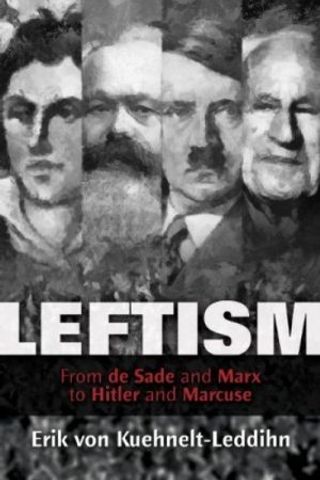

Uma obra erudita
Estatísticas
Avaliações
3.5 / 4- 5 estrelas25%
- 4 estrelas50%
- 3 estrelas25%
- 2 estrelas0%
- 1 estrelas0%
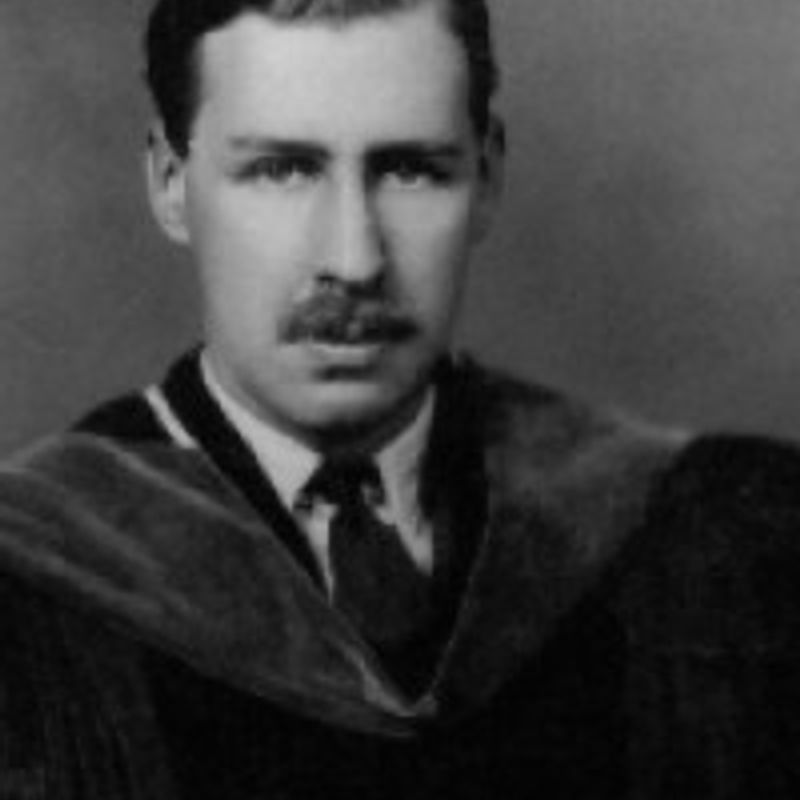
Erik Maria Ritter von Kuehnelt-Leddihn
Erik Maria Ritter von Kuehnelt-Leddihn (1909 —1999) foi um intelectual austríaco católico e aristocrata. Descreveu-se a si mesmo como extremamente conservador e arqui-liberal; ou, para ser mais exacto, defendeu a monarquia contra o totalitarismo da decisão da maioria que a democracia representava. Os seus primeiros livros, "A ameaça da multidão" (Menace of the Herd, em inglês) e "Liberdade e Igualdade" foram muito influentes no movimento convervador dos Estados Unidos. Era poliglota, capaz de falar oito línguas diferentes e de ler outras onze. Os seus textos mais comentados foram publicados na revista norte-americana conservadora National Review, onde foi colunista por 35 anos. Trabalhou ainda no Acton Institute e foi professor adjunto no Instituto Ludwig Von Mises.