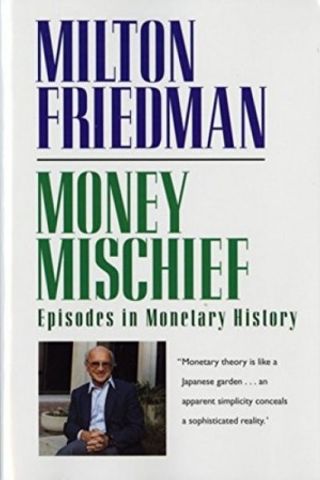
Money Mischief - Episodes in Monetary History

    Milton Friedman

    Mariner Books
    1994
    304 páginas
    10h 8m
    ISBN-10: 015661930X

    Nobel Prize-winner Milton Friedman makes clear once and for all that no one is immune from monetary economics--that is, from the effects of its theory and its practices. He demonstrates through historical events the mischief that can result from misunderstanding the monetary system--how, for example, the work of two obscure Scottish chemists destroyed the presidential prospects of William Jennings Bryan and how Franklin D. Roosevelt's decision to appease a few senators from the American West helped communism triumph in China. In Money Mischief Dr. Friedman discusses the creation of value: from stones to feathers to gold. He outlines the central role of monetary theory and shows how it can act to ignite or deepen inflation, as one instance. He explains, in layman's English, what the present monetary system in the United States--a system without historical precedent--means for your paycheck and savings book as well as for the global economy.

    Edições (1)

    Ver mais
    • book cover
    Resenhas (1)Ver mais
    José Eduardo Rolim picture
    José Eduardo Rolim20/11/2022Resenhou um livro
    5 (Perfeito)

    Lições de um gênio

    Milton Friedman, neste livro, avalia algumas políticas monetárias e suas consequências econômicas. Há capítulos dedicados ao bimetalismo, com foco nos EUA, assim como à desmonetização da prata, com capítulo dedicado à China. Em um capítulo são expostos os casos de moedas fiduciárias atreladas ao dólar, especificamente em Israel e no Chile, com a comparação dos resultados (opostos) alcançados por ambos os Estados e a conclusão de não ser medida salutar. Há, ainda, a avaliação das consequências da expansão e da redução da base monetária de moedas exclusivamente fiduciárias, com a sua famosa conclusão de que a inflação é sempre e em todo lugar um fenômeno monetário. Algumas frases que extraí do livro e parecem muito atuais: "(...) inflation is a disease, a dangerous and sometimes fatal disease, a disease that if not checked in time can destroy a society, as it did in China. The hyperinflation in Russia and Germany after World War I prepared ground for communism in the one country and nazism in the other. When inflation in Brazil reached 100 percent a year in 1954, it brought military government." "No government willingly accepts the responsibility for producing inflation even in moderate degree, let alone at inflationary rates. Government officials always find some excuse - greedy businessman, grasping trade unions, spendthrift consumers, Arab sheiks, bad weather, or anything else that seems remotely plausible."

    3 curtidas

    Estatísticas

    Avaliações

    5 / 1
    • 5 estrelas100%
    • 4 estrelas0%
    • 3 estrelas0%
    • 2 estrelas0%
    • 1 estrelas0%