On the Jewish Question is a work by Karl Marx, written in 1843, and first published in Paris in 1844 under the German title Zur Judenfrage in the Deutsch . It was one of Marx's first attempts to deal with categories that would later be called the materialist conception of history. The essay criticizes two studies by fellow Young Hegelian, Bruno Bauer on the attempt by Jews to achieve political emancipation in Prussia. Bauer argued that Jews can achieve political emancipation only if they relinquish their particular religious consciousness, since political emancipation requires a secular state, which he assumes does not leave any "space" for social identities such as religion. According to Bauer, such religious demands are incompatible with the idea of the "Rights of Man." True political emancipation, for Bauer, requires the abolition of religion. A number of historians, scholars and commentators regard On the Jewish Question, and in particular its second section, which addresses Bauer's work "The Capacity of Present-day Jews and Christians to Become Free", as anti-semitic. Marx uses Bauer's essay as an occasion for his own analysis of liberal rights. Marx argues that Bauer is mistaken in his assumption that in a "secular state" religion will no longer play a prominent role in social life, and, as an example refers to the pervasiveness of religion in the United States, which, unlike Prussia, had no state religion. In Marx's analysis, the "secular state" is not opposed to religion, but rather actually presupposes it. The removal of religious or property qualifications for citizens does not mean the abolition of religion or property, but only introduces a way of regarding individuals in abstraction from them. On this note Marx moves beyond the question of religious freedom to his real concern with Bauer's analysis of "political emancipation." Marx concludes that while individuals can be 'spiritually' and 'politically' free in a secular state, they can still be bound to material constraints on freedom by economic inequality, an assumption that would later form the basis of his critiques of capitalism.
On The Jewish Question (Classics) -
Karl Marx
CreateSpace Independent Publishing Platform
2012
38 páginas
1h 16m
ISBN-10: B008S63622
Edições (1)
Ver mais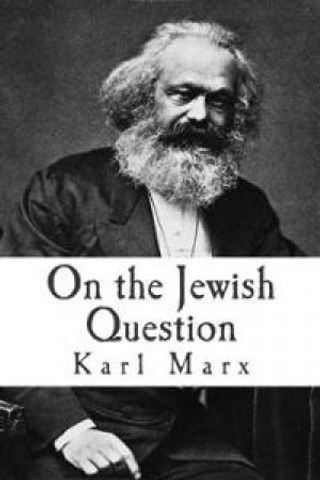
Estatísticas
Avaliações
5 / 1- 5 estrelas100%
- 4 estrelas0%
- 3 estrelas0%
- 2 estrelas0%
- 1 estrelas0%
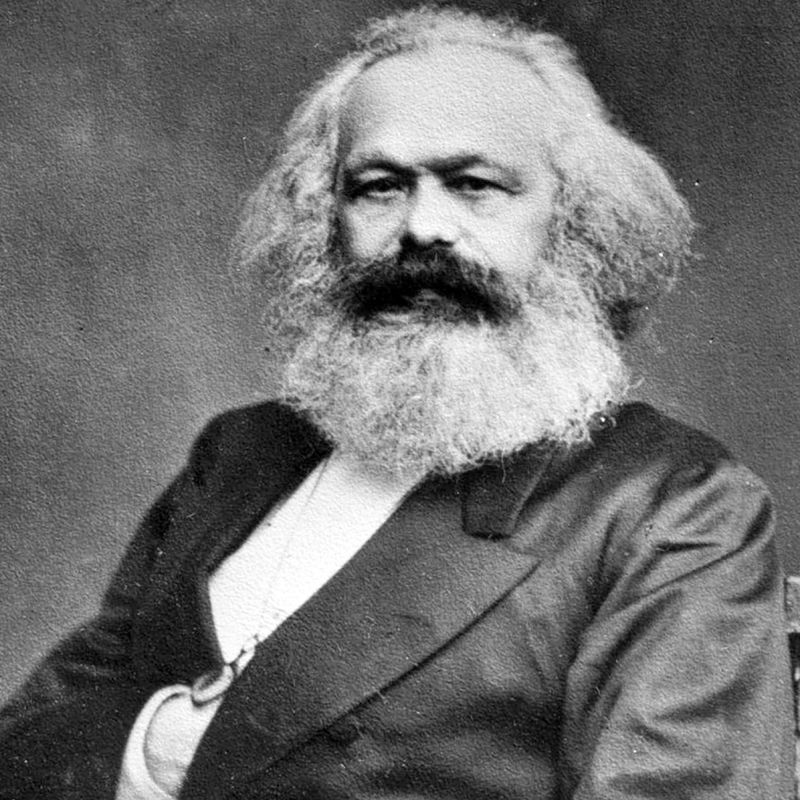
Karl Heinrich Marx
Intelectual e revolucionário alemão, um dos principais interpretes do sistema capitalista, influente comunista e notória influência nas mais diversas ciências, como Filosofia, História, Sociologia, Direito, Antropologia, Psicologia, Economia, Geografia, entre outras.
142 Livros
722 Seguidores
Renânia-Palatinado, Alemanha