Shakespeare lived in a world of absolutes—of claims for the absolute authority of scripture, monarch, and God, and the authority of fathers over wives and children, the old over the young, and the gentle over the baseborn. With the elegance and verve for which he is well known, Stephen Greenblatt, author of the best-selling Will in the World, shows that Shakespeare was strikingly averse to such absolutes and constantly probed the possibility of freedom from them. Again and again, Shakespeare confounds the designs and pretensions of kings, generals, and churchmen. His aversion to absolutes even leads him to probe the exalted and seemingly limitless passions of his lovers. Greenblatt explores this rich theme by addressing four of Shakespeare’s preoccupations across all the genres in which he worked. He first considers the idea of beauty in Shakespeare’s works, specifically his challenge to the cult of featureless perfection and his interest in distinguishing marks. He then turns to Shakespeare’s interest in murderous hatred, most famously embodied in Shylock but seen also in the character Bernardine in Measure for Measure. Next Greenblatt considers the idea of Shakespearean authority—that is, Shakespeare’s deep sense of the ethical ambiguity of power, including his own. Ultimately, Greenblatt takes up Shakespearean autonomy, in particular the freedom of artists, guided by distinctive forms of perception, to live by their own laws and to claim that their creations are singularly unconstrained. A book that could only have been written by Stephen Greenblatt, Shakespeare’s Freedom is a wholly original and eloquent meditation by the most acclaimed and influential Shakespearean of our time.
Shakespeare's Freedom (The Rice University Campbell Lectures) -
Stephen Greenblatt
University Of Chicago Press
2012
168 páginas
5h 36m
ISBN-10: 0226306674
Edições (1)
Ver mais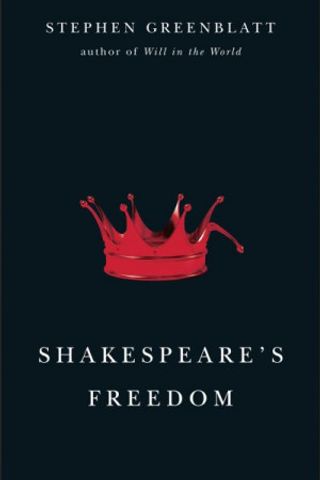
Estatísticas
Avaliações
5 / 2- 5 estrelas100%
- 4 estrelas0%
- 3 estrelas0%
- 2 estrelas0%
- 1 estrelas0%

Stephen Jay Greenblatt
É considerado por muitos como um dos fundadores do New Historicism (Novo Historicismo) - a que ele também se refere como "poética cultural" -, uma das mais influentes escolas de crítica e teoria literária, a partir do início dos anos 1980, quando Greenblatt introduziu a expressão na introdução de The Forms of Power and the Power of Forms (1982), uma coletânea de ensaios sobre o Renascimento editada por ele e publicada como edição especial do periódico Genre. Stephen Greenblatt escreveu vários livros e numerosos artigos sobre o Novo Historicismo, o estudo da cultura, a Renascença e sobre a obra de Shakespeare sendo considerado um especialista nessas áreas. Seu trabalho mais conhecido é Will in the World, uma biografia de Shakespeare que esteve na lista dos livros mais vendidos durante nove semanas, segundo o New York Times. Editou mais de dez obras, incluindo a sétima edição de The Norton Anthology of English Literature. É fellow da American Academy of Arts and Sciences e recebeu vários prêmios e honrarias.
24 Livros
4 Seguidores
Massachusetts, Estados Unidos