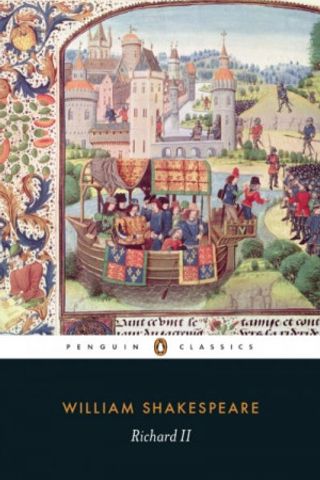
The first part of the 'Henriad', continued with the two parts of Henry IV and concluded by Henry V¸ William Shakespeare's Richard II is a history play dramatizing the rebellion of Henry Bolingbroke, that would eventually see him made King of England. This Penguin Shakespeare edition is edited by Stanley Wells with an introduction by Paul Edmondson. 'Not all the water in the rough rude sea Can wash the balm off from an anointed king' Banishing his cousin, Bolingbroke, King Richard II prevents a dispute from turning bloody. But Richard is an arrogant and despotic ruler, prone to tyranny and vanity, who listens only to his flatterers. As favour turns against him and Bolingbroke returns to reclaim his land, Richard is humbled and grieved to see that the throne given to him by God might be taken from him by men. This book contains a general introduction to Shakespeare's life and Elizabethan theatre, a separate introduction to Richard II, a chronology, suggestions for further reading, an essay discussing performance options on both stage and screen, and a commentary. William Shakespeare (1564-1616) was born to John Shakespeare and Mary Arden some time in late April 1564 in Stratford-upon-Avon. He wrote about 38 plays (the precise number is uncertain), many of which are regarded as the most exceptional works of drama ever produced, including Romeo and Juliet (1595), Henry V (1599), Hamlet (1601), Othello (1604), King Lear (1606) and Macbeth (1606), as well as a collection of 154 sonnets, which number among the most profound and influential love-poetry in English. 'We go to Shakespeare to find out about ourselves' Jeanette Winterson
Richard II -
William Shakespeare
Penguin Classics
2015
320 páginas
10h 40m
ISBN-10: B01B26ZWOE
Resenhas (3)Ver mais

ricardo marçal30/05/2020Resenhou um livro
2 curtidas
Estatísticas
Avaliações
3.8 / 16- 5 estrelas38%
- 4 estrelas31%
- 3 estrelas19%
- 2 estrelas6%
- 1 estrelas6%