On December 9th, 1968, a research project funded by the US Department of Defense launched a revolution. The focus was not a Cold War adversary or even a resource rich banana republic, but rather to "augment human intellect" and the man driving it was not a general, but a mild mannered engineer named Douglas Engelbart. His presentation that day, which would be so consequential that it is now called "The Mother of All Demos," demonstrated a new vision that would transform computers from obscure calculating machines that few ever saw to an interactive device for everyday use. Two who were in attendance, Bob Taylor and Alan Kay would go on to work at Xerox's famed research center, PARC, and develop Engelbart's ideas into the Alto, the first truly personal computer. Later, Steve Jobs would take many elements of the Alto to create the Macintosh, which launched with great fanfare in 1984. In the years that followed, different companies learned different lessons from that particular series of events and pursued widely divergent paths. Apple, quite famously, focused on the end user. IBM's research division, which boasts more Nobel Prize winners than most countries, helps it see 10 or 20 years in to the future. Google, more recently, created its "Google X" division to be its "Moonshot Factory." Others pursue different strategies, such as continually testing a number of small, innovative projects or developing novel business models that can create, deliver or capture value in new and different ways. With so many paths to innovation--all of which have strong track records of success--which should you pursue? Mapping Innovation offers a simple, but powerful framework, backed by years of research and dozens of interviews, which will help your business develop a strategy to innovate in a competitive marketplace. It explains how, by asking the right questions, you can map the innovation space and define which approach is most likely to solve the specific problems and opportunities you face. In essence, this book enables executives to choose the right tools for the right jobs and build a solid strategy based on sound principles, rather than conjecture. Mapping Innovation is a "playbook for navigating a disruptive age" that goes inside some of the world's most innovative organizations, such as major corporations like Google, IBM and Experian, major scientific institutions like MD Anderson Cancer Center, and Argonne National Laboratory and startups like Upwork, Tidemark and Bloomreach to identify how they make an impact on the world.
Mapping Innovation - A Playbook for Navigating a Disruptive Age
Greg Satell
McGraw-Hill Education
2017
240 páginas
8h 0m
ISBN-10: 1259862259
Edições (1)
Ver mais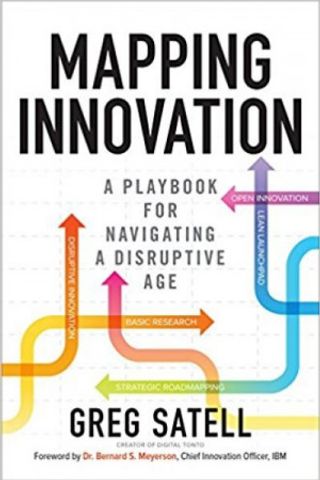
Resenhas (1)Ver mais

Felipe Moitta30/06/2017Resenhou um livro
Which path should you pursue? Fortunately, there is an answer, and it starts with asking the right questions to define the problems you seek to solve and map the innovation space. From there, it is mostly a matter of choosing the right tools for the right jobs to develop an innovation playbook that will lead to success in the marketplace. The problem is that computers don’t really do anything by themselves. People need to use them to transform the work of their industry or field, and that takes more than just a change in technology—it takes a change in behavior. People have to see how technology can solve their problems. If, for example, an executive is used to a secretary typing his letters and memos, then he is unlikely to care much about an easy-to-use word processing program. And if he believes that crunching numbers is something for the accounting department to do, then a spreadsheet application won’t hold any attraction for him either. It is only when people see how technology can add value to their lives that it can truly create an impact. Today, just about every industry you can imagine has been shaped by Bush’s vision. Smartphones, as noted above, are largely built on federally funded technologies, and so are other products of information technology. Most of the blockbuster drugs developed over the last half century stem from research funded by the NIH. Google itself began as an NSF funded project. So while few of us spend much time thinking about fundamental research, it is absolutely essential to the innovation process. Clearly, it takes more than a single big idea to change the world. As Scott Berkun has put it, “Big thoughts are fun to romanticize, but it’s many small insights coming together that bring big ideas into the world.” If we want to innovate effectively, we need to look beyond linear sequences of events and take a broader view. Rather than striving to dream things up out of thin air, we need to look around us to see what we can combine to create novel solutions to important problems. If a problem is difficult enough, it needs to borrow from multiple fields of expertise. Innovation, more than anything else, is combination. So when anybody offers us the “one true path” to innovation, we should always be suspicious. Innovation is, quite clearly, not a path but an ecosystem. One of Einstein’s greatest strengths as a scientist was that he was able to discard accepted paradigms when they got in the way of solving a problem. We tend to think that we experience the world as it is. We see and hear things, store them away as knowledge, and then take new facts into account. Yet that’s not what we really do. In fact, we filter out most of what we experience. In effect, we forget most things so we can focus on what we feel is of prime importance. This effect is cumulative. What we think of as knowledge is really connections in our brains called synapses, which develop over time. These pathways strengthen as we use them and degrade when we don’t. Or, as scientists who study these things like to put it, the neurons that fire together, wire together—a principle known as Hebbian plasticity. So, as we go through life and learn the ways of the world, we become less able to imagine new possibilities. Our mental models become instinctive, and standard practices become “the right way to do things.” This effect becomes even stronger and more pervasive if we see our mental models as being responsible for our success. At some point, best practices are no longer just a set of tools to promote operational efficiency, but become full-fledged mental models that become hardwired in our brains. To violate them offends our sense of how the world is supposed to work. What’s more, while our previous experiences tend to blind us to new developments, those around us will help reinforce common beliefs. new paradigms don’t emerge whole, but first arrive as a series of quirky anomalies that are easy to dismiss as “special cases” that we can work around. This usually works pretty well for a while, and things go on much as before. A final barrier to shifting paradigms is that change incurs real costs. How much time, effort, and resources do we want to expend on a hunch? So part of the answer to the puzzle that Darwin, Einstein, and Watson and Crick present is that they were better able to come up with innovative new ideas because they weren’t especially prominent. They had no record of accomplishment to fall back on and protect. So it was easier for them to explore new ideas. For them, these weren’t merely “special cases” or small anomalies to be worked around and forgotten, but exciting new paths to travel. Another commonality is that all of these scientists spent seemingly idle time letting their imaginations run wild. Darwin had a five-year voyage on the Beagle to simply observe nature and think about what he saw. Einstein’s “miracle year” occurred while he was in virtual exile as a clerk in a patent office and hashing over ideas at cafés as part of the “Olympia Academy” he formed with his friends. Watson and Crick, much to the annoyance of their colleagues, seemed to spend their time trading wild ideas rather than doing experiments. Most of all—and this is a crucial point—they did not confine their explorations to their own fields. It’s hard to see how Darwin could ever have come up with his famous theory if he had confined his interests to biology. It was, in fact, a book on geology that first got the ball rolling. And his breakthrough moment came while reading the work of Thomas Malthus, an economist. Biology, geology, and economics are three very different fields with relatively little in common. But by combining them Darwin was able to attain groundbreaking new insights. Without any one of those three elements, it is doubtful he would have achieved what he did. In much the same way, Einstein credited the insights of philosopher David Hume with helping him to formulate his theory of relativity. Watson and Crick combined insights from biology, chemistry, and x-ray crystallography to solve their puzzle. Everybody else who was working on the problem, many more talented and distinguished than Watson and Crick, were focusing on just one aspect of it. If a problem is difficult enough, it needs to borrow from multiple fields of expertise. To break free of an existing paradigm, we need to search beyond the realm in which it was established. Innovation, more than anything else, is combination, which is why if we are to create anything truly important, we need to travel down multiple paths. Yet that doesn’t mean innovation is a random pursuit. We need a clear sense of where we’re going and some concrete ideas on how to get there. To do that, we need to map innovation. So, how should we pursue innovation? Should we hand it over to the guys with white lab coats, an external partner, a specialist in the field, crowdsource it, or explore fundamental questions within a particular field? What we need is a clear framework for defining innovation problems and the strategies most likely to resolve them. Like any journey, the best way to start is by creating a map. Maps, of course, are not answers in themselves because they always offer more than one path to our destination. They do, however, help us choose the path that’s best for us. Sometimes, we will opt to take the highway in order to travel at the optimum speed. Other times, perhaps at rush hour, we will take the scenic route in order to avoid traffic. Or maybe we want to take another route altogether because we have a secondary task in mind, like picking up dinner on the way home. Innovation works in much the same way, except it is often the destination itself that varies. Some firms market their products to consumers, others to enterprises that themselves have a considerable amount of expertise in their particular fields. Some seek to gain the upper hand in a competitive market, while others are looking to create an entirely new category. When it comes to innovation, it is not enough to try to get there faster; you first need to define where “there” is. Another important aspect of innovation is that organizations vary widely in their capabilities. Some are large enterprises with considerable resources, while others are nimble upstarts. Some have considerable scientific and technical expertise, while others are master marketers. Still others excel at creating effective partnerships to access capabilities they lack internally. So looking for “one true path” to innovation is nothing more than a distraction. It is more likely to set us on a wild goose chase and waste lots of time and money than anything else. What we need is to identify our own path to innovation and then gather the tools we need to get where we want to go. As Nobel laureate George Smoot put it, “If we only did applied research, we would still be making better spears,” In my conversations with scientists and executives engaged in basic research, there was one thing I heard over and over again: to gain access to top-quality research, you have to be seen as a participant rather than just an observer. Firms that are successful in this area publish openly, attend scientific conferences, and actively contribute to the expansion of knowledge, whether through their own internal research or by in-kind support, such as offering the use of their facilities or data to cash-strapped scientists. As Woody Allen put it, “80 percent of success is just showing up.” As we have also seen, to solve really tough problems you need combinations of ideas, but what kinds of combinations are likely to be most effective? That’s the question that a team of researchers set out to explore when they analyzed 17.9 million scientific papers to see what made for the most highly cited papers. Their results showed a clear pattern. The most impactful discoveries came from combining deep expertise in closely related fields with just a smidgen of knowledge from some unlikely place. As the authors of the study wrote, “The highest-impact science is primarily grounded in exceptionally conventional combinations of prior work yet simultaneously features an intrusion of unusual combinations So a disruptive innovation, according to Christensen, is a product that changes the basis of competition because it performs worse according to traditional parameters, but better against new parameters that previously weren’t regarded as important (in the case of the copier business, size and price). He also pointed out that these types of innovators also tend to target either light consumers or nonconsumers of a category (for example, small and medium-sized businesses versus Xerox’s large corporate clients) and introduce a new business model to the market. (Xerox made its money on the volume of copies; the Japanese simply sold or leased their products.) However, another way to view disruptive innovation is as an existing technology put toward a new purpose. To innovate effectively, you have to choose the right tool for the right job. That’s the essence of building a successful innovation strategy. Instead of thinking about innovation as a search for the “one best way,” we need to start thinking about it as building a portfolio of solutions aimed at solving the specific portfolio of challenges that a particular organization faces. Every enterprise is a unique combination of business model, strategy, and culture. We need to resist the urge to adopt a particular innovation strategy just because it worked somewhere else or because that’s how we solved the last problem. You have to use the right tool for the right job. At the same time, every organization faces a variety of challenges, so we also shouldn’t limit ourselves to just one quadrant of the innovation matrix. While focus is important, we need a portfolio of strategies. Apple, for instance, is mainly a sustaining innovator, but iTunes was certainly an important disruptive innovation. And while Google may very well be the greatest disruptive innovator on the planet, as we will see in Chapter 6, it is also highly focused on improving its core products through sustaining innovations. In fact, that’s where it concentrates 70 percent of its resources. Old paradigms, such as Moore’s Law and lithium-ion batteries, will reach their theoretical limits in the next 5 to 10 years. That means that nascent technologies, including largely new areas such as genomics, nanotechnology, and robotics, will play important and maybe even decisive roles in value creation. This is likely to cause innovation portfolios to shift again. You can’t win in the marketplace by fighting the last war; you have to constantly look to the next one and adjust your innovation portfolio accordingly, much like you might change the asset mix in an investment portfolio from time to time. That’s why it’s important to continually innovate how we innovate and deepen our knowledge of the rich tapestry of strategies available to us. Remember, in the Innovation Matrix, we put disruptive innovation in the lower right quadrant because disruptive innovations have well-defined domains but poorly defined problems. In other words, they are essentially solutions looking for problems to solve, which is why they almost always require a new business model. That’s exactly the problem we had at Afisha. Our product was still popular with consumers, but the job it had normally done for advertisers, which was to provide a platform for their advertisements, was now being done better by the international magazine brands like Cosmopolitan and Men’s Health. A business model is often confused with a business plan. In truth, they are very different animals. A business plan is basically a financial projection, in essence, an extended version of a quarterly budget. That can be very valuable, essential even, for an existing business. It helps you to understand the basic dynamics and underlying financial logic of your enterprise, quantify various assumptions and alert you to areas where adjustments need to be made. A business model, however, provides the conceptual rather than the financial logic of your business by spelling out a coherent logic for how you create, deliver, and capture value. So to innovate a business model, you need to find a way to significantly improve on one of those elements for a given market. Afisha, for example, created value through editorial content and advice on where to go in the city of Kyiv. It delivered that value through a free distribution magazine and a website. It captured value primarily through advertising sales. As I noted above, we were still confident in our ability to create value, but our models for delivering and capturing value were clearly broken. Every start-up begins with an idea, and that idea is always wrong in some way. What determined if the venture would succeed or fail had less to do with any particular quality of the initial vision, or even the market in which it sought to compete, than if the inevitable flaws were found and corrected faster than the company ran out of money. With the benefit of hindsight, he saw that much better results could be achieved if start-ups merely accepted this simple truth and began their exploratory journey before they blew all their cash building out a full-blown version of a flawed product vision.6 His insight led him to develop a course called Customer Development that he taught at the Haas School of Business at the University of California at Berkeley and the School of Engineering at Stanford. That, in turn, led to a book, The Four Steps to the Epiphany. Later, one of Blank’s students, Eric Ries, built on Blank’s work and published The Lean Startup, which became a New York Times bestseller. Also, as we will see at the end of the chapter, Alexander Osterwalder created a tool called the Business Model Canvas that would help operationalize these concepts. Together, these ideas combine to form what is today known as the Lean Launchpad. In a nutshell, it boils down to three key concepts: Customer Development, the Minimum Viable Product, and the Pivot. So instead of starting with a clear product vision and then racing to a “ship” date, Blank suggests that first you start looking for customers. Notice, he doesn’t say “a market,” but simply “customers.” That’s no accident. As he writes, “you are going to develop a product for the few, not the many. . . . In a startup, the first product is not designed to satisfy a mainstream customer.”9 More specifically, he suggests that you find customers that have not only identified a problem, but have already either designated a budget to solve the problem or have already cobbled together a stopgap solution and are looking for something more permanent. He calls these types of customers “visionary customers.”10 Yet merely asking customers what they want is not enough. You have to validate that they are actually willing to pay for your product or service. That’s where the minimum viable product comes in. A minimum viable product is not a prototype. As Eric Ries writes, “Unlike a prototype or a concept test, an MVP is designed not to just answer product design or technical questions. Its goal is to test fundamental business hypotheses.” As noted above, at first you are just trying to find customers. Not just any customers, but as Steve Blank put it, visionary customers. These are the early adopters who are adventurous enough—or desperate enough—to take a flyer on a new and unproven product. As you scale your business, you’ll find that the customers in the larger market have very different needs. Every initial vision is wrong. There is always some element of the business model that doesn’t match reality. Whether it is the type of customer, the initial choice of partners, the distribution channel, or something else, as your business grows from the initial group of early adopters you will find that you have to change something significant to build a sustainable business model. We tend to think of start-ups as a modern version of a Horatio Alger story. An unlikely underdog figures out how to make a better mousetrap and outsmarts its larger, better-financed rivals to prevail against all odds. Yet the work of people like Steve Blank and Eric Ries shows that’s not really true. You don’t start with a better mousetrap; you start out with a seriously flawed one. What makes the difference between success and failure is how willing you are to recognize that simple fact and work to identify a sustainable business model before you run out of money. The best way to do that is not to throw caution to the wind and charge forward with reckless abandon, but to explore, experiment, and iterate until you hit on the right combination of creating, delivering, and capturing value. As it turns out, that’s not just good advice for start-ups, but for any enterprise. Whether it is an entertainment magazine in Ukraine, a children’s hospital in Dallas, or a world-class research organization in Australia, the basic principles of the Lean LaunchPad—get out of the building, build a minimum viable product, learn, iterate, and pivot—apply equally well. Innovation requires far more than tinkering with test tubes and algorithms and pilot projects—it also requires us to identify a sustainable business model. It’s clear now that we should have spent more time pursuing similar “accidents.” All too often, managers see their jobs through two lenses: strategy and execution. That’s a reasonable approach when you are operating in a stable market, with clearly defined industry boundaries, a stable customer base, and a predictable technological environment, but few businesses enjoy those luxuries anymore. They are largely relics of a dying age. We can no longer assume that how we create, deliver, and capture value will continue to be relevant for any period of time. In all likelihood, at least one of those elements is already being disrupted or soon will be. We need to start treating business model innovation with the same discipline that we treat any other business function, like production, marketing, or finance. THE NINE BUSINESS MODEL BUILDING BLOCKS 1. Key partners. These are the key partners you will need to create, deliver, and capture value, including buyers, suppliers, strategic alliances, and joint venture partners. 2. Key activities. These are all the activities you will need to engage in to successfully execute your business model, including production, logistics, problem solving, maintaining platforms, and so on. 3. Key resources. These are the resources you will need to either acquire or gain access to, such as physical assets, intellectual property, human capital, and financial resources. 4. Value proposition. The value proposition describes the benefits that your business model will produce for your customers. 5. Customer relationship. This building block describes the relationship you will have with your customers, such as dedicated personal assistance, self-service, advisory service, and so on. 6. Channels. These are the ways you will interact with your customers, such as retail outlets, a website, distribution partners, and so on. 7. Customer segments. These are the particular types of customers that you believe will be willing to pay for your product or service (mass market, niche market, etc.). 8. Cost structure. Your cost structure is the total costs you will incur from acquiring and maintaining key resources, operating key activities, and costs related to key partnerships. 9. Revenue streams. These are the various ways you will capture value, such as through sales margins, service fees, subscription fees, and so on. By 2002, less than a year after the site was launched, the decision was made to recruit noncompetitive companies to post their problems onto the platform. It began with three firms, and the results were more than encouraging. In fact, it soon became clear that the more problems they posted, the better the solutions became. “We saw that nothing increased the number of solvers better than the number of good problems,” Bingham told me. Over time, InnoCentive began recruiting even competitive pharmaceutical firms to post their challenges because the team realized that was the best way to attract highly qualified solvers in large numbers. Clearly, Bingham and his colleagues had hit on a powerful model. As we discussed in Chapter 3, well-defined problems often go unsolved because the relevant field is missing one small but crucial piece of information. Through applying an open innovation approach, it’s possible to cast a net so wide that it literally covers the entire world. With enough eyeballs, all bugs do indeed become shallow! Still, as Chris Thoen pointed out, it was an enormous cultural change to make this possible. It’s not easy to admit that you can’t solve every problem within your organization, but besides the pride of its internal scientists, there were also legal, organizational, and competitive issues to be considered. All of these had to be overcome before Connect & Develop could be made successful. You’ve got to think about big things while you’re doing small things, so that all the small things go in the right direction. Clayton Christensen began his research on disruptive innovation because he noticed that many successful companies that fail do indeed prepare for the future. In fact, many of the failed companies he studied had excellent management, invested profits back into their companies’ products, and sought out customer input in order to create products that customers wanted. They were disrupted not because they ignored threats to their business, but because they didn’t recognize threats to their business. That’s what makes running an enterprise so difficult. You must make decisions in real time, with limited information and often under extreme time constraints. The case studies managers learn from in business school, on the other hand, are written with the benefit of hindsight, a process that tends to simplify the issues and often leads to platitudes, such as “you need to invest now and for the future.” That may seem simple and straightforward enough, but unless you can predict the future with perfect foresight, it’s not very useful advice. It tells you nothing about what to actually invest in. The same goes for the need to innovate your core business. It may seem like an obvious point, but defining your core business is anything but easy. Defining what business you’re in is one of the most important strategic decisions you can make. Bain consultants Chris Zook and James Allen expanded on Levitt’s point in their book Profit from the Core,2 in which they argue that firms that focus on their core business significantly outperform those who stray. “Most companies that sustain value creation possess only one or two strong cores,” they wrote, and pointed out that diversification usually leads to worse performance. Zook and Allen further noted “acquisitions made for the purpose of expanding scale in a core business have a success rate that’s at least twice that of acquisitions to diversify and expand scope.”3 So how do you define your core business? Zook and Allen suggest that it is the “set of products, customer segments and technologies with which you can build the greatest competitive advantage,”4 which can be determined by analyzing profitability, growth, and relative share of a particular market segment. The problem with all this is that there are so many ways you can define a core business and, therefore, what is adjacent to the core, that it’s very hard to use the concept as a guide for strategy. Wasn’t Xerox focusing on its core when it failed to market the Alto as a personal computer in favor of building a more elaborate system to automate offices? Or would personal computers have been adjacent to the core somehow? Didn’t Steve Jobs stray from the core when he moved Apple into music players, smartphones, and retail stores? What about Kodak, which focused on its core film developing business all the way to bankruptcy? The truth is that in any given business, the odds favor the core, but especially today, when technology shifts can disrupt your business in an instant, you need to constantly be looking for new opportunities, wherever they lie. However, you must also be careful to manage risk while you do so. Management is not an exact science. As management guru Henry Mintzberg explained, “The great myth is the manager as orchestra conductor. It’s this idea of standing on a pedestal and you wave your baton and accounting comes in, and you wave it somewhere else and marketing chimes in with accounting, and they all sound very glorious. But management is more like orchestra conducting during rehearsals, when everything is going wrong.” So the key to successfully managing your core and adjacencies is not to try to achieve perfect knowledge, but to manage risks by allocating resources according to your best guesses about what is core and what is adjacent to your business. A popular guide that has emerged for doing that is the three horizons model, a version of which you can see in Figure 6.1 Although it was originally conceived as a general management framework, it has since been adopted by the innovation community and been given the proportions 70/20/10. The idea behind the three horizons framework is not to eliminate uncertainty, but to take your level of uncertainty into account when allocating resources. Put simply, you invest the bulk of your resources in capabilities (e.g., skills and technologies) and markets you know well, a much smaller portion toward adjacencies, and an even smaller proportion to future opportunities that don’t even exist yet. The proportions 70/20/10 are intended to be general guidelines and do not lend themselves to a strict accounting. The primary insight is that businesses need to pursue all three horizons at once, albeit in different proportions. While the three horizons framework may seem simplistic, that’s part of its strength. It offers a simple framework and a simple language to discuss the core business, adjacencies, and long-term bets. Let’s look at each of the three horizons in turn. Another interesting aspect is that, while allowing employees to use company resources for their own pet projects may seem profligate to many efficiency-minded managers, it’s actually an effective way to manage resources. For a 20 percent time project to get off the ground and become a product, it needs to get enough people excited about it to want to contribute their time and efforts rather than working on a project of their own. That’s probably a much better indication of viability than the usually politics-driven process for funding projects that is endemic in most companies. By applying an additional level of scrutiny in the form of the three horizons model, Google’s leadership can ensure that all of the creative energy inside the company remains focused on short, medium, and long-term objectives in a reasonably balanced way. In effect, rather than an innovation strategy, Google has built an innovation ecosystem in which the whole is vastly more than the sum of its parts. It is also the only organization I found in my research that is active in all four quadrants of the Innovation Matrix, which is probably one reason that the founders thought it was necessary to create the holding company Alphabet so that it could separate the largely Horizon 1 Google business from its active explorations into Horizon 2 and Horizon 3. Another thing to consider is that Google’s 70/20/10 policy is fundamentally an admission that it has no crystal ball. In effect, it doesn’t believe it is smart enough to predict the future, so instead of making any “bet the company” initiatives, it is content to continue making relatively small wagers and see what pays off. In a way, that’s disappointing. We so often expect leaders to point the way forward, I’m sure that for many, Google’s lack of a master plan must seem inadequate. On the other hand, if the guys at Google can’t come up with a sure-fire strategic plan for the future, who can? It is the small bets, compounded over time, that pave the path to the future. This was primarily a crisis of business model, rather than business process. And that’s the key thing to understand about innovating at scale. Start-ups begin with a blank page, with few assets and no investment in the status quo. It is in their nature to disrupt the marketplace. Established companies, with entrenched assets and obligations to existing customers, must eventually learn to disrupt themselves. They need to figure out which parts of their existing business model to keep and which to throw away. For IBM, its commitment to its core capabilities in world-class research, engineering. and sales has remained solid throughout its long history. Everything else, however, is negotiable. So IBM has to innovate on three horizons. First, it must create solutions so powerful that it can create enough value to replace the revenues it is losing from hardware sales. Second, it must learn how to apply those solutions to adjacent areas. Third, it must come up with completely new computing architectures that can drive technological advancement beyond Moore’s Law. IBM does not pursue disruptive innovation strategies as a core strategy, although it has demonstrated that it is perfectly capable of understanding the skill set. It’s a global leader in agile development methodologies and even runs a program called Bluemix Garage that teaches other companies how to implement Lean LaunchPad and Design Thinking techniques. It also routinely engages in the kind of customer development processes that we saw in Chapter 4. The difference is that when IBM meets with customers, it is often looking 5, 10, or even 20 years out and is willing to work that long to bring truly pathbreaking technologies to market. Its focus is not disrupting the marketplace, but solving problems for its enterprise clients. The key thing to understand about IBM’s innovation portfolio is that it wouldn’t work for any other company. IBM is not agile like a start-up, nor does it have the design sensibilities of Apple or the entrepreneurial energy of Amazon. Rather, it leverages its own unique capabilities in research, engineering, and sales. That’s how you innovate at scale. In essence, Weber was advocating for a new form of organization he called bureaucracy. The term has since taken on a pejorative meaning, but it’s important to note that a century ago bureaucracy was an important innovation. In an industrial age, productivity no longer depended on the skill of artisans, but the efficiencies of organizations. Those organizations, in turn, could not plausibly be run solely through the personal authority of leaders, but needed systems in place in order to operate with any measure of competence. No one person, no matter how smart or charismatic, could effectively coordinate the work of thousands. Bureaucracy performed that function reasonably well. In 1985, a professor at Harvard Business School named Michael Porter built on Coase’s ideas in his book Competitive Advantage, which quickly became the standard reference for business strategy. At the heart of his framework was the value chain (Figure 8.1). Porter argued, “The value chain is not a collection of independent activities, but a system of interdependent activities.”3 In other words, to gain competitive advantage, you need to manage the transaction and informational costs that exist all along the path from the acquisition of resources to the point of sale. Any weakness in that chain of control could cause a firm to lose its ability to leverage its assets and achieve sustainable competitive advantage. At one end of the bell curve, you have a set of problems where there are either established solutions or the skills to solve them are known and accessible, such as when choosing a supplier for basic components or services. In those cases, you only incur search costs in terms of price, reliability, level of service, and so on. On the other end of the bell curve are the really tough problems that have no clear solutions. In those cases, you incur search costs related to finding the talent, skills, and information you need to solve the problem. In the middle are opportunities to differentiate your business by leveraging internal assets and capabilities to solve problems.5 That, in a nutshell, is the effect that digital technology has had on markets and competitive strategy. It has lowered search costs outside of firms much more efficiently than it has lowered organizational costs inside of firms (Figure 8.2). So today, organizations must make very different decisions about what capabilities they will build and leverage internally and what will be cheaper and more effective to access externally. In a nutshell, Porter suggested that to achieve sustainable competitive advantage, businesses needed to minimize threats of substitutes and new entrants, while at the same time maximize bargaining power with buyers and suppliers. That, combined with a highly efficient value chain, would make for an unbeatable proposition. This is sometimes called the “positioning school” of strategy because it held that by making the right strategic moves, firms could build an unassailable strategic position. So clearly, we need to give up the illusion of control and learn to use platforms in order to access ecosystems of talent, technology, and information. In a world connected by digital technology, power no longer resides at the top of value chains, but at the center of networks, and the best way to become a dominant player is to become an indispensable partner. If you recall, Alexander Fleming first discovered the antibacterial effects of the mold at St. Mary’s Hospital in London in 1928. As a skilled laboratory scientist with a medical degree, he had exactly the qualifications someone would need to discover an obscure mold with the potential to cure disease. However, he had very few of the skills one would need to transform that discovery into a cure. In fact, what Fleming discovered couldn’t cure anyone. It wasn’t a drug but rather, as he called it, “mold juice.” He had no way to make it stable so it could be stored or to administer it to patients. Even if there was, there was no way to make penicillin in anything near the quantities required to have therapeutic value. These weren’t trivial problems but substantial obstacles that had no easy answers. It wasn’t until a decade later, when Howard Florey and Ernst Chain happened upon Fleming’s article in a scientific journal, that anybody made any real progress toward solving them. Florey and his team had many capabilities that Fleming lacked. Ernst Chain was a world-class biochemist who was an expert at solving problems exactly like those needed to transform Fleming’s “mold juice” into a storable powder. Norman Heatley, another member of Florey’s team, was a whiz at scraping together useful apparatus from odds and ends he found around the lab. It was he who first figured out a way to build a system that could ferment the penicillin in quantities large enough to test on mice. There was also a wide array of technicians with other relevant skills who could contribute to the project. Still, even the additional resources available at Florey’s lab at Oxford were not enough to meet the challenge. It was only when Florey and Heatley travelled to the United States and began working with other labs that they were able to identify a more powerful strain of the penicillin mold and learned about corn steep liquor, a significantly more effective fermentation medium for penicillin. After that, they needed additional help from American pharmaceutical companies to scale up production. So while the story of the discovery of penicillin is often portrayed as “accidental,” it was clearly the result of a massive collaboration. None of those involved could have hoped to create the miracle drug by themselves, because no one person—or even entire labs—had the knowledge and skills to solve the all of the problems associated with the production of penicillin. Clearly the nature of work has changed. MIT economist David Autor has argued that the important dividing line among jobs is no longer between manual and cognitive tasks as much as it is between routine and nonroutine work. So clerical workers like bookkeepers and travel agents have suffered, but financial analysts and wedding planners have done well.2 In fact, a report by the McKinsey Global Institute notes that from 2000 to 2009, nearly all net new jobs were “interaction jobs” that require complex problem solving and personal skills. They calculate that nearly 5 million of these jobs were created over that period, while at the same time 3 million production jobs (factory worker, farmer, etc.) and transaction jobs (bank clerk, cashier, etc.) were lost. Put another way, as the amount of information available online has increased, the need for people who can carry around a lot of data in their heads has declined. While the need for cognitive skills has diminished, we’re also increasingly working in teams. The journal Nature recently noted that although up until the 1920s sole authorship of scientific papers was the rule, that custom had virtually disappeared by the 1950s, and today the average paper has four times as many authors as it did then. In fact, it is no longer unusual for papers to have as many as 100 authors!5 The makeup of those teams is also far more interdisciplinary, with researchers regularly collaborating with others outside their fields. Taking note of these trends, longtime Fortune editor Geoff Colvin argues in Humans Are Underrated that the most critical twenty-first-century skill is empathy and calls for a shift in emphasis from “knowledge workers” to “relationship workers.”8 In a world of exponentially increasing complexity, no one person or firm can do it all, so those that can work well with others have a distinct advantage. That has major implications for how we educate, train, and manage people. It is no longer enough to simply offer extravagant compensation packages to hire the “best and the brightest” people. To innovate in this new environment, we don’t need the best people—we need the best teams. As it turns out, working in a team requires very different skills than the ones that make somebody a great solo performer. In the aftermath of 9/11, the CIA commissioned a study to determine what attributes made for the most effective analyst teams. What they found was surprising. As it turned out, what made for the most effective teams was not the individual attributes of their members, or even the coaching they got from their leaders, but the makeup of the group and interactions between them. Teams that worked interdependently, meaning that they were jointly responsible to fulfill a larger task, performed significantly better than “co-acting” teams that broke the task up into smaller jobs and worked in parallel, with each team member responsible for his or her share of the task. The authors of the study concluded, “A large team task often requires that the team be composed of individuals with different expertise and specialties, which can foster the kinds of cross-functional exchanges that, occasionally, result in unanticipated insights and syntheses.”9 Their point about diversity was also found in another study, which suggests that diverse teams outperform homogenous ones even if the more diverse teams are less capable individually. So clearly, if we are going to innovate effectively in the digital age, we need to learn a lot more about what makes a great team. Certainly, like individuals, all teams do not perform with the same effectiveness. A team of researchers from MIT, Carnegie Mellon, and Union College has even found evidence for a “collective intelligence factor,” similar to individual IQ, that determines how teams will perform on a wide range of tasks, such as brainstorming, negotiating over limited resources, solving visual puzzles, and making collective moral judgments. After examining the results, they found three traits that determined group performance. The most important factor was social sensitivity, measured by a test that asks subjects to accurately read what others are thinking or feeling by looking at pictures of their eyes. Groups with members that scored high on social sensitivity performed markedly better than groups with members that performed poorly on the test. Second, groups that took turns speaking and spoke in roughly equivalent amounts performed better than ones in which one or two members dominated the conversation. Finally, the presence of women in the group also boosted performance, although it was noted that this last factor might be related to the fact that women often score higher on social sensitivity tests then men. When I asked him what he thought accounted for IBM Research’s remarkable track record as an organization, he told me. “We mercilessly squash the Ivory Tower syndrome that had led to the demise of other labs, as thinking of oneself as inherently the better of your peers in development, for example, leads to nothing ever making it out of the labs into the real world. That is the promise of this new era of innovation. As barriers such as time and space—and increasingly ones related to language, culture, and occupational field—fall away, solving really tough problems is increasingly a matter of organizational and platform design rather than skill or cognitive ability. This is an important point to consider, as the challenges ahead will be more difficult and complex than anything mankind has faced before. Gordon sees even darker days ahead. In fact, he sees four primary headwinds, including income inequality, education, demographics, and government debt, that will depress productivity growth for decades to come. We always overestimate the change that will occur in the next two years and underestimate the change that will occur in the next ten. Don’t let yourself be lulled into inaction. Clearly, simple slogans like “innovate or die” are not enough. Everybody wants to innovate, and many think they can, but the number of organizations that are able to do it consistently, year after year and decade after decade, is exceedingly small. We need to start treating innovation as seriously as we do other organizational disciplines, such as finance, accounting, marketing, manufacturing, or logistics. Six Principles to Develop Your Own Innovation Playbook 1. Actively Seek Out Good Problems innovations are “novel solutions to important problems.” Important to whom? Well, that depends on who you are trying to serve. Businesses solve problems for their customers. Nonprofits focus on problems of particular communities. Scientists solve problems that other scientists believe are important. 2. Choose Problems That Suit Your Organization’s Capabilities, Culture, and Strategy In his delightful memoir Surely You’re Joking, Dr. Feynman!, legendary physicist Richard Feynman devoted the final chapter to what he called “cargo cult science.”2 He took the name from a peculiar phenomenon that emerged in islands of the South Pacific after World War II. Many natives on the islands observed soldiers build airstrips and soon after saw planes appear with valuable cargo. After the soldiers left, they built their own improvised airfields, with makeshift antennas protruding out of coconut helmets, improvised headphones, and guys waving sticks to signal airplanes in the hopes that valuable cargo would drop from the sky for them, too. Anthropologists called the islanders who did this “cargo cults.” Of course, it never worked. Indeed, it seems more than a little bit silly. Simply setting up an airstrip is not what causes cargo planes to fly across the world to a particular location. Anyone who would believe such a thing is missing some very basic principles of how air travel functions. It is patently absurd. Yet at the same time, many executives in business today believe that it’s perfectly normal to adopt the externally visible practices of successful innovators in the hopes of getting the same results. Want to innovate like Steve Jobs? Some say that all you have to do is learn how to combine technology with ease of use and compelling design.3 Want to know what makes Elon Musk such an amazing innovator? Read an article about his “five habits.”4 Want to be like Google founders Sergey Brin and Larry Page? Start a “20 percent time” program. Or wait, maybe you should simply just drop out of Harvard like Bill Gates and Mark Zuckerberg did. It seemed to work pretty well for them. Clearly, none of these things are likely to lead to a billion-dollar company. Combining technology with design is a very good idea, but it doesn’t mean you are solving an important problem. I don’t know Elon Musk personally, and he seems like a fine person, but how many other billionaires share all of his habits? And clearly, very few people have succeeded through “20 percent time” programs or by dropping out of school. The truth is that expecting to get the same results by emulating the actions of innovative people and organizations is essentially cargo cult thinking. The most important drivers of success are the things that we can’t see, like capabilities, culture, and strategy. Fusing technology and design was Steve Jobs’s passion, which is why he built a company around it. “20 percent time” works for Google because it reflects the values and the culture that Larry Page and Sergey Brin instilled throughout their organization. Bill Gates and Mark Zuckerberg didn’t build great companies because they dropped out of college; they dropped out of college because they were building great companies. We’ve seen a lot of innovative organizations in this book, and they all do things very differently. Experian identifies problems its customers are having and will deliver a prototype solution in 90 days. IBM searches for “grand challenges” that it will spend years—and sometimes decades—on. Google deftly integrates its ability to push the boundaries of computer science into the day-to-day work of its engineers. These approaches work because they suit the capabilities, strategy, and culture of the companies that employ them. They are unlikely to work the same way for anyone else. So if you want to innovate effectively, you need to choose problems that play to your own strengths, that will help your organization achieve its strategic objectives, and that will be meaningful to your culture. 3. Ask the Right Questions to Map the Innovation Space As a matter of fact, show me any successful innovator, and I can show you another that is just as successful that does things very differently. Once again, there’s no “silver bullet” for innovation. You have to start by defining problems, not preordaining solutions. That’s why if you remember one thing from this book, it should be these two questions: 1. How well is the problem defined? 2. How well is the domain defined? So the key to innovating effectively is not the objective merits of any particular strategy, but whether that strategy addresses the problem you are trying to solve. 4. Leverage Platforms to Access Ecosystems of Talent, Technology, and Information In Michael Porter’s model, strategy is very much like a game of chess. He advised managers to drive efficiency by optimizing their firm’s value chain, taking measures to minimize threats from new market entrants and substitute goods, and at the same time working to maximize their bargaining power with buyers and suppliers. By developing the right sequence of strategic moves, enterprises could position themselves to exert power and dominate their respective industries. Clearly, much has changed since Porter formulated his theory of competitive advantage more than 35 years ago. Today, we live in a networked world, and competitive advantage is no longer the sum of all efficiencies, but the sum of all connections. Strategy, and by extension innovation, must focus on widening and deepening connections to talent, technology, and information. We now need to design our organizations for agility, empathy, and interconnectedness, rather than for scale, dominance, and efficiency. 5. Build a Collaborative Culture To innovate these days, you not only need smart, creative people, but also empathetic ones who can listen, build relationships, and form mutual bonds of understanding. One brilliant but abrasive team member can poison the culture and bring collaboration to a screeching halt. 6. Understand That Innovation Is a Messy Business We glamourize the 1 percent inspiration but forget about the 99 percent perspiration. After all, perspiration stinks. Many famous innovators failed horribly. Alexander Fleming published his paper and no one noticed. Yet still, he went back to work at his lab the next day. After Steve Jobs’s failed Lisa project, he was hounded out of the company he helped found. It was more than a decade before he returned to create an even greater success. After IBM turned the computing world on its head with the launch of the PC, it soon found itself in near bankruptcy, but rose once again to become a giant in technology services. That’s why so few companies can innovate well. It is such hard, heartbreaking work. ==========
curtir
Estatísticas
Avaliações
5 / 1- 5 estrelas100%
- 4 estrelas0%
- 3 estrelas0%
- 2 estrelas0%
- 1 estrelas0%