The Nicomachean Ethics -

    Aristóteles

    Penguin Classics
    2004
    400 páginas
    13h 20m
    ISBN-13: 9780140449495
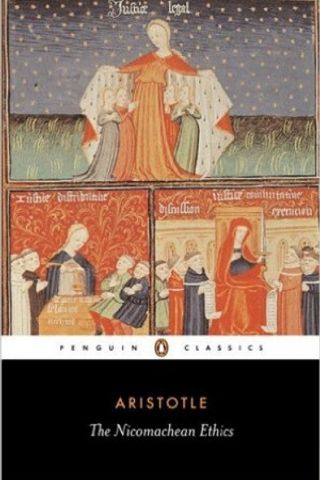
    Previously published as Ethics, Aristotle's The Nicomachean Ethics addresses the question of how to live well, and originates the concept of cultivating a virtuous character as the basis of his ethical system. This Penguin Classics edition is translated from the Greek by J.A.K. Thomson with revisions and notes by Hugh Tredennick, and an introduction and bibliography by Jonathan Barnes. 'One swallow does not make a summer; neither does one day. Similarly neither can one day, or a brief space of time, make a man blessed and happy' In The Nicomachean Ethics, Aristotle sets out to examine the nature of happiness. He argues that happiness consists in 'activity of the soul in accordance with virtue', for example with moral virtues, such as courage, generosity and justice, and intellectual virtues, such as knowledge, wisdom and insight. The Ethics also discusses the nature of practical reasoning, the value and the objects of pleasure, the different forms of friendship, and the relationship between individual virtue, society and the State. Aristotle's work has had a profound and lasting influence on all subsequent Western thought about ethical matters. Aristotle (384-22 BC) studied at the Academy of Plato for 20 years and then established his own school and research institute, 'The Lyceum'. His writings, which were of extraordinary range, profoundly affected the whole course of ancient and medieval philosophy and are still eagerly studied and debated by philosophers today.

    Edições (2)

    Ver mais
    • book cover
    • book cover

    Similares (1)

    Ver mais
    • book cover
    Resenhas (1)Ver mais
    Marcos Augusto picture
    Marcos Augusto08/04/2023Resenhou um livro
    4 (Muito bom)

    Aristóteles discute o que significa ética. A ética aristotélica trata do que torna possível um caráter virtuoso, que por sua vez é necessário para que a felicidade seja possível. Ele descreve uma sequência de passos necessários para conseguir isso: Primeiro, ações corretas, muitas vezes feitas sob a influência de professores, permitem o desenvolvimento de hábitos corretos. Estes, por sua vez, podem permitir o desenvolvimento de um bom caráter estável, no qual os hábitos são voluntários. Aristóteles, no entanto, não iguala o caráter ao hábito porque o caráter real envolve escolha consciente, ao contrário do hábito. No entanto, bons hábitos são descritos como pré condição para um bom caráter. Aristóteles então se volta para exemplos, revisando algumas das maneiras específicas pelas quais as pessoas são consideradas dignas de censura ou elogio. À medida que prossegue, ele descreve como os tipos mais elevados de louvor, portanto, os tipos mais elevados de virtude, implicam ter todas as virtudes de caráter de uma só vez, e estas, por sua vez, implicam não apenas um bom caráter, mas um tipo de sabedoria. As quatro virtudes que ele diz requerer a posse de todas as virtudes éticas juntas são: 1. Ser de "grande alma" (magnanimidade), a virtude em que alguém seria verdadeiramente merecedor dos maiores elogios e teria uma atitude correta em relação à honra que isso pode envolver. 2. O tipo de justiça ou equidade de um bom governante em uma boa comunidade. 3. Phronesis ou julgamento prático demonstrado por bons líderes. 4. A virtude de ser um verdadeiro bom amigo é o último exemplo.

    1 curtida

    Estatísticas

    Avaliações

    4.5 / 11
    • 5 estrelas64%
    • 4 estrelas27%
    • 3 estrelas9%
    • 2 estrelas0%
    • 1 estrelas0%