Tim Berners-Lee, the inventor of the World Wide Web, has been hailed by Time magazine as one of the 100 greatest minds of this century. His creation has already changed the way people do business, entertain themselves, exchange ideas, and socialize with one another. With new online businesses and communities forming every day, the full impact of Berners-Lee's grand scheme has yet to be fully known. Berners-Lee's creation was fueled by a highly personal vision of the Web as a powerful force for social change and individual creativity. He has never profited personally from the Web but has devoted himself to its continued growth and health. Now, this low-profile genius tells his own story of the Web's origins-from its revolutionary introduction and the creation of the now ubiquitous WWW and HTTP acronyms to how he sees the future development of this revolutionary medium. Today, Berners-Lee continues to facilitate the Web's growth and development as director of the World Wide Web Consortium and from his position at the MIT Laboratory for Computer Science. Berners-Lee offers insights to help readers understand the true nature of the Web, enabling them to use it to their fullest advantage. He shares his views on such critical issues as censorship, privacy, the increasing power of software companies in the online world, and the need to find the ideal balance between the commercial and social forces on the Web. His incisive criticism of the Web's current state makes clear that there is still much work to be done. Finally, Berners-Lee presents his own plan for the Web's future, one that calls for the active support and participation of programmers, computer manufacturers, and social organizations to make it happen. His vision of the Web is something much more than a tool for research or communication; it is a new way of thinking and a means to greater freedom and social growth than ever before possible.
Weaving the Web - The Original Design and Ultimate Destiny of the World Wide Web by its Inventor
Tim Berners-Lee
HarperOne
1999
240 páginas
8h 0m
ISBN-13: 9780062515865
Edições (1)
Ver mais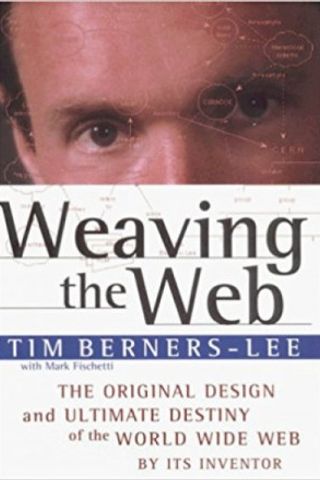
Estatísticas
Avaliações
0 / 0- 5 estrelas0%
- 4 estrelas0%
- 3 estrelas0%
- 2 estrelas0%
- 1 estrelas0%

Timothy John Berners-Lee
Timothy John Berners-Lee KBE, OM, FRS (TimBL ou TBL) (Londres, 8 de junho de 1955) é um físico britânico, cientista da computação e professor do MIT. É o criador da World Wide Web, tendo feito a primeira proposta para sua criação a 25 de março de 1989. Em 25 de dezembro de 1990, com a ajuda de Robert Cailliau e um jovem estudante do CERN, implementou a primeira comunicação bem-sucedida entre um cliente HTTP e o servidor através da internet. Berners-Lee é o diretor do World Wide Web Consortium (W3C), que supervisiona o desenvolvimento continuado da web. Também é o fundador da Fundação World Wide Web e é um pesquisador sênior e titular e fundador da cadeira de 3Com no Laboratório de Inteligência Artificial e Ciência da Computação do MIT (CSAIL). É um diretor da The Web Science Research Initiative (WSRI) e um membro do conselho consultivo do Centro de Inteligência Coletiva do MIT. Em abril de 2009, foi eleito como membro da Academia Nacional de Ciências dos Estados Unidos, sediada em Washington, D.C. Em 2004, Timothy venceu o Millennium Technology Prize, o que lhe rendeu um milhão de euros. Em 2017 foi agraciado pela Association for Computing Machinery (ACM) com o Prêmio Turing de 2016, considerado o "Nobel da Computação".
1 Livro
3 Seguidores
Londres, Inglaterra