This is a story og love given and love withheld. Gleaming with sudden passages of poetic beauty, it a tautly told and almost unbearably dramatic novel set in modern Japan. But its dominating theme of retribution for the sins of the father is as universal as the Pentateuch, as modern as Eugene O'Neil. Kawabata has much in common with O'Neill's tender, tragic insight into family life, but he also has the Japanese delight in the visible world, in the joy of the senses. We come upon Kikuji; whose story this is, on his way to tea with one of his father's mistresses, Chikako. But he is really on his way to act out the unfinished drama of his father's life. His father had been a cultivated man, an art-lover, a pleasure-seeker. One mistress, Chikako, he had cast off. But he gave his love to another, Mrs. Ota, until his death. Kikuji, like his father, tries to escape from Chikako, now masculine and meddlesome. Like his father, he is drawn to Mrs. Ota, who has remained young, alluring, and pliant even though her daughter, Fumiko, is twenty and lovely. Kikuji's passion for Mrs. Ota, her sudden death, and the efforts of her daughter to appease the family fate carry the story to a stunning climax. When Fumiko and Kikuji have tea together, the symbols of the two fine old China bowls, one male, one female, shine out clearly. Fumiko's fate is foreshadowed when she forces Kikuji to break the female bowl, and with it the tragic circle of their lives. The ending of this simple story of ill-fated love shatters the heart.
Thousand Cranes - a novel by Yasunari Kawabata
Yasunari Kawabata
L TuT Books
1992
147 páginas
4h 54m
ISBN-10: 0801035333
Edições (2)
Ver mais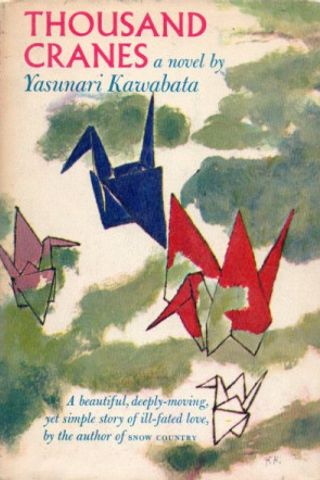
Estatísticas
Avaliações
4.4 / 4- 5 estrelas50%
- 4 estrelas50%
- 3 estrelas0%
- 2 estrelas0%
- 1 estrelas0%

Yasunari Kawabata
Prêmio Nobel de 1968, Yasunari Kawabata é considerado um dos representantes máximos da literatura japonesa do século XX. Nascido em Osaka em 1899, interessou-se por livros ainda adolescente, principalmente clássicos do Japão, que viriam a ser uma de suas grandes inspirações. Kawabata estudou literatura na Universidade Imperial de Tóquio e foi um dos fundadores da Bungei Jidai, revista literária influenciada pelo movimento modernista ocidental, em particular o surrealismo francês. Acompanhado de jovens escritores, defenderia mais tarde os ideais dacorrente neo-sensorialista (shinkankakuha), que visava uma revolução nas letras japonesas e uma nova estética literária, deixando de lado o realismo em voga no Japão em prol de uma escrita lírica, impressionista, atravessada por imagens nada convencionais. Ao contrastar o ritmo harmônico da natureza e o turbilhão da avalanche sensorial, Kawabata forjou insólitas associações e metáforas táteis, visuais e auditivas que surpreendem por revelar os processos de fragilização do ser humano diante do cotidiano, numa composição surrealista de elementos da cultura e filosofia orientais, personagens acuados e cenários inóspitos. Sua obsessão pelo mundo feminino, sexualidade humana e o tema da morte (presente em sua vida desde cedo, sob a forma da perda sucessiva de todos seus familiares) renderam-lhe antológicas descrições de encontros sensuais, com toques de fantasia, rememoração, inefabilidade do desejo e tragédia pessoal. Desgastado por excesso de compromissos, doente e deprimido, Kawabata suicidou-se em 1972.
38 Livros
234 Seguidores
Kinki, Japão