The Period Anterior to the Abolition of the Monarchy Preparer's Note This work contains many literal citations of and references to foreign words, sounds, and alphabetic symbols drawn from many languages, including Gothic and Phoenician, but chiefly Latin and Greek. This English Gutenberg edition, constrained to the characters of 7-bit ASCII code, adopts the following orthographic conventions: 1) Except for Greek, all literally cited non-English words that do not refer to texts cited as academic references, words that in the source manuscript appear italicized, are rendered with a single preceding, and a single following dash; thus, -xxxx-. 2) Greek words, first transliterated into Roman alphabetic equivalents, are rendered with a preceding and a following double-dash; thus, —xxxx—. Note that in some cases the root word itself is a compound form such as xxx-xxxx, and is rendered as —xxx-xxx—3) Simple unideographic references to vocalic sounds, single letters, or alphabeic dipthongs; and prefixes, suffixes, and syllabic references are represented by a single preceding dash; thus, -x, or -xxx. 4) (Especially for the complex discussion of alphabetic evolution in Ch. XIV: Measuring and Writing). Ideographic references, meaning pointers to the form of representation itself rather than to its content, are represented as -"id:xxxx"-. "id:" stands for "ideograph", and indicates that the reader should form a picture based on the following "xxxx"; which may be a single symbol, a word, or an attempt at a picture composed of ASCII characters. E. g. —"id:GAMMA gamma"— indicates an uppercase Greek gamma-form followed by the form in lowercase. Some such exotic parsing as this is necessary to explain alphabetic development because a single symbol may have been used for a number of sounds in a number of languages, or even for a number of sounds in the same language at different times. Thus, -"id:GAMMA gamma" might very well refer to a Phoenician construct that in appearance resembles the form that eventually stabilized as an uppercase Greek "gamma" juxtaposed to one of lowercase. Also, a construct such as —"id:E" indicates a symbol that with ASCII resembles most closely a Roman uppercase "E", but, in fact, is actually drawn more crudely. 5) Dr. Mommsen has given his dates in terms of Roman usage, A.U.C.; that is, from the founding of Rome, conventionally taken to be 753
The History of Rome (Complete) -
Theodor Mommsen
Library of Alexandria
2012
2334 páginas
3d 5h 48m
ISBN-10: B00B0XM5S6
Edições (2)
Ver mais

Estatísticas
Avaliações
4.5 / 2- 5 estrelas50%
- 4 estrelas50%
- 3 estrelas0%
- 2 estrelas0%
- 1 estrelas0%
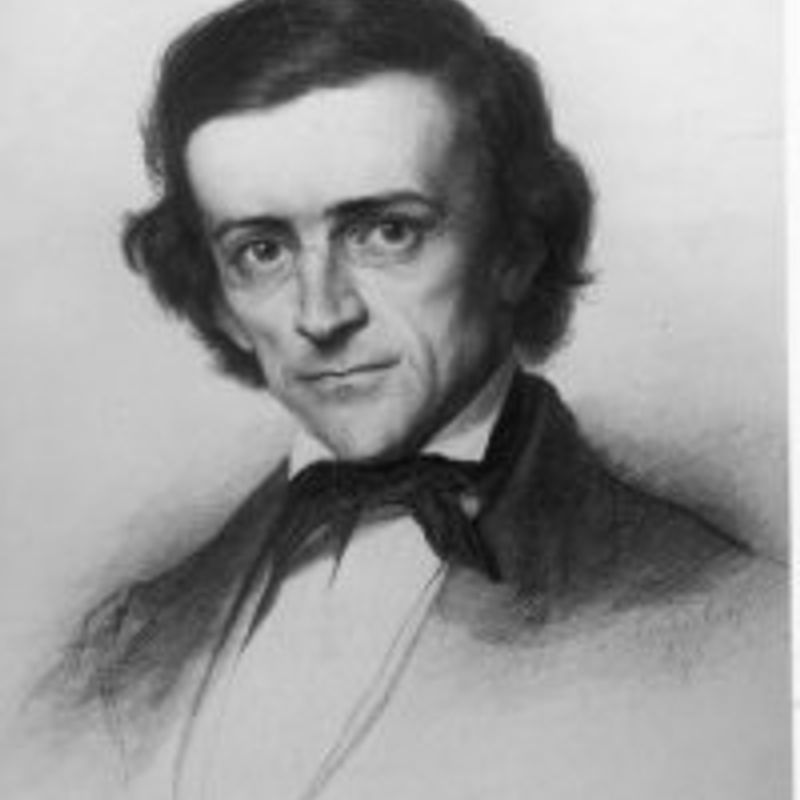
Christian Matthias Theodor Mommsen
Christian Matthias Theodor Mommsen (Garding, 30 de Novembro de 1817 — Charlottenburg, 1 de Novembro de 1903) foi um historiador alemão. É considerado um dos maiores especialista em história da Antigüidade Latina de todos os tempos, e muitos dos seus escritos e compilações de documentos ainda hoje conservam uma importância capital. Foi agraciado com o Nobel de Literatura de 1902, pela sua História de Roma.
5 Livros
5 Seguidores
Schleswig-Holstein., Alemanha