Wide Sargasso Sea is a 1966 postcolonial parallel novel by Dominica-born author Jean Rhys. Since her previous work, Good Morning, Midnight, was published in 1939, Rhys had lived in obscurity. Wide Sargasso Sea put Rhys into the limelight once more, and became her most successful novel. The novel acts as a prequel to Charlotte Brontë's famous 1847 novel Jane Eyre. It is the story of the first Mrs. Rochester, Antoinette (Bertha) Mason, a white Creole heiress, from the time of her youth in the Caribbean to her unhappy marriage and relocation to England. Caught in an oppressive patriarchal society in which she belongs neither to the white Europeans nor the black Jamaicans, Rhys' novel re-imagines Brontë's devilish madwoman in the attic. As with many postcolonial works, the novel deals largely with the themes of racial inequality and the harshness of displacement and assimilation.
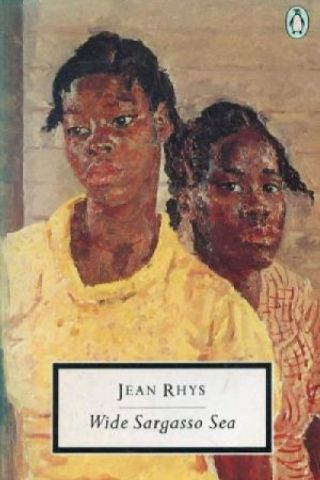
Wide Sargasso Sea -
Jean Rhys
Penguin
1968
156 páginas
5h 12m
ISBN-10: 0140183485
Edições (2)
Ver mais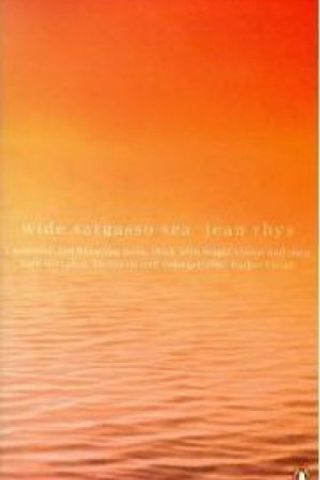
Resenhas (6)Ver mais

Berttoni Licarião28/09/2011Resenhou um livro
Caribbean gothic
There are two ways of reading Jean Rhys’s Wide Sargasso Sea: the first one is not knowing that the novel dialogues with the English literary tradition by giving voice to a silenced character from a nineteenth century book; the second, and opposite one, is acknowledging its postmodern stand of revisiting the past, by bringing to life one of fiction’s most mysterious characters, the madwoman in the attic from Charlotte Brontë’s Jane Eyre. Both readings will certainly guarantee an intriguing plunge in such an atmosphere that one is promptly tempted to refer as Caribbean Gothic. Unluckily, I was not fortunate enough to read it unaware of its relation to Brontë’s work, which sadly impeded the overwhelming and delightful surprise of finding that out in the third and last part of the novel. Nevertheless, bearing in mind its intertextual endeavor is sure pleasing in its own way, allowing the reader to infer many of the foreshadowing symbols of the novel. As in the short passage from the first part: “‘You go,’ she said. ‘I wish to stay here in the dark… where I belong,’ she added.” In Rhy’s passionate and heartbreaking narrative everything is encompassed by a dream-like scenario, half-said words and hazarding feelings: the imminent-tragedy mood which pervades the novel drives characters and readers towards the inexorable fire that shall destroy Thornfield Hall in Jane Eyre. Suggesting the maddening metamorphosis of Antoinette Cosway into Bertha Mason, the madwoman in the attic, by bestowing upon her the chance to tell her side of the story is one of the great triumphs of the novel—in my opinion, something afterwards achieved so equally creatively by Michael Cunningham in his Woolfish work The Hours. In a few words, Wide Sargasso Sea tells the story of Antoinette Cosway, a witty and sensual creole girl who is sold to marriage to the prideful Rochester, whose voice is also portrayed in the novel even though his name is never revealed. After a first attempt to live in Jamaica—a society so driven by hatred, so skewed in its sexual relations that drives Antoinette mad—the couple leaves the Caribbean islands to England, where Antoinette is kept imprisoned under Grace Poole’s watch. The pervasive nature—pungent, bright and colourful—has an almost hallucinatory quality, demanding a careful reader specially in the dark places of the novel. As Rochester points out: “Desire, Hatred, Life, Death came very close in the darkness. Better not know how close. Better not think, never for a moment. Not close. The same… ‘You are safe,’ I’d say to her and to myself. ‘Shut your eyes. Rest.’” Shutting one’s eyes is to admit the dream-upon-waking atmosphere to barge in, but it also has the power to reveal both Antoinette and Rochester incompatible worlds, as we are suggested by the powerful upcoming passage which closes this review: ‘Is it true,’ she said, ‘that England is like a dream? Because one of my friends who married an Englishman wrote and told me so. She said this place London is like a cold dark dream sometimes. I want to wake up.’ ‘Well,’ I answered annoyed, ‘that is precisely how your beautiful island seems to me, quite unreal and like a dream.’
1 curtida
Estatísticas
Avaliações
4.1 / 59- 5 estrelas39%
- 4 estrelas29%
- 3 estrelas27%
- 2 estrelas3%
- 1 estrelas2%