Madame Butterfly é uma das mais trágicas e comoventes histórias de todos os tempos, um paradigma do amor à beira da loucura e da morte. Trata-se de um pequeno best-seller do início do século XX que conta a história de Pinkerton, um soldado americano colocado em Nagasaki, e de uma bela e jovem gueixa que sacrifica a sua família, a sua religião e a sua própria vida pelo marido.
M. Butterfly -
Serge Grünberg
Editora Record
1994
208 páginas
6h 56m
ISBN-10: 8501041459
Português Brasileiro
Edições (1)
Ver mais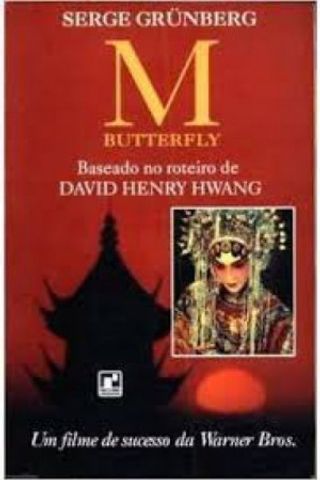
Resenhas (1)Ver mais

Júlia Schneider02/10/2011Resenhou um livro
The Power of Love
M Butterfly is a daring, powerful narrative surrounding the 1960's diplomatic life of China, after it establishes relations with France, at the same that it goes through a cultural revolution. The story is centered on the life of René Gallimard, an accountant working for the embassy, after he meets the opera singer, Song Liling. Song, in the eyes of Monsieur Gallimard, is a very beautiful, attractive woman. She is conveniently the type of woman he needs at this point of his life: submissive, loyal, faithful. Someone with the patience to help him build his confidence and grow. After being promoted to vice consul, there is barely even time to mature their relationship. The plot thickens as Song is revealed to be a man, a Chinese spy working as a woman to extract state secrets from René. This particular detail is not exactly explicit throughout the narrative, so it does come as a shock in the final pages, when Gallimard is judged at the French court for betrayal and Song testifies against him. Humiliated, Gallimard commits suicide in prison. "Mr. Song" goes on serving his country and is finally admitted at the Communist Party, not before serving for some years in Tibet. The shock of cultures portrayed at the story is quite obvious. More than that, all the discussions the characters had on the subject is clearly a constant attack to the western culture by the opera singer, leaving the French diplomat always speechless. He becomes a weak character, someone who can be easily manipulated. He does not know how to argue with her, he does not know how to seduce her. Everything happens as she commands and yet, always making him think that he is the one calling the shots. The book then becomes a mockery. The fact that for eight years they were lovers and, not for once, Gallimard ever suspected that it was a man that he loved, in my point of view, is a comic critic to the western culture, the very "person" Song attacks all the time. The fact that a diplomat - someone who is supposed to know at least a respectful amount about the culture of the country one is living in - does not know that female roles are commonly played by male actors in Chinese opera, shows how strongly frustrated the author feels about the opposite part of the globe. The fact that Gallimard dies as M. Butterfly is prison and Song walks out free is a severe, yet mocking statement of how little the western culture thinks of the ancient, millenary and, in the eyes of the author, superior eastern culture. More than showing a shock of those two cultures, it shows an inversion of roles created by History, in which the threat becomes the victim and the victim becomes the threat.
1 curtida
Estatísticas
Avaliações
3.9 / 11- 5 estrelas45%
- 4 estrelas27%
- 3 estrelas18%
- 2 estrelas0%
- 1 estrelas9%