The 1932–33 Norton Lectures are among the best and most important of T. S. Eliot’s critical writings. Tracing the rise of literary self-consciousness from the Elizabethan period to his own day, Eliot does not simply examine the relation of criticism to poetry, but invites us to “start with the supposition that we do not know what poetry is, or what it does or ought to do, or of what use it is; and try to find out, in examining the relation of poetry to criticism, what the use of both of them is.” Eliot begins with the appearance of poetry criticism in the age of Dryden, when poetry became the province of an intellectual aristocracy rather than part of the mind and popular tradition of a whole people. Wordsworth and Coleridge, in their attempt to revolutionize the language of poetry at the end of the eighteenth century, made exaggerated claims for poetry and the poet, culminating in Shelley’s assertion that “poets are the unacknowledged legislators of mankind.” And, in the doubt and decaying moral definitions of the nineteenth century, Arnold transformed poetry into a surrogate for religion. By studying poetry and criticism in the context of its time, Eliot suggests that we can learn what is permanent about the nature of poetry, and makes a powerful case for both its autonomy and its pluralism in this century.
The Use of Poetry and Use of Criticism - Studies in the Relation of Criticism to Poetry in England
T. S. Eliot
Harvard University Press
1986
160 páginas
5h 20m
ISBN-13: 9780674931503
Edições (1)
Ver mais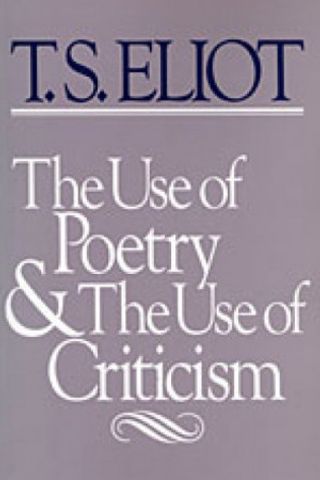
Estatísticas
Avaliações
3 / 1- 5 estrelas0%
- 4 estrelas0%
- 3 estrelas100%
- 2 estrelas0%
- 1 estrelas0%

Thomas Stearns Eliot
Eliot nasceu nos Estados Unidos, mudou-se para a Inglaterra em 1914 (então com 25 anos) e tornou-se cidadão britânico em 1927, com 39 anos de idade. T. S Eliot residia em Londres. Depois da guerra, nos anos vinte, ele passou muito tempo com outros grandes artistas na avenida Montparnasse, em Paris, onde foi fotografado por Man Ray. A poesia francesa exerceu grande influência na obra de Eliot, em particular o simbolista Charles Baudelaire, cujas imagens da vida em Paris serviram de modelo para a imagem de Londres pintada por Eliot. Ele começou então a estudar sânscrito e religiões orientais, chegando a ser aluno do renomado armênio G. I. Gurdjieff. A obra de Eliot, após a sua conversão ao cristianismo pela Igreja Anglicana, é frequentemente religiosa em sua natureza e tenta preservar o inglês arcaico e alguns valores europeus que ele julgava serem importantes. Publicou o poema The Waste Land em 1922; em 1927 obteve a nacionalidade britânica. Em 1928, Eliot resumiu suas crenças muito bem no prefácio de de seu livro "Para Lancelot Andrews": "O ponto de vista geral [dos assuntos do livro] pode ser descrito como classicista na literatura, monarquista na política e anglo-católico na religião." Essa fase inclui trabalhos poéticos como Ash Wednesday, The Journey of the Magi, e Four Quartets. Recebeu o Nobel de Literatura de 1948.
59 Livros
131 Seguidores
Missouri, Estados Unidos